Coins, weights and everyday objects the Bible talks about – photos of originals in museums. In the Bible text they appear when you tap a marked word.
Coins
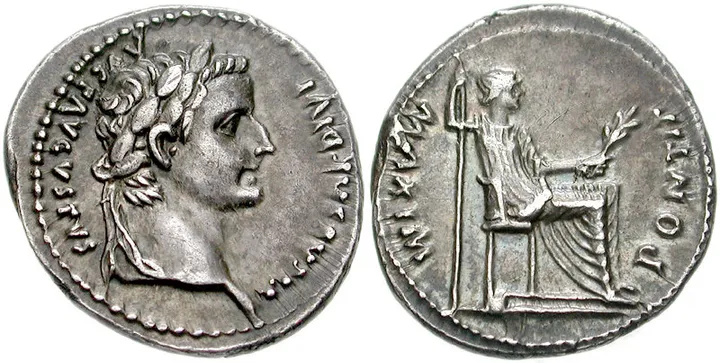
Denarius of Tiberius
AD 14–37
Silver coin with the head of Emperor Tiberius – probably the kind of coin Jesus asked to see in the question about taxes (Mark 12:15–17). A denarius was a labourer’s daily wage (Matthew 20:2).
Photo: Classical Numismatic Group, Inc. (cngcoins.com) · CC BY-SA 3.0 · Source
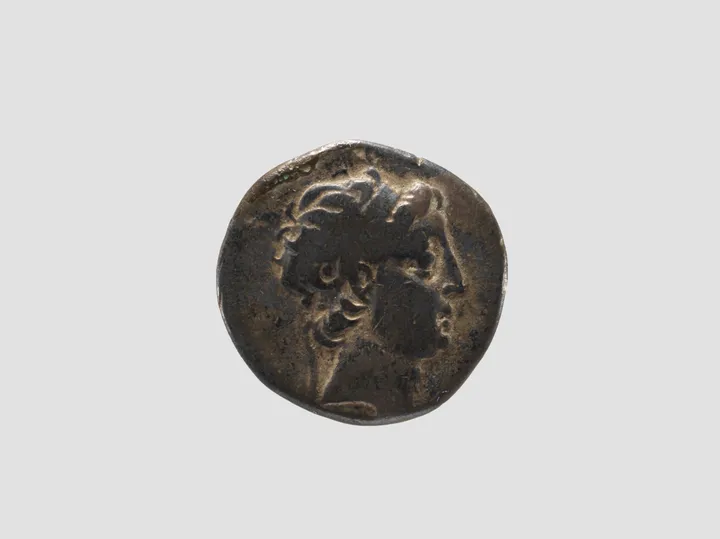
Seleucid drachm
c. 145–141 BC, Syria
Greek silver coin worth about a denarius. A drachma like this is what the woman searched for in the parable of the lost coin (Luke 15:8–9).
Photo: The Metropolitan Museum of Art (Bequest of Charles K. Wilkinson, 1986) · CC0 1.0 · Source
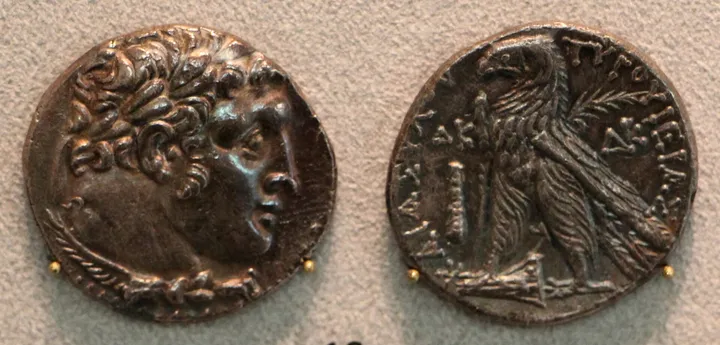
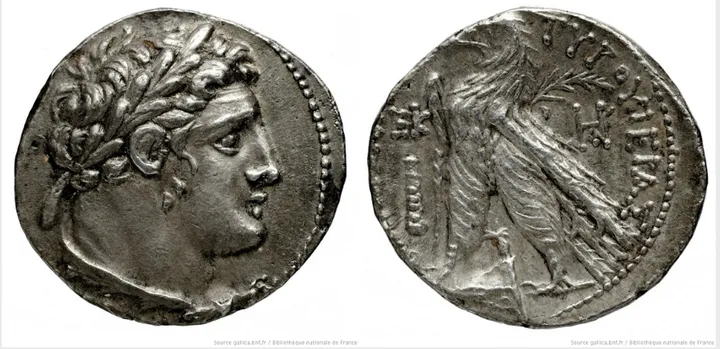
Shekel of Tyre
c. 102–61 BC, Altes Museum Berlin
Silver coin of Tyre with the head of the god Melqart. It was worth four drachmas – exactly the temple tax for two people, which Peter found in the fish’s mouth (Matthew 17:27).
The shekel was first a weight (about 11.4 g of silver), later also a coin. Half a shekel was the yearly temple tax per person (Exodus 30:13; Matthew 17:24); in Jesus’ time it was paid in coins of Tyre.
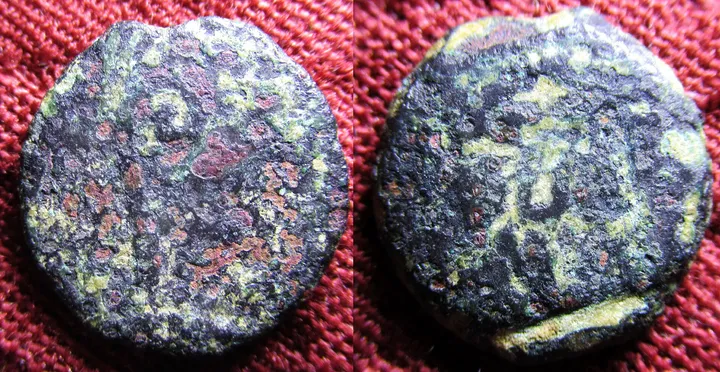
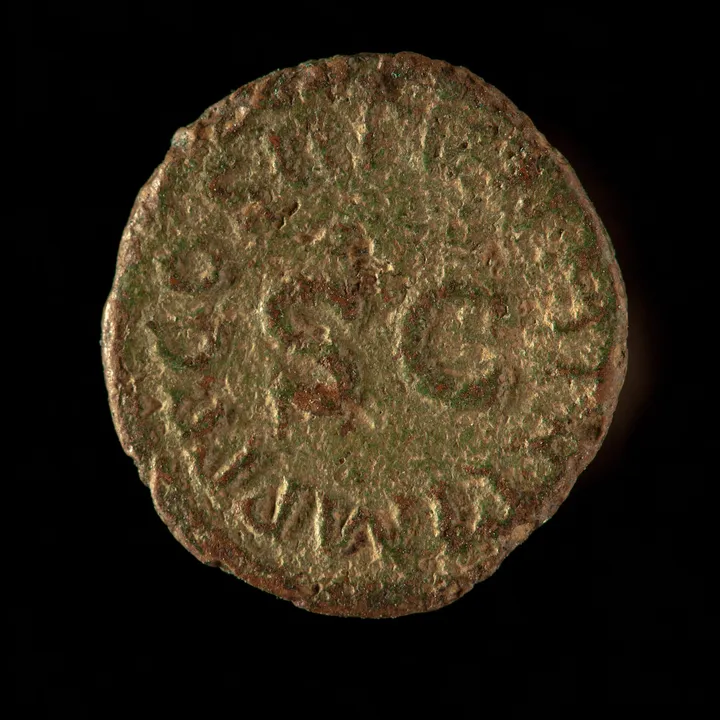
The smallest Roman copper coin, a quarter of an as. Mark uses it to explain the value of the two mites to his readers (Mark 12:42); “to the last penny” (Matthew 5:26).
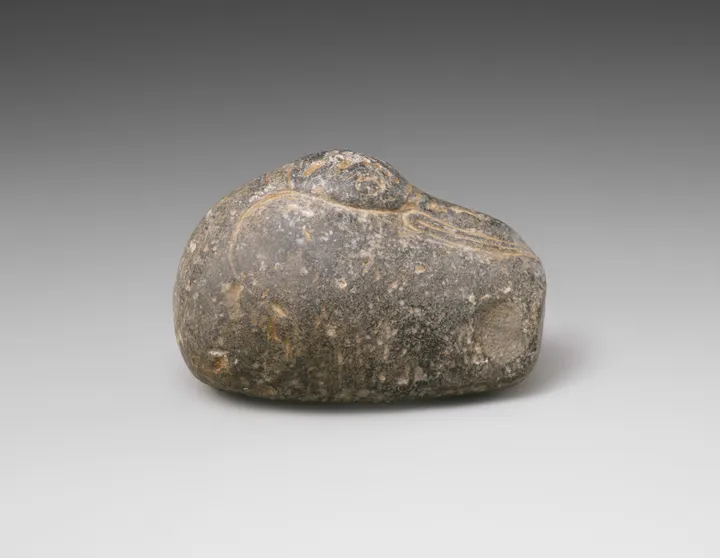
Stone weight for the scales. Before coins, silver was weighed, not counted; talent, mina and shekel were weights. The Bible demands honest weights (Deuteronomy 25:13–15).
Photo: The Metropolitan Museum of Art (Rogers Fund, 1957) · CC0 1.0 · Source
Home and daily life
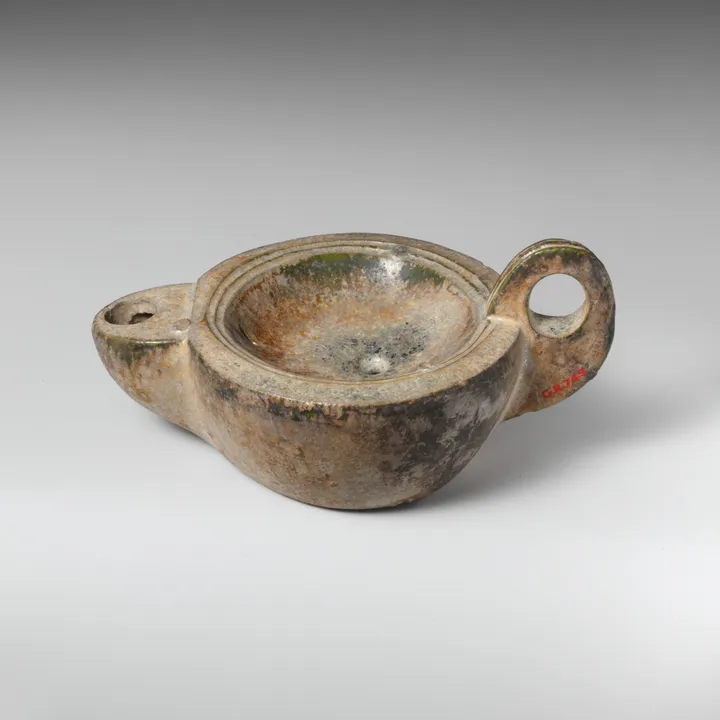
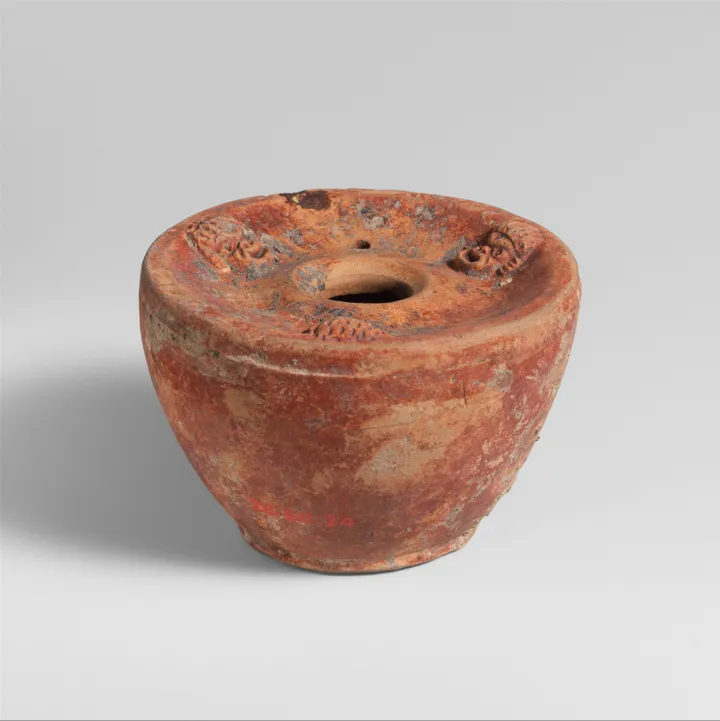
Terracotta oil lamp
1st century AD, Roman
Olive oil went into the middle, a wick into the spout. One filling burned only a few hours – which is why the wise virgins took extra oil (Matthew 25:1–13).
Photo: The Metropolitan Museum of Art (Purchase, 1896) · CC0 1.0 · Source
Stamp seal
c. 6th century BC, Levant or Syria
Stone seal, often worn as a ring or on a cord. Pressed into clay or wax it confirmed ownership and letters – Jezebel wrote letters with Ahab’s seal (1 Kings 21:8).
Photo: The Metropolitan Museum of Art (Bequest of W. Gedney Beatty, 1941) · CC0 1.0 · Source
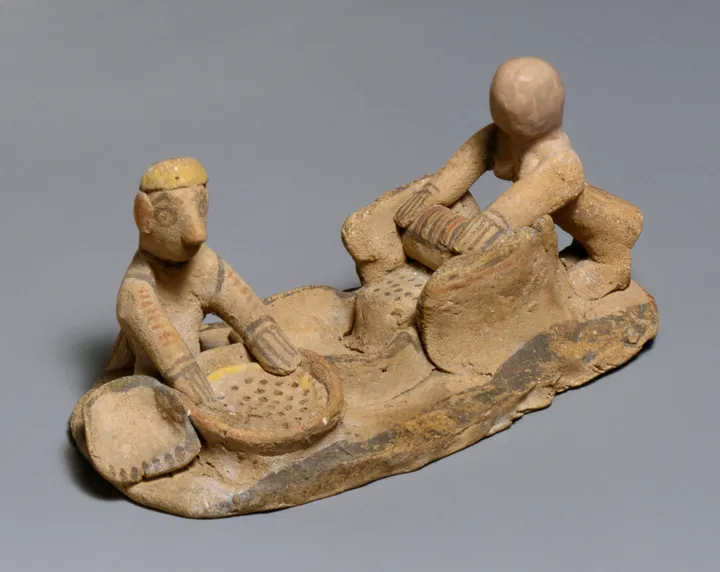
Terracotta group: grinding flour
c. 600–480 BC, Cyprus
Grain was ground at home every day, mostly by women: a rubbing stone was pushed back and forth on a flat lower stone. So no one was to take a handmill in pledge (Deuteronomy 24:6; Matthew 24:41).
Photo: The Metropolitan Museum of Art (The Cesnola Collection, Purchased by subscription, 1874–76) · CC0 1.0 · Source
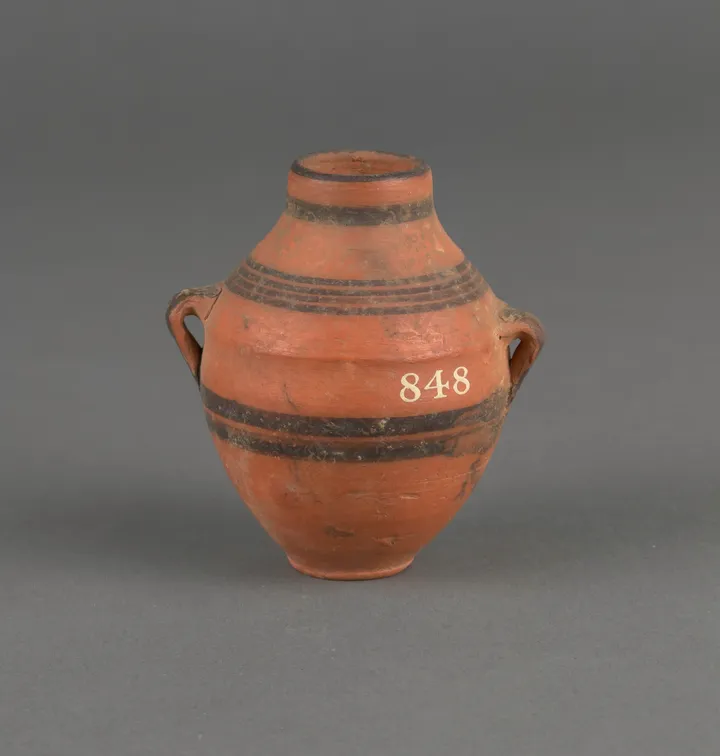
Storage jar (“Canaanite jar”)
750–600 BC, Cyprus
Clay jars held water, oil, wine and grain; women fetched water from the well in jars (Genesis 24:15; John 4:28).
Photo: The Metropolitan Museum of Art (The Cesnola Collection, Purchased by subscription, 1874–76) · CC0 1.0 · Source
Writing
Inkwell and stylus
1st–2nd century AD, Roman
Scribes carried their writing kit at the waist (Ezekiel 9:2). Soot ink was used on papyrus, leather or potsherds, the stylus on wax.
Photo: The Metropolitan Museum of Art (Fletcher Fund, 1926) · CC0 1.0 · Source
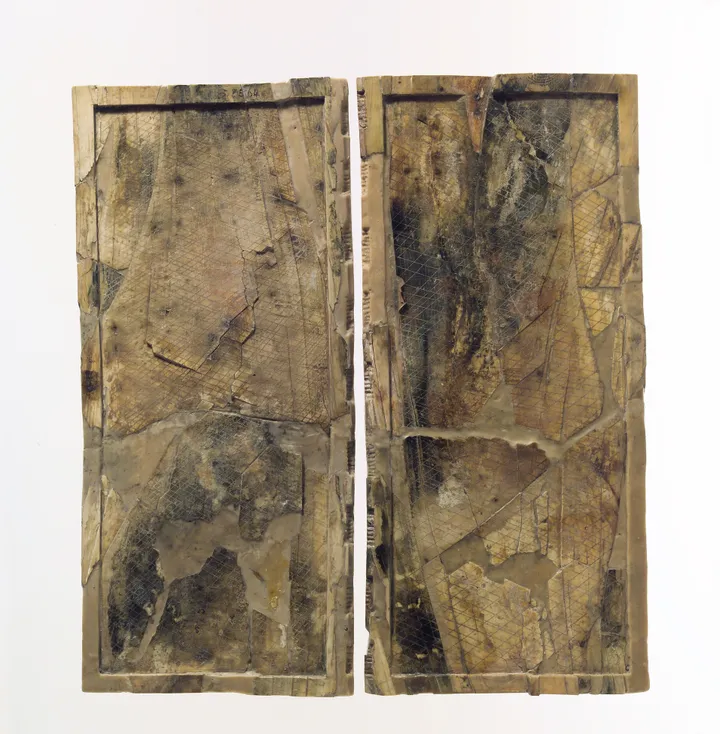
Ivory writing board
c. 721–705 BC, Assyria
Folding boards with a layer of wax: one scratched with a stylus and could smooth the writing again. On such a tablet Zechariah wrote “His name is John” (Luke 1:63).
Photo: The Metropolitan Museum of Art (Rogers Fund, 1954) · CC0 1.0 · Source
Photos: Metropolitan Museum of Art (Open Access, CC0) and Wikimedia Commons. Explanations AI-assisted, based on the Tyndale Open Bible Dictionary (CC BY-SA 4.0) and museum records – How the texts are made