Galatia
- Kind
- Region
- Today
- region around Ankara (Turkey)
- Location
- securely identified (confidence 1000 of 1000)
When the place appears in the Bible
Map
Base map: Natural Earth (public domain), places after OpenBible.info (CC BY 4.0), © OpenStreetMap (ODbL) · All sources and licences
Notes and sources for this map
Location after OpenBible.info
Pictures
Today: the place and its landscape as they look today
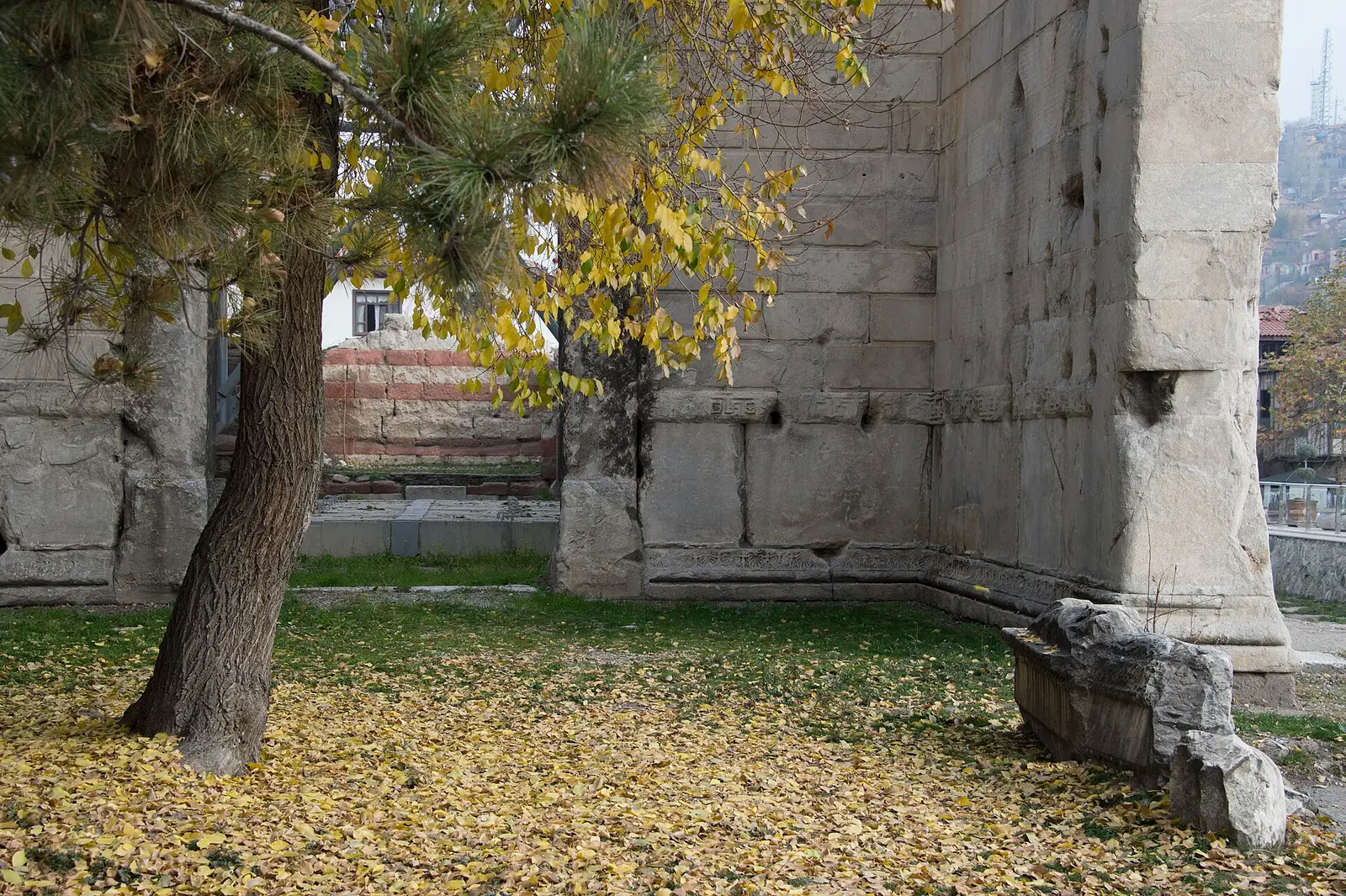
Photo credits
- Walls of the Temple of Augustus in Ankara, ancient Ancyra, capital of the province of Galatia. Today · 2014 · Dosseman · CC BY-SA 4.0 · Source

Photos from Wikimedia Commons and the Matson Collection of the Library of Congress, resized. Tap a photo to enlarge it. Captions AI-assisted – How the texts are made
About the place
Galatia was a region and later a Roman province in the interior of Asia Minor; one of its towns was Ancyra.1 The name goes back to Gallic tribes who settled on the central plateau in the 3rd century BC.1 Paul wrote a letter to the churches of Galatia, and 1 Peter is also addressed in part to Christians there (Galatians 1:2; 1 Peter 1:1).1,2
Where the name comes from
Gauls, also called Celts, moved in from the west against Rome, which they sacked in 390 BC, and later against Greece, where they were driven back.1 They then turned to Asia Minor, were defeated in 230 BC and were confined to the area later known as Galatia.1 Three tribes settled in Tavium, Pessinus and Ancyra; in 189 BC the Romans subdued them but let them run their own affairs.1
Galatia as a Roman province
After the death of King Amyntas, Galatia became a Roman province in 25 BC, which also took in Lycaonia and Isauria as well as parts of Pisidia and Phrygia.1 So Derbe, Lystra, Iconium and Pisidian Antioch, which Paul visited on his first missionary journey, also lay within the province (Acts 13:14; 14:1, 6).1,2 Because Galatia could mean either the land the Gauls settled in the north or the whole province, it remains open which churches received the letter to the Galatians.1
Land and people
In the north, alongside the dominant Celts, lived many Phrygians as well as Greeks and a sizeable Jewish community; in the southern towns Greek influence was stronger.1 In both parts the goddess Cybele was the main object of worship.1 The northern towns stood on a well-watered plateau along a road to the Aegean, the southern ones on the route between Syria and Asia, which explains why Paul founded churches there.1
Galatia in the New Testament
Acts reports that Paul travelled through the Galatian region together with Phrygia; whether he also founded churches in the north is unclear (Acts 16:6; 18:23).1,2 The other mentions probably refer to the southern towns: Paul gave instructions for a collection in Galatia, Crescens went there, and 1 Peter greets the exiles in Galatia (1 Corinthians 16:1; 2 Timothy 4:10; 1 Peter 1:1).1,2
Galatia in the Bible
Galatia appears in 19 sections across 5 books of the Bible – first in Acts 16:6, last in 1 Peter 5:1. Most often in Galatians (9), 1 Peter (6) and Acts (2).
Acts
1 Corinthians
mentioned: 16:1
Galatians
- Galatians 1:1–10 No Other Gospel
- Galatians 1:11–2:10 Paul’s Call and Apostleship
- Galatians 2:11–21 Paul Opposes Cephas
- Galatians 3:1–14 By Faith, Not by Works
- Galatians 3:15–29 Promise and Law
- Galatians 4:1–31 Sons and Heirs, Slave and Free
- Galatians 5:1–15 Set Free for Freedom
- Galatians 5:16–26 The Fruit of the Spirit
- Galatians 6:1–18 Carry One Another’s Burdens
2 Timothy
mentioned: 4:10
1 Peter
- 1 Peter 1:1–12 A Living Hope
- 1 Peter 1:13–2:10 A Holy People
- 1 Peter 2:11–3:7 Doing Good among the Nations
- 1 Peter 3:8–22 Suffering for Righteousness’ Sake
- 1 Peter 4:1–19 Living by the Will of God
- 1 Peter 5:1–14 Shepherds of the Flock
Often mentioned together
Events at this place
- Through Phrygia, Galatia and Asia
- Paul writes to the churches of Galatia
- Peter writes to the exiles of the dispersion
References
- Tyndale Open Bible Dictionary – Article “Galatia” · tyndaleopenresources.com
- Bible text: Acts 13:14; Acts 14:1; Acts 14:6; Acts 16:6; Acts 18:23; 1 Corinthians 16:1; Galatians 1:2; 2 Timothy 4:10; 1 Peter 1:1