Ephesus
- Today
- near Selçuk (Turkey)
- Location
- securely identified (confidence 1000 of 1000)
- Elevation
- 240 m above sea level
- Coordinates
- 37.939° N, 27.341° E
When the place appears in the Bible
Map
Base map: Natural Earth (public domain), places after OpenBible.info (CC BY 4.0), © OpenStreetMap (ODbL) · All sources and licences
Notes and sources for this map
Location after OpenBible.info
Pictures
Today: the place and its landscape as they look today · Excavation: remains from biblical times that have survived or been excavated · Back then: photographs from around 1900–1940 (Matson Collection), before modern development
 Today · 2010
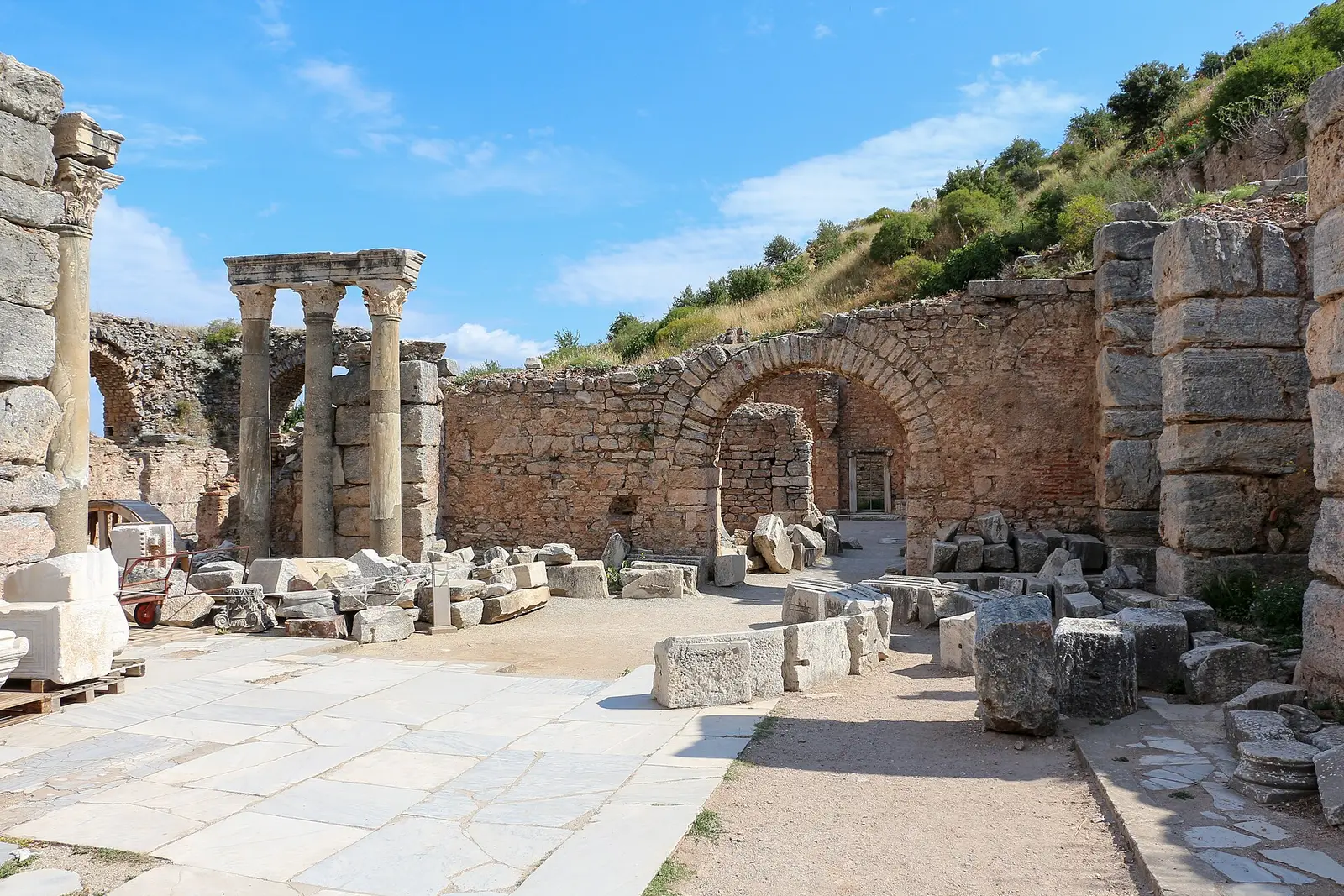 Today · 2014
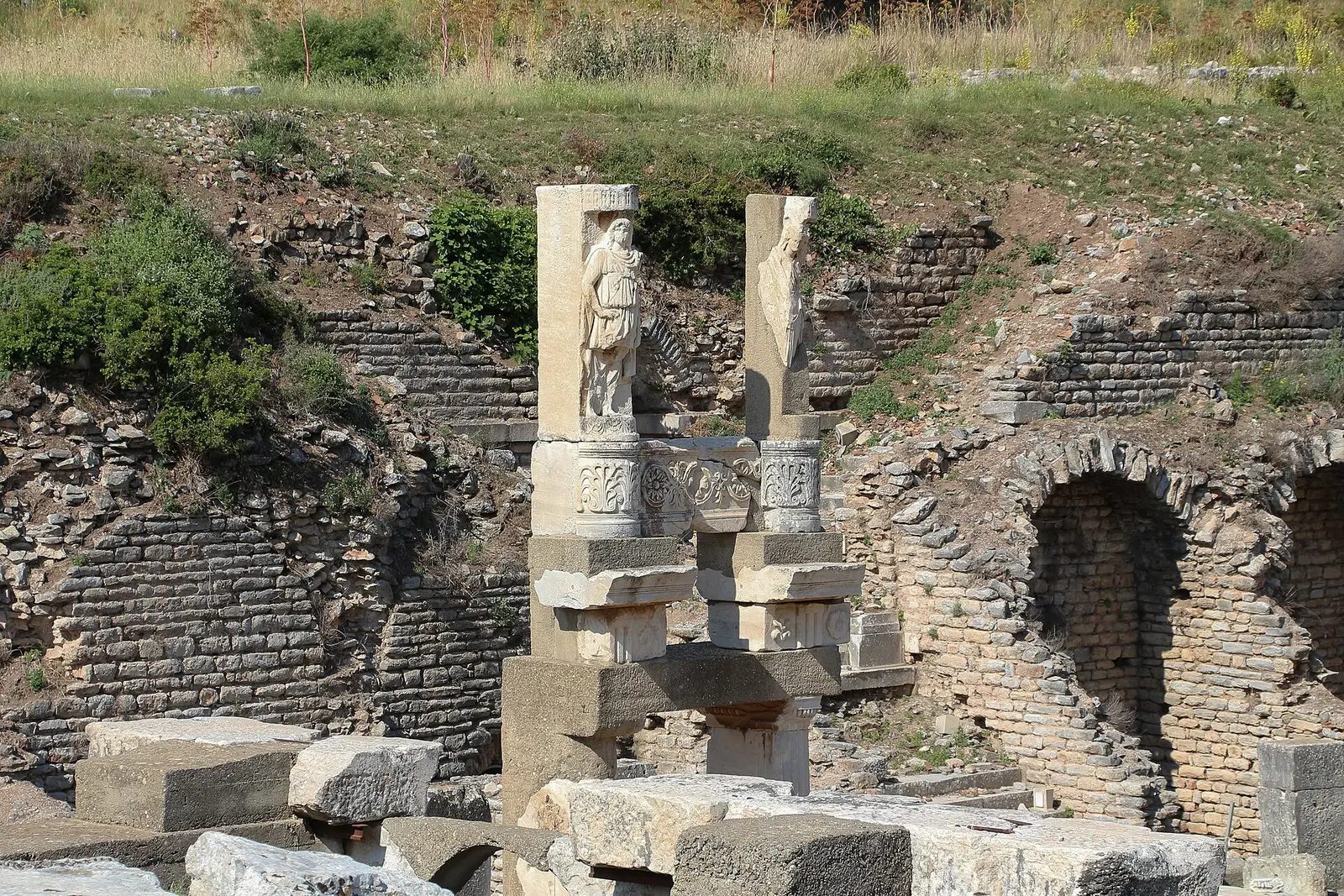 Today · 2014
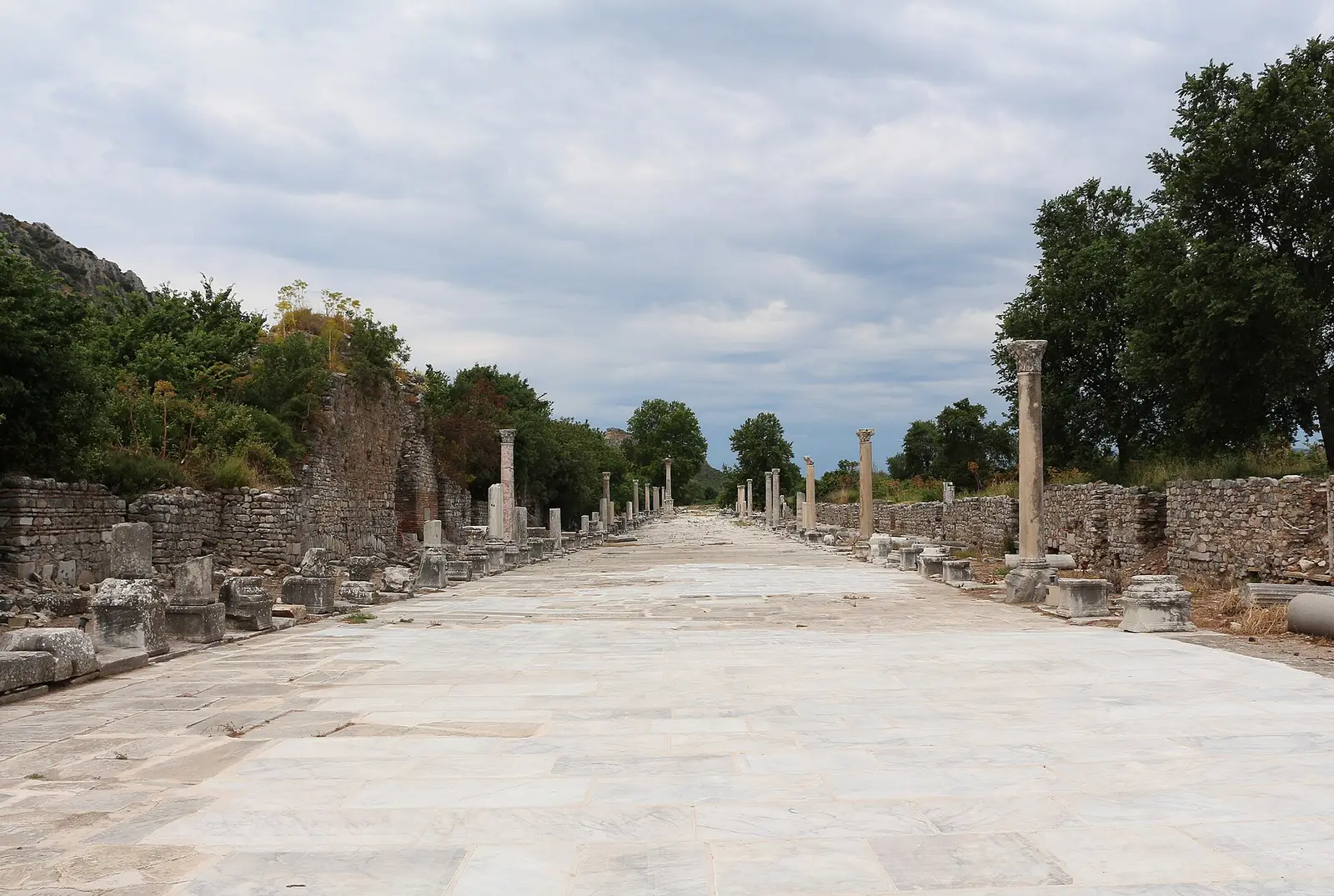 Today · 2014
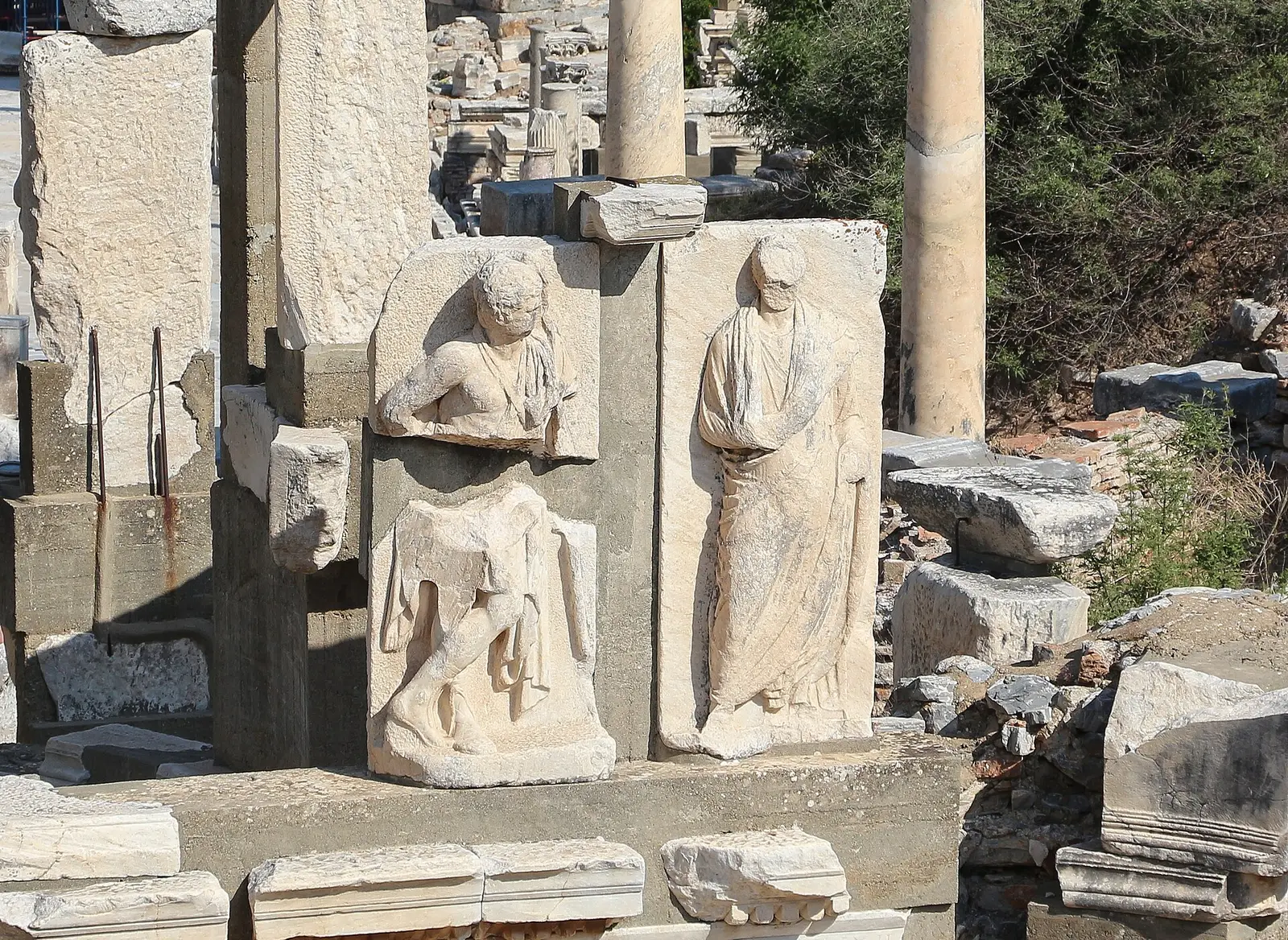 Today · 2014
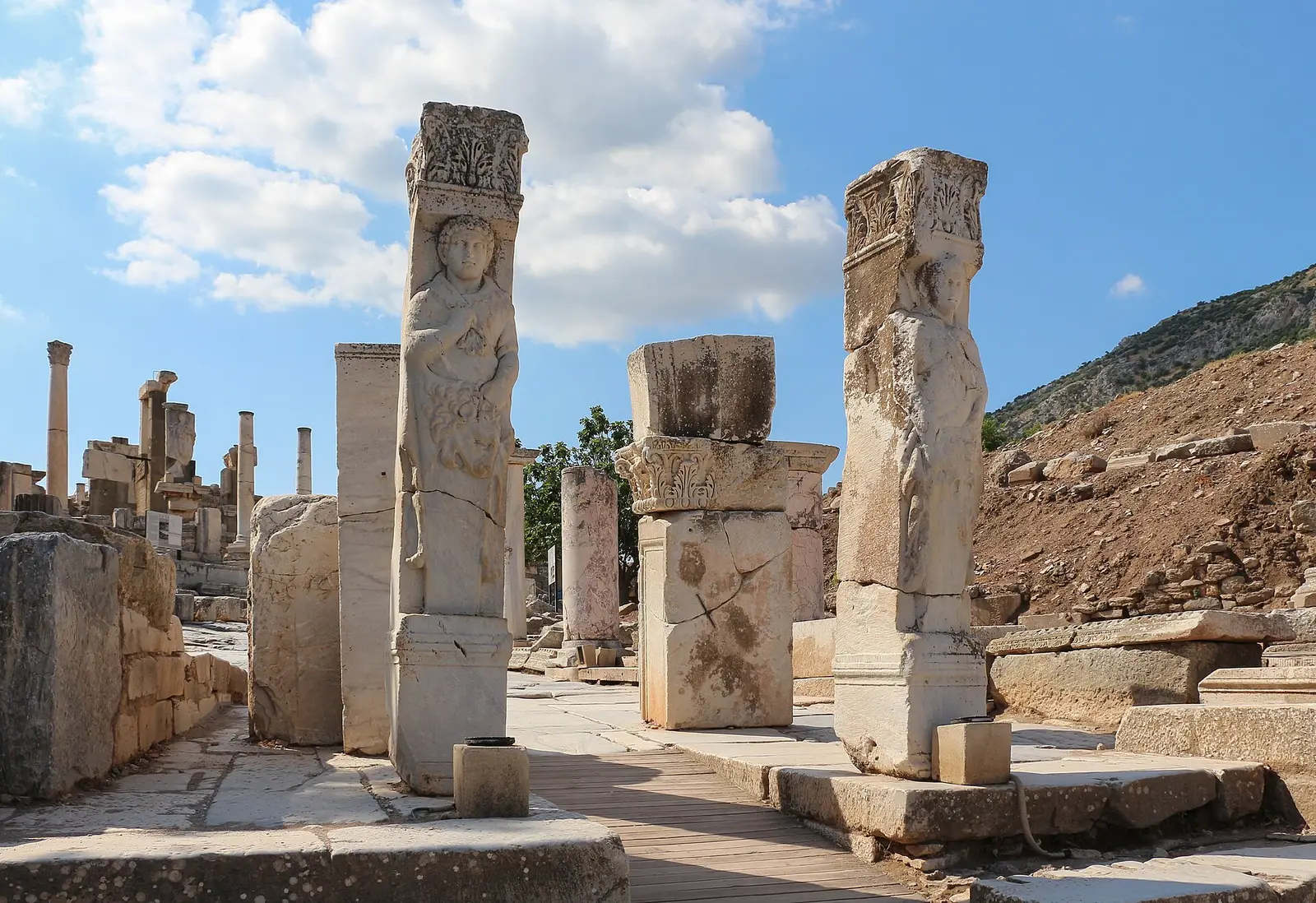 Today · 2014
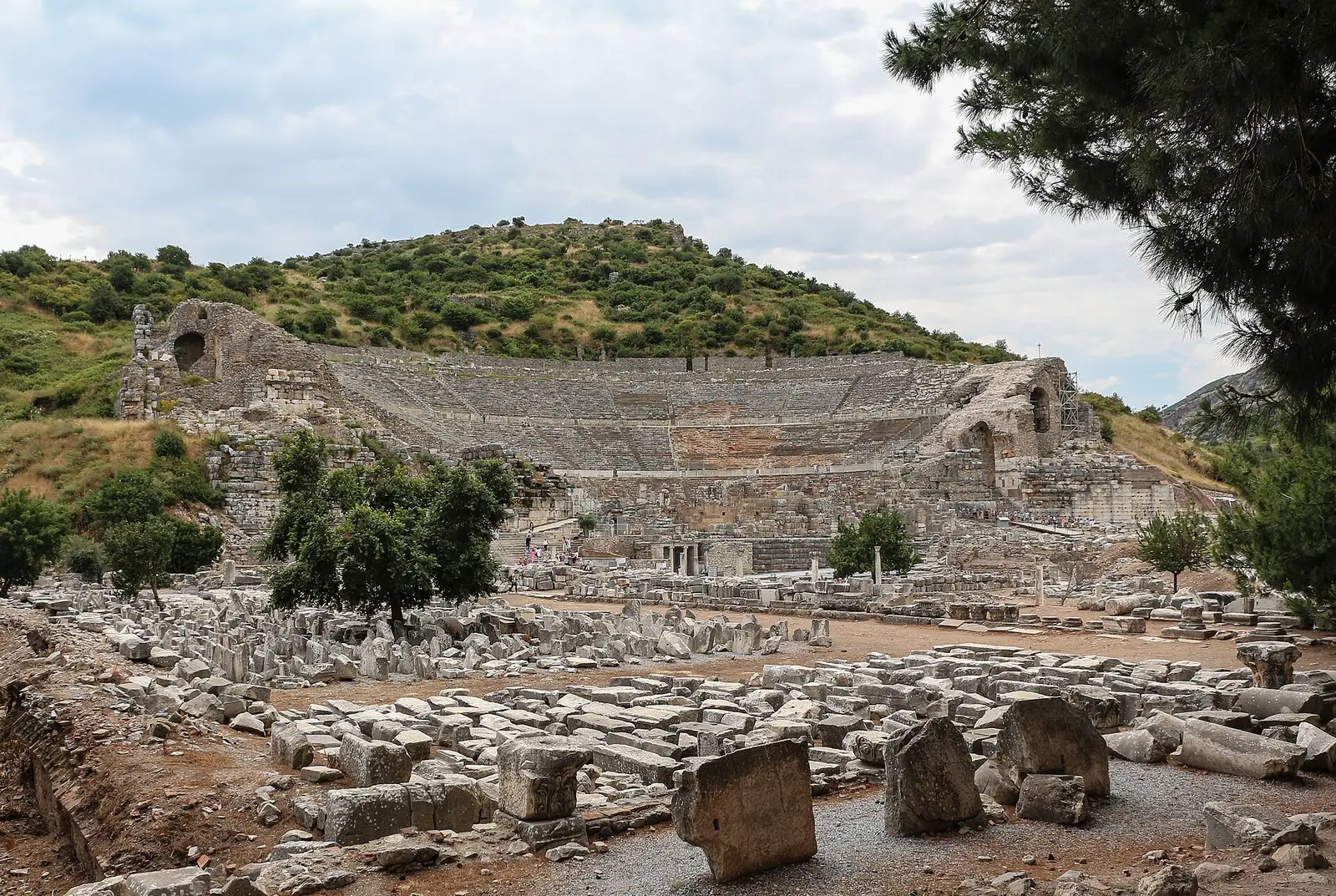 Excavation · 2014
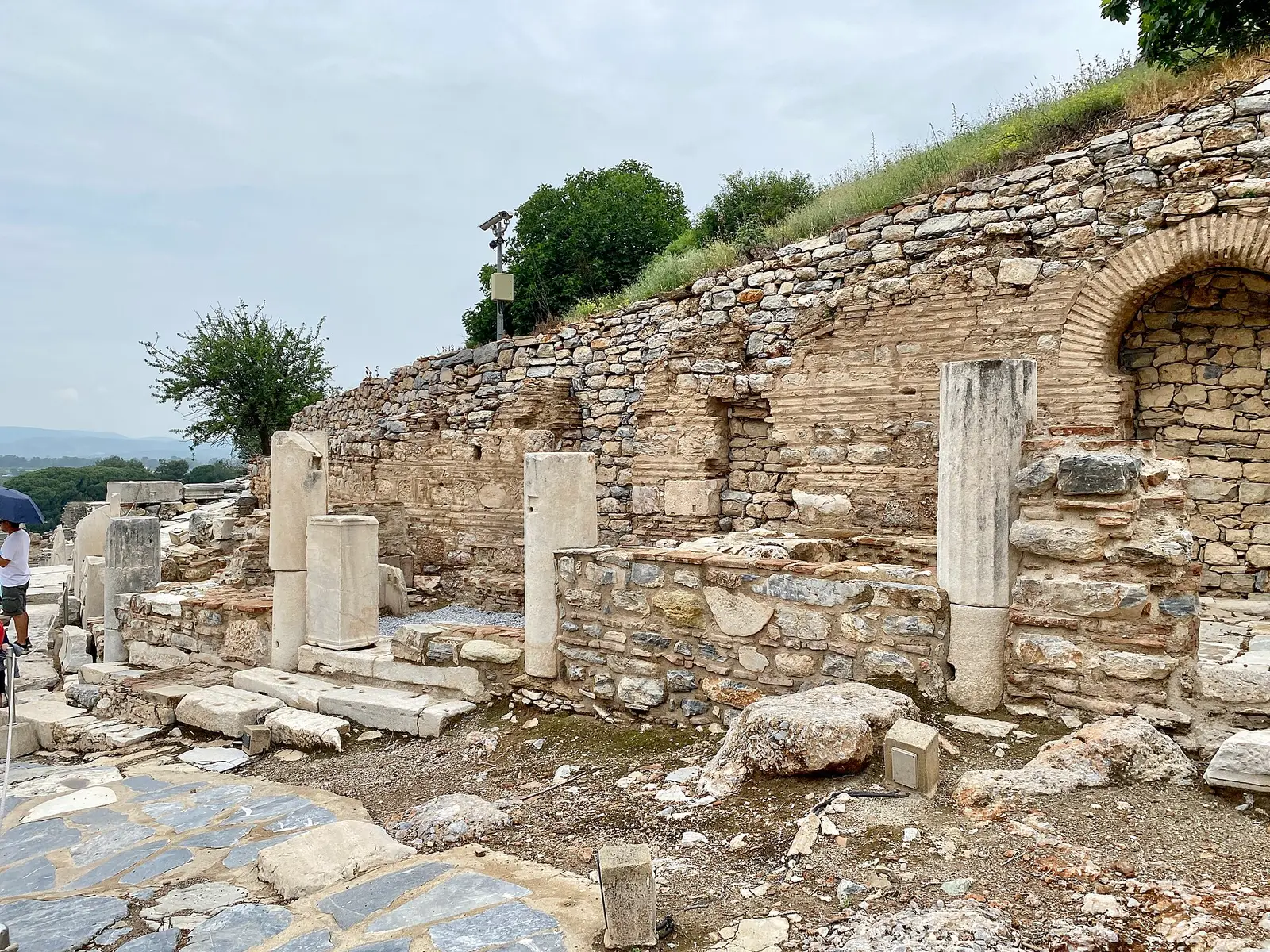 Excavation · 2023
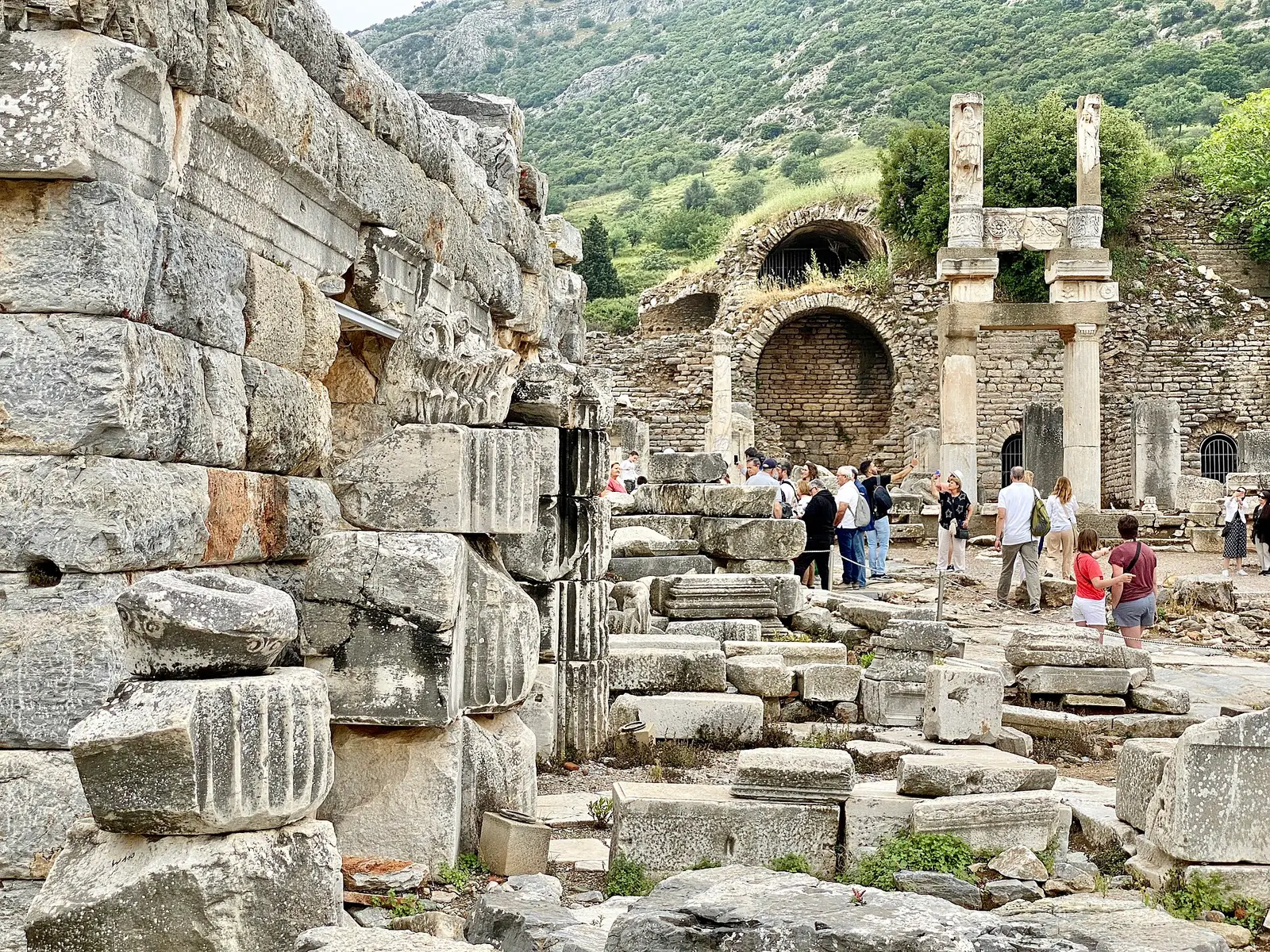 Excavation · 2023
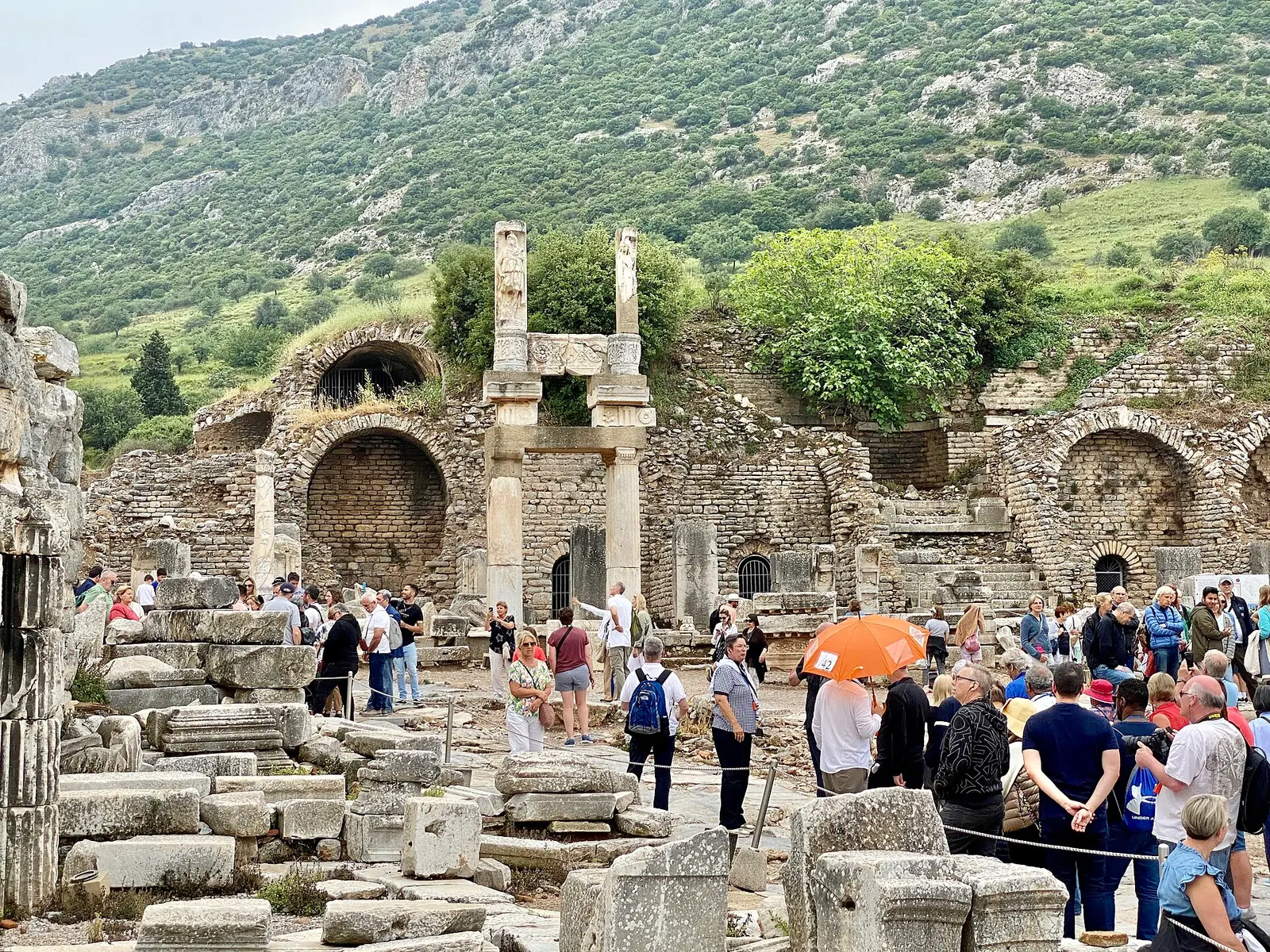 Excavation · 2023
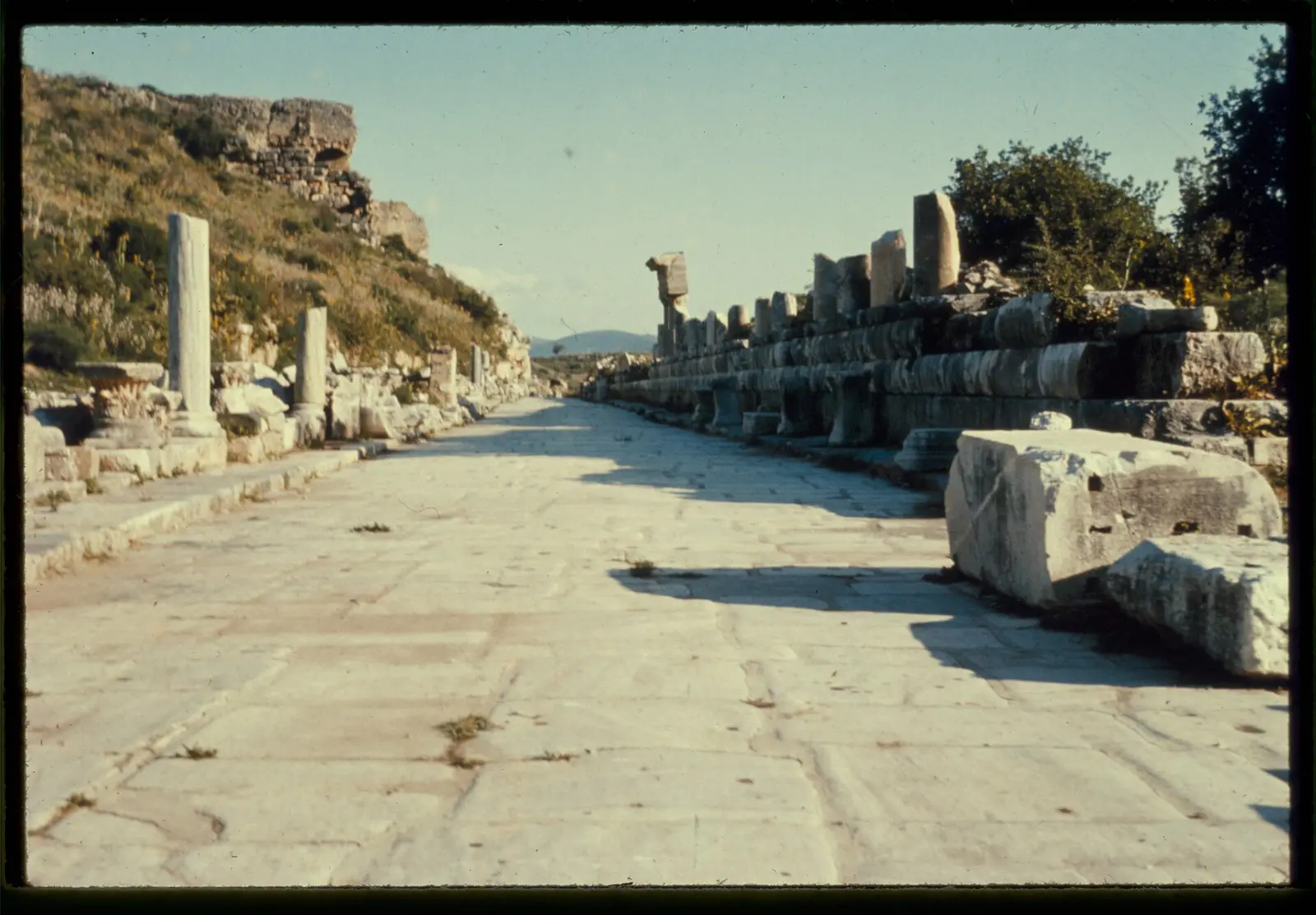 Back then · c. 1950–1960
Photo credits
- Façade of the Library of Celsus in Ephesus – built around AD 117, some decades after Paul. Today · 2010 · Benh LIEU SONG · CC BY-SA 3.0 · Source
- Scholastikia Baths in Ephesus. Today · 2014 · Bernard Gagnon · CC BY-SA 3.0 · Source
- Temple of Domitian in Ephesus – imperial cult at the time of Revelation. Today · 2014 · Bernard Gagnon · CC BY-SA 3.0 · Source
- The Arcadiane, Ephesus’ harbour street. Today · 2014 · Bernard Gagnon · CC BY-SA 3.0 · Source
- Memmius Monument in Ephesus – Roman monument from the 1st century BC. Today · 2014 · Bernard Gagnon · CC BY-SA 3.0 · Source
- Heracles Gate in Ephesus. Today · 2014 · Bernard Gagnon · CC BY-SA 3.0 · Source
- The great theatre of Ephesus – scene of the silversmiths’ riot (Acts 19:29). Excavation · 2014 · Bernard Gagnon · CC BY-SA 3.0 · Source
- Ruins at the Ephesus archaeological site. Excavation · 2023 · Warren LeMay from Chicago, IL, United States · CC BY-SA 2.0 · Source
- Remains of the Temple of Domitian in Ephesus (before AD 100). Excavation · 2023 · Warren LeMay from Chicago, IL, United States · CC BY-SA 2.0 · Source
- Remains of the Temple of Domitian in Ephesus. Excavation · 2023 · Warren LeMay from Chicago, IL, United States · CC BY-SA 2.0 · Source
- Ephesus in the 1950s: marble street, ruins of the theatre on the right. Back then · c. 1950–1960 · G. Eric and Edith Matson Photograph Collection, Library of Congress, Prints & Photographs Division, LC-DIG-matpc-23105 · Public Domain · Source
Photos from Wikimedia Commons and the Matson Collection of the Library of Congress, resized. Tap a photo to enlarge it. Captions AI-assisted – How the texts are made
Finds from here


About the place
Ephesus was the leading city of the Roman province of Asia on the west coast of Asia Minor; its ruins lie near Selçuk in present-day Turkey.1 The city was known as keeper of the temple of Artemis, whom the Romans called Diana (Acts 19:35).1,2 Paul worked here on his third missionary journey, and the uproar over the cult of Artemis nearly cost him his life (Acts 19).1,2 The first of the letters to the churches in Revelation is addressed to the church in Ephesus (Revelation 2:1–7).1,2
Where Ephesus was
Ionian Greeks founded Ephesus at a natural harbour where the Cayster River flowed into a gulf of the Aegean.1 The Greek geographer Strabo described it as the largest trading centre west of the Taurus Mountains.1 By the time Paul came, the city was already about a thousand years old.1
Paul in Ephesus
Priscilla and Aquila came to Ephesus with Paul and stayed there; later Timothy and Erastus also worked with him, and Timothy was asked to remain in the city (Acts 18:18–19; 19:22; 1 Timothy 1:3).1,2 From here Paul wrote to the Corinthians that he would stay in Ephesus until Pentecost (1 Corinthians 16:8).2 When he taught that gods made by human hands are no gods, the silversmiths around Demetrius saw their trade linked to the temple of Artemis in danger and rushed with the crowd into the theatre (Acts 19:24–31).1,2
The temple of Artemis
The cult of Artemis was as old as the city; the temple, built around 550 BC, was the biggest building of the Hellenistic world and the first large structure made entirely of marble.1 It was counted among the seven wonders of the world, was partly destroyed in 356 BC and rebuilt to the old plan.1 The British archaeologist Wood found it in 1869; the Goths had burned it in AD 262.1
Excavations
The theatre of Acts 19:29 has also been uncovered: it stood next to the marketplace, had three tiers for 24,000 people and measured 151 metres across.1,2 From there a colonnaded street about 10.5 metres wide led down to the harbour.1 On the slope of Mount Koressos stood houses of several storeys, some with mosaic floors, marble walls and running water.1
Ephesus in Revelation
According to the church father Irenaeus, the apostle John lived in Ephesus after his exile on Patmos, until the reign of the emperor Trajan (Revelation 1:9).1,2 The letter to Ephesus reproaches the church for having left its first love (Revelation 2:4).1,2 In AD 431 a church council met in Ephesus.1
Ephesus in the Bible
Ephesus appears in 43 sections across 6 books of the Bible – first in Acts 18:19, last in Revelation 2:1. Most often in 1 Corinthians (18), Ephesians (9) and Acts (6).
Acts
- Acts 18:1–22 In Corinth
- Acts 18:23–19:20 Apollos and Paul in Ephesus
- Acts 19:21–41 The Riot in Ephesus
mentioned: 20:16; 20:17; 21:29
1 Corinthians
- 1 Corinthians 1:1–17 Greeting, Thanks and Divisions
- 1 Corinthians 1:18–2:16 The Message of the Cross
- 1 Corinthians 3:1–23 God’s Fellow Workers, God’s Temple
- 1 Corinthians 4:1–21 Servants of Christ
- 1 Corinthians 5:1–13 Immorality in the Church
- 1 Corinthians 6:1–20 Lawsuits and the Temple of the Spirit
- 1 Corinthians 7:1–40 Marriage and Singleness
- 1 Corinthians 8:1–13 Food Offered to Idols
- 1 Corinthians 9:1–27 All Things to All People
- 1 Corinthians 10:1–11:1 Warning against Idolatry
- 1 Corinthians 11:2–16 Order in Worship
- 1 Corinthians 11:17–34 The Lord’s Supper
- 1 Corinthians 12:1–31 Many Gifts, One Body
- 1 Corinthians 13:1–13 Love
- 1 Corinthians 14:1–40 Tongues and Prophecy
- 1 Corinthians 15:1–34 Christ Has Been Raised
- 1 Corinthians 15:35–58 The Resurrection Body
- 1 Corinthians 16:1–24 Collection, Plans and Greetings
Ephesians
- Ephesians 1:1–14 Blessed with Every Spiritual Blessing
- Ephesians 1:15–23 A Prayer for Wisdom
- Ephesians 2:1–10 Saved by Grace
- Ephesians 2:11–22 One in Christ
- Ephesians 3:1–21 The Mystery of Christ
- Ephesians 4:1–16 One Body, One Spirit
- Ephesians 4:17–5:20 The New Self
- Ephesians 5:21–6:9 Marriage, Family and Work
- Ephesians 6:10–24 The Armor of God
1 Timothy
- 1 Timothy 1:1–20 Against False Teaching
- 1 Timothy 2:1–15 Prayer for All People
- 1 Timothy 3:1–16 Overseers and Deacons
- 1 Timothy 4:1–16 A Good Servant of Christ
- 1 Timothy 5:1–6:2 Widows, Elders and Slaves
- 1 Timothy 6:3–21 Fight the Good Fight
2 Timothy
Revelation
- Revelation 2:1–7 To the Church in Ephesus
mentioned: 1:11
Often mentioned together
Events at this place
- Return from the second journey
- Third missionary journey begins
- In Ephesus; First Corinthians written
- Riot in Ephesus
- Paul writes from Ephesus to the church in Corinth
- Paul writes from prison to the church in Ephesus
- Paul writes to Timothy in Ephesus
References
- Tyndale Open Bible Dictionary – Article “Ephesus” · tyndaleopenresources.com
- Bible text: Acts 18:18–19; Acts 19:1–41; Acts 19:22; Acts 19:24–31; Acts 19:26; Acts 19:29; Acts 19:35; 1 Corinthians 16:8; 1 Timothy 1:3; Revelation 1:9; Revelation 2:1–7