Ammon
- Kind
- Region
- Today
- region around Amman (Jordan)
- Location
- securely identified (confidence 1000 of 1000)
When the place appears in the Bible
Map
Base map: Natural Earth (public domain), places after OpenBible.info (CC BY 4.0), © OpenStreetMap (ODbL) · All sources and licences
Notes and sources for this map
Location after OpenBible.info
Pictures
Today: the place and its landscape as they look today · Excavation: remains from biblical times that have survived or been excavated · Back then: photographs from around 1900–1940 (Matson Collection), before modern development
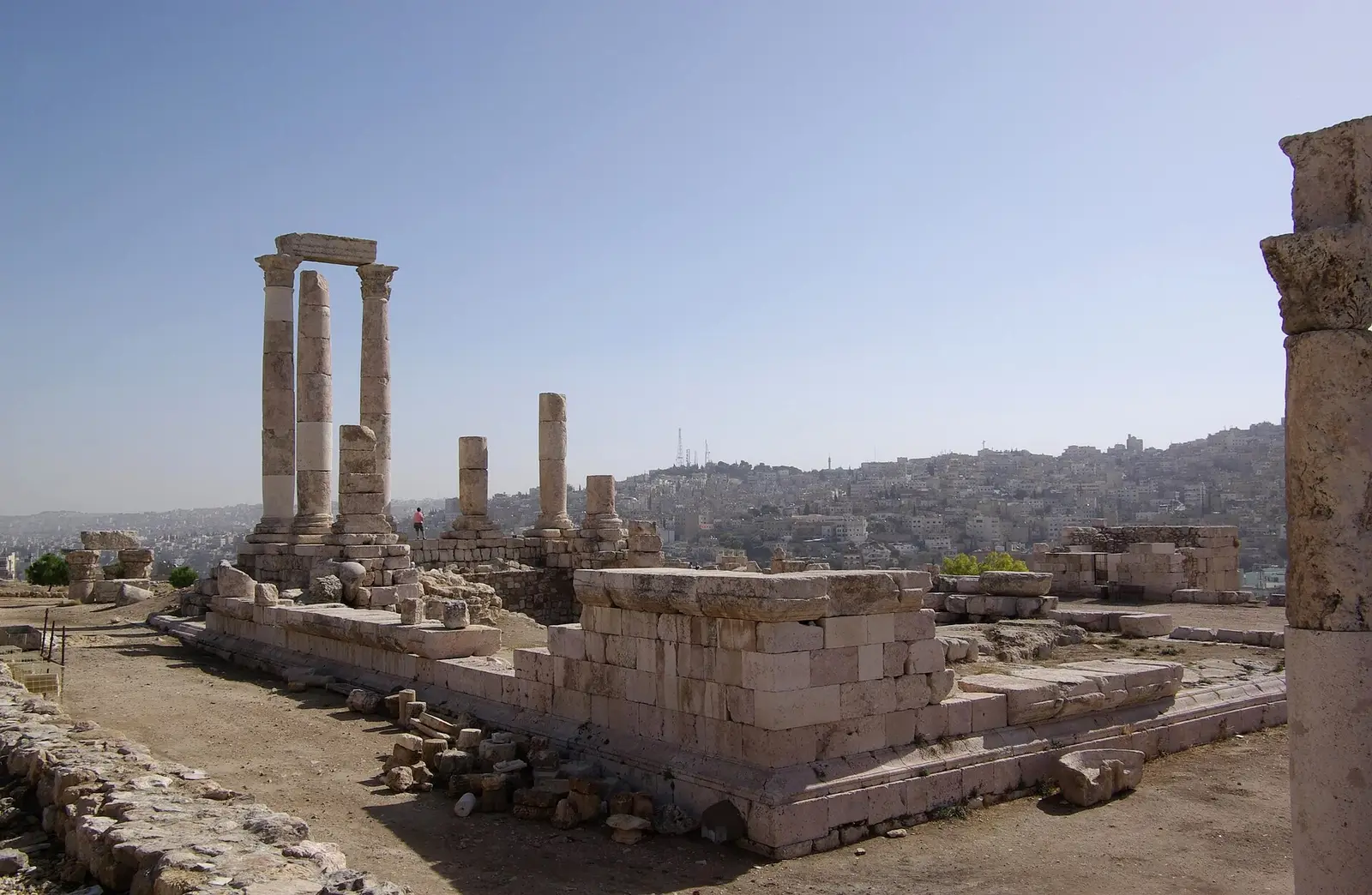

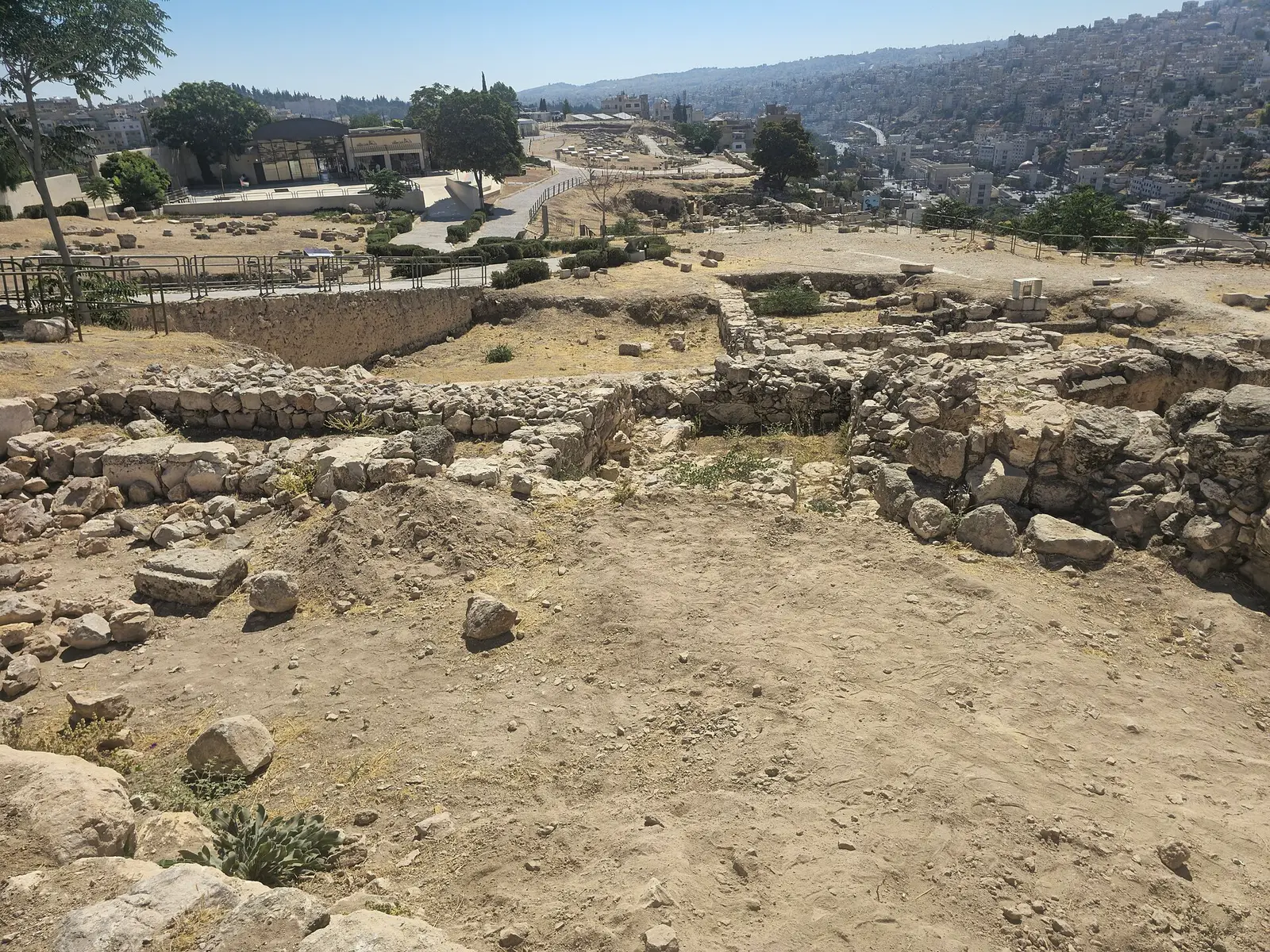
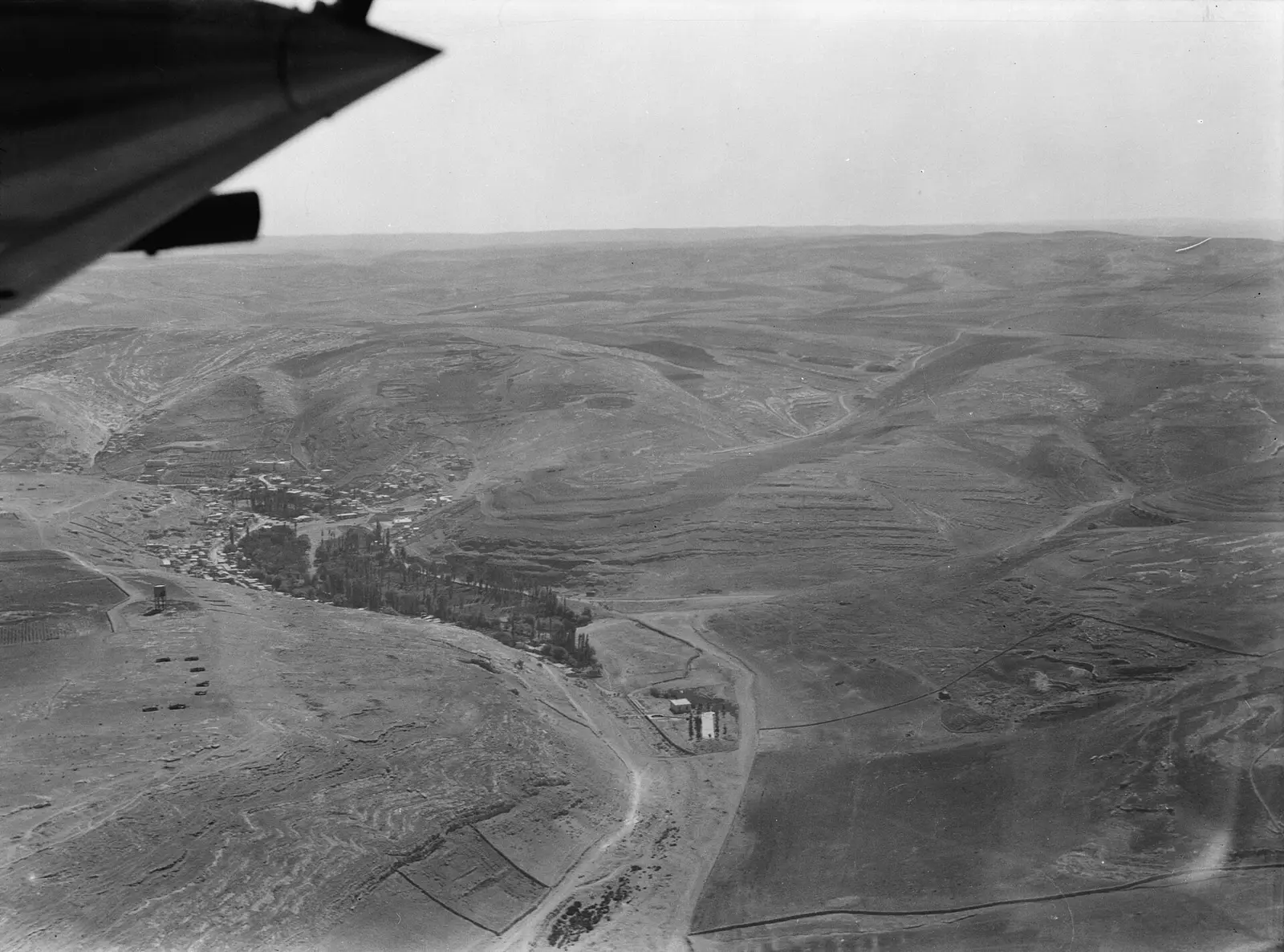
Photo credits
- Temple of Hercules on the Amman citadel – ancient Rabbah of the Ammonites. Today · 2009 · Berthold Werner · CC BY-SA 3.0 · Source
- Amman from the air – biblical Rabbah today. Today · 2009 · High Contrast · CC BY 3.0 DE · Source
- Ruins on the Amman citadel. Excavation · 2026 · Mohammad hajeer · CC BY-SA 4.0 · Source
- Amman from the air, from the west, 1932. Back then · c. 1932 · G. Eric and Edith Matson Photograph Collection, Library of Congress, Prints & Photographs Division, LC-DIG-matpc-15934 · Public Domain · Source


Photos from Wikimedia Commons and the Matson Collection of the Library of Congress, resized. Tap a photo to enlarge it. Captions AI-assisted – How the texts are made
About the place
Ammon was the land of the Ammonites east of the Jordan, northeast of Moab between the Arnon and Jabbok rivers and reaching east to the Syrian Desert.1 Its capital was Rabbah, today Amman, the capital of Jordan (2 Samuel 11:1).1,2 The Bible traces the Ammonites back to the son of Lot’s younger daughter (Genesis 19:38).1,2 Their language was close to Hebrew and used the old Canaanite-Phoenician alphabet, so Israelites could probably read it.1
What the name means
The Hebrew name originally meant something like “son of my father’s clan” and points to a kinship between Ammonites and Israelites.1 From the middle of the second millennium BC the name turns up in texts from Ugarit, Mari, Amarna and Alalakh.1
Ammon on Israel’s way into the land
Moses was told not to touch the land of the Ammonites, because God had given it to the descendants of Lot (Deuteronomy 2:19, 37).1,2 Giants once lived there, whom the Ammonites called Zamzummim (Deuteronomy 2:20–21).1,2 Because Ammonites and Moabites had not met Israel with bread and water and had hired Balaam against them, they were not to enter the assembly of the LORD (Deuteronomy 23:3–4).1,2
Ammon in the time of the judges and of Saul
The Ammonites oppressed Gilead and crossed the Jordan to fight Judah, Benjamin and Ephraim, until Jephthah defeated them (Judges 10:7–9; 11:32–33).1,2 Around 1020 BC the Ammonite king Nahash besieged Jabesh-gilead; Saul came to the town’s aid and defeated the Ammonites (1 Samuel 11:1–11).1,2
Ammon under David and Solomon
Joab laid siege to the capital Rabbah, David captured it and had the Ammonite king’s crown placed on his own head (2 Samuel 12:26–30).1,2 Later Shobi, a son of Nahash, helped David as he fled from Absalom (2 Samuel 17:27).1,2 The mother of Solomon’s son Rehoboam was an Ammonite (1 Kings 14:21).1,2
Ammon up to the exile
Under Jehoshaphat, Ammonites joined Moabites and Meunites against Judah but destroyed one another, and Judah spent three days gathering the spoil (2 Chronicles 20:1, 22–25).1,2 In 593 BC envoys from Ammon met King Zedekiah in Jerusalem to plan a revolt against Babylon (Jeremiah 27:3).1,2 After Jerusalem fell, Judeans found refuge in Ammon, and Baalis, king of the Ammonites, had Ishmael murder the governor Gedaliah (Jeremiah 40:11, 14; 41:2, 15).1,2
Ammon in the Bible
Ammon appears in 44 sections across 19 books of the Bible – first in Genesis 19:38, last in Zephaniah 2:8. Most often in 2 Samuel (7), Jeremiah (6) and Judges (5).
Genesis
mentioned: 19:38
Numbers
mentioned: 21:24
Deuteronomy
mentioned: 2:19; 2:37; 3:11; 3:16
Joshua
mentioned: 12:2; 13:10; 13:25
Judges
mentioned: 3:13; 10:6–7; 10:9; 10:11; 10:17–18; 11:4–6; 11:8–9; 11:12–15; 11:27–28; 11:29–33; 11:36; 12:1–3
1 Samuel
2 Samuel
mentioned: 8:12; 10:1–3; 10:6; 10:8; 10:10–11; 10:14; 10:19; 11:1; 12:9; 12:26; 12:31; 17:27; 23:37
1 Kings
mentioned: 11:1; 11:7; 11:33
2 Kings
1 Chronicles
mentioned: 11:39; 18:11; 19:1–3; 19:6–7; 19:9; 19:11–12; 19:15; 19:19; 20:1; 20:3
2 Chronicles
mentioned: 12:13; 20:1; 20:10; 20:22–23; 27:5
Nehemiah
mentioned: 13:23
Psalms
mentioned: 83:7
Isaiah
mentioned: 11:14
Jeremiah
mentioned: 9:26; 25:21; 27:3; 40:11; 40:14; 41:10; 41:15; 49:1–4; 49:6
Ezekiel
mentioned: 21:20; 21:28; 25:2–3; 25:5; 25:10
Daniel
mentioned: 11:41
Amos
mentioned: 1:13; 1:15
Zephaniah
mentioned: 2:8–9
Often mentioned together
References
- Tyndale Open Bible Dictionary – Article “Ammon, Ammonites” · tyndaleopenresources.com
- Bible text: Genesis 19:38; Deuteronomy 2:19–21; Deuteronomy 2:37; Deuteronomy 23:3–4; Judges 10:7–9; Judges 11:32–33; 1 Samuel 11:1–11; 2 Samuel 11:1; 2 Samuel 12:26–30; 2 Samuel 17:27; 1 Kings 14:21; 2 Chronicles 20:1; 2 Chronicles 20:22–25; Jeremiah 27:3; Jeremiah 40:11; Jeremiah 40:14; Jeremiah 41:2; Jeremiah 41:15