Moab
- Kind
- Region
- Today
- highlands east of the Dead Sea (Jordan)
- Location
- securely identified (confidence 1000 of 1000)
When the place appears in the Bible
Map
Base map: Natural Earth (public domain), places after OpenBible.info (CC BY 4.0), © OpenStreetMap (ODbL) · All sources and licences
Notes and sources for this map
Location after OpenBible.info
Pictures
Today: the place and its landscape as they look today · Back then: photographs from around 1900–1940 (Matson Collection), before modern development
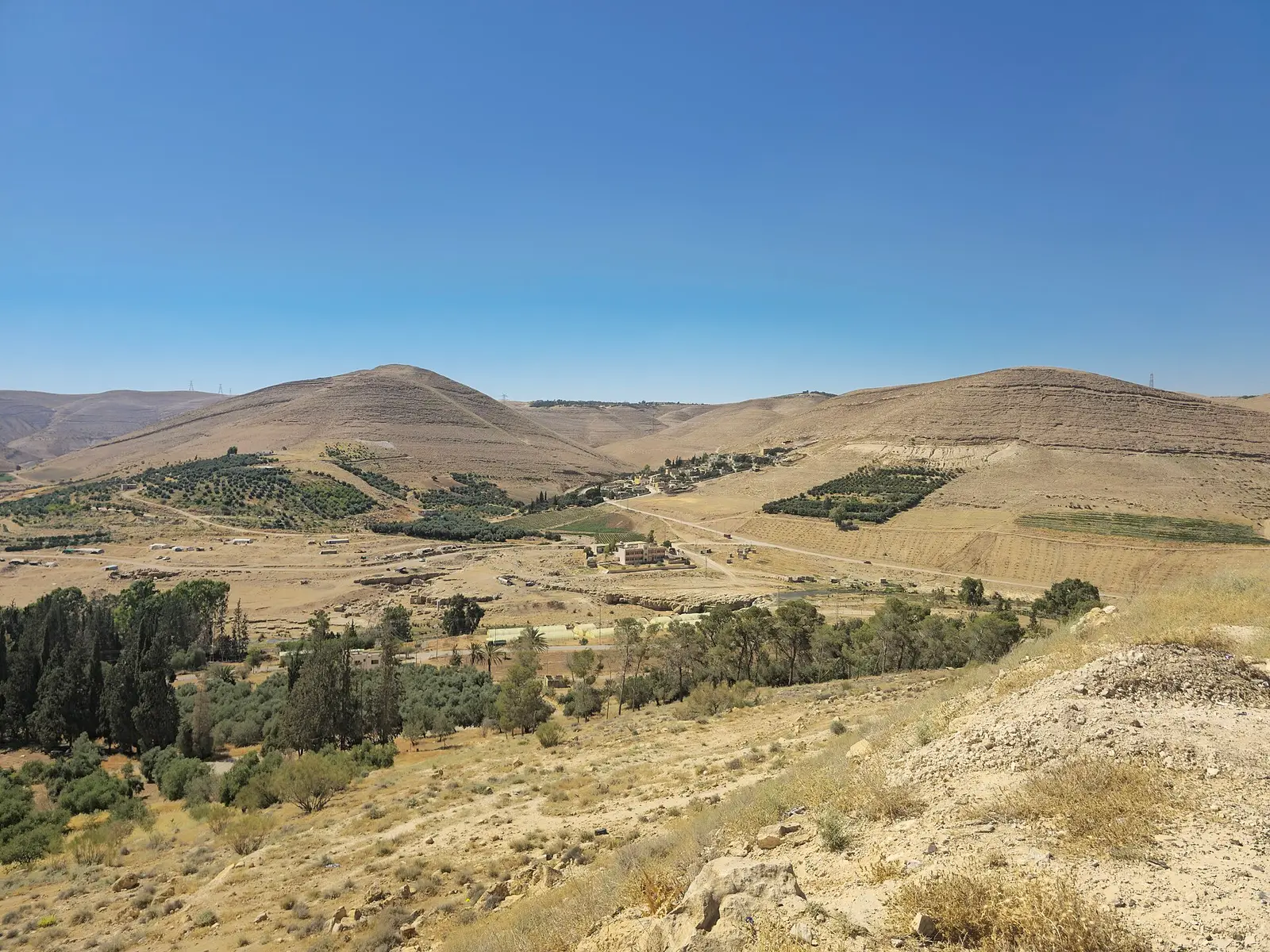
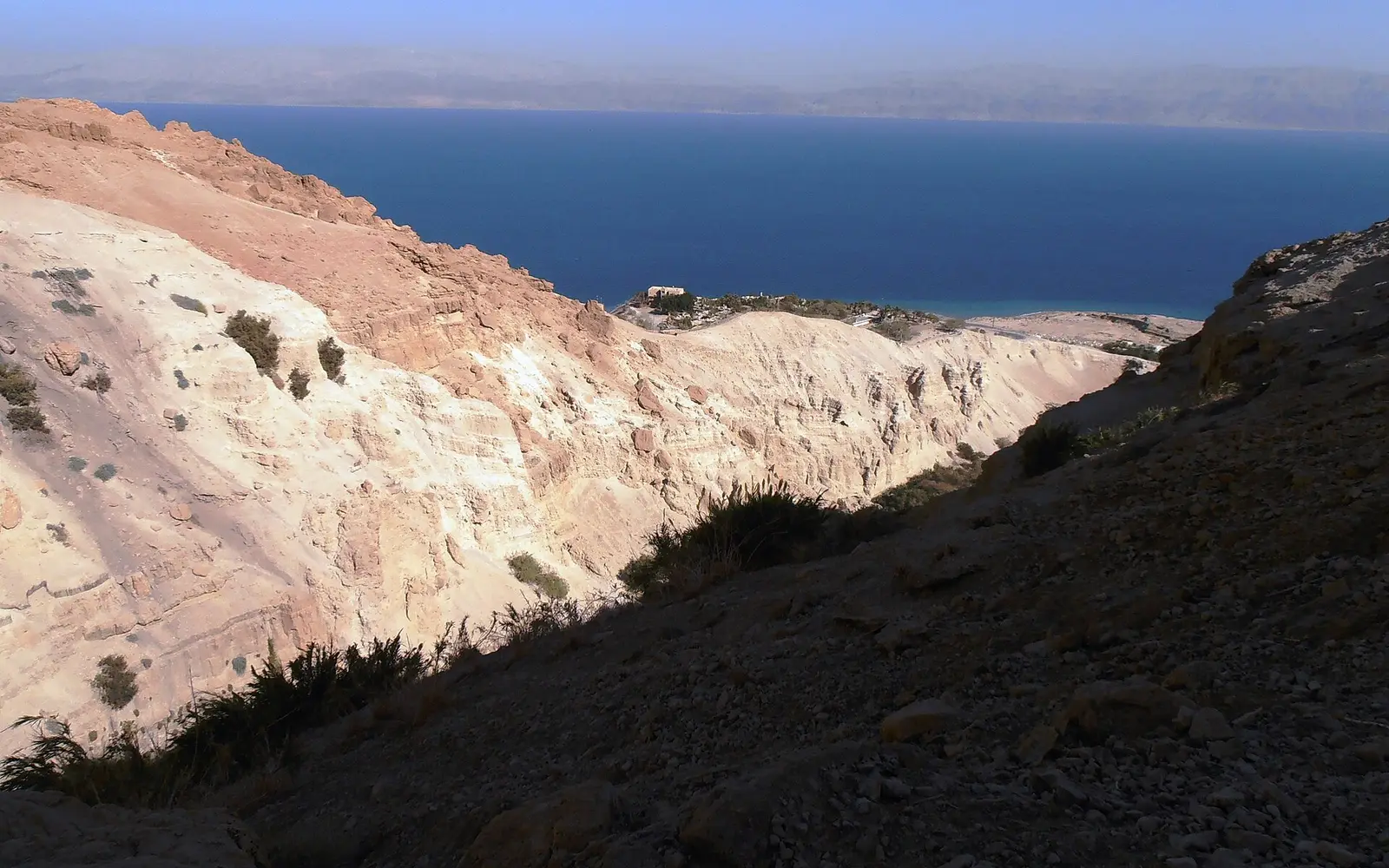
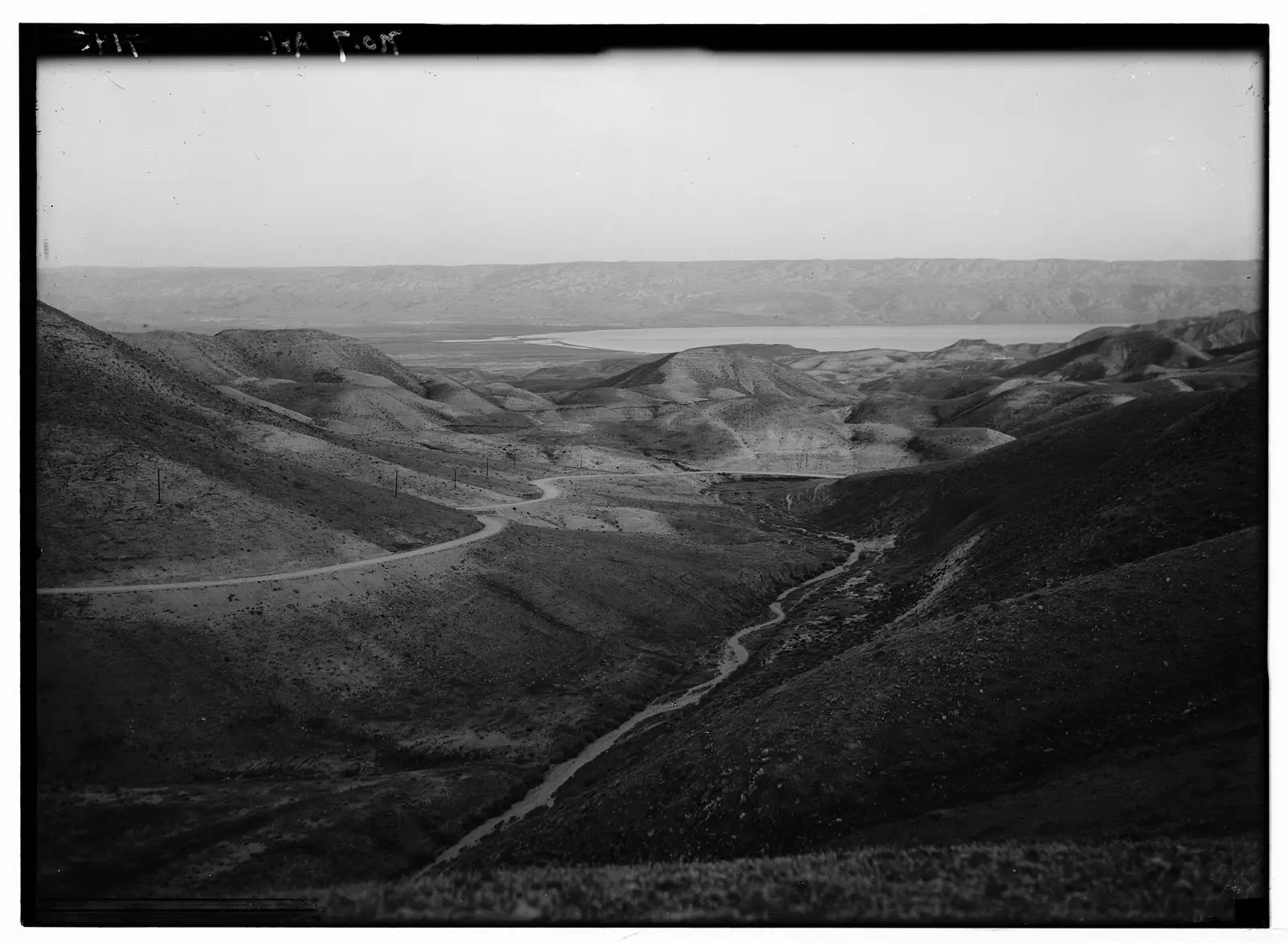
Photo credits
- Hill country by Wadi al-Wala near Dhiban, biblical Dibon, on the Moabite plateau north of the Arnon. Today · 2026 · Mohammad hajeer · CC BY-SA 4.0 · Source
- View from En Gedi across the Dead Sea to the mountains of Moab on the eastern shore. Today · 2011 · ekeidar · CC BY-SA 3.0 · Source
- The Dead Sea with the mountains of Moab beyond, seen from the Judean wilderness, between 1898 and 1946. Back then · c. 1898–1946 · G. Eric and Edith Matson Photograph Collection, Library of Congress, Prints & Photographs Division, LC-DIG-matpc-05367 · Public Domain · Source


Photos from Wikimedia Commons and the Matson Collection of the Library of Congress, resized. Tap a photo to enlarge it. Captions AI-assisted – How the texts are made
About the place
Moab was a small kingdom on the plateau east of the Dead Sea, in present-day Jordan; to the south the brook Zered divided it from Edom.1 The Moabites traced their descent to Moab, a son of Lot, and were long Israel’s neighbours and rivals (Genesis 19:37).1,2 Yet there were also times of peace, as the book of Ruth shows: Ruth the Moabite became David’s great-grandmother (Ruth 1:4; 4:13, 17).1,2
Where Moab was
The escarpment of the Jordan Rift separated Moab from Judah, the edge of the Syrian desert limited its farmland to the east, and the brook Zered marked the south.1 The northern border moved with the kingdom’s strength, between the area around Heshbon and the Arnon; even at its height Moab measured only about 95 by 32 kilometres.1 The King’s Highway ran across the rolling tableland, and its pastures were famous: King Mesha sent Israel’s king 100,000 lambs as tribute, along with wool from 100,000 rams (Numbers 21:21–22; 2 Kings 3:4).1,2
Moab in the Old Testament
Before Israel arrived, the Amorite king Sihon of Heshbon had taken the land north of the Arnon from the Moabites (Numbers 21:26).1,2 Balak king of Moab feared Israel and hired the diviner Balaam to curse it (Numbers 22:1–6).1,2 In the time of the judges the Moabite king Eglon oppressed Israel until Ehud killed him; later David subdued Moab, and Solomon built a high place for Chemosh, the god of the Moabites (Judges 3:12–30; 2 Samuel 8:2; 1 Kings 11:7).1,2
The end of Moab
In the ninth century BC Omri and Ahab dominated Moab; the Moabite Stone, on which King Mesha tells of this conflict, shows that Moabite was a close relative of Hebrew (2 Kings 3:4–5).1,2 Isaiah, Jeremiah and Ezekiel spoke oracles of judgment over Moab, and early in the sixth century BC Nebuchadnezzar destroyed the kingdom (Isaiah 15:1; Jeremiah 48:1; Ezekiel 25:8–11).1,2 No Moabite state ever rose again, yet after the exile the community in Jerusalem kept the rule that no Moabite be admitted to the assembly (Deuteronomy 23:3; Nehemiah 13:1).1,2
Religion
The national god of the Moabites was Chemosh; the Old Testament calls them the people of Chemosh, and the Moabite Stone presents him as a war god leading his people against their enemies (Numbers 21:29).1,2 Their religion had priests and sacrifices; in his direst need the king of Moab offered his firstborn son on the city wall (Jeremiah 48:7; 2 Kings 3:27).1,2 Richly furnished tombs, such as those at Dibon, show that the Moabites believed in life after death.1
Moab in the Bible
Moab appears in 57 sections across 22 books of the Bible – first in Genesis 36:35, last in Zephaniah 2:8. Most often in Numbers (7), Deuteronomy (5) and 2 Kings (5).
Genesis
mentioned: 36:35
Exodus
mentioned: 15:15
Numbers
mentioned: 21:11; 21:13; 21:15; 21:20; 21:26; 21:28–29; 22:3–4; 22:7–8; 22:10; 22:14; 22:21; 23:6–7; 23:17; 24:17; 25:1–2; 33:44
Deuteronomy
mentioned: 1:5; 2:8–9; 2:18; 29:1; 32:49; 34:5–6
Joshua
mentioned: 24:9
Judges
mentioned: 3:12; 3:14–15; 3:17; 3:28–30; 10:6; 11:15; 11:17–18; 11:25
Ruth
- Ruth 1:1–5 Naomi Loses Everything
- Ruth 1:6–22 Ruth Stays with Naomi
1 Samuel
mentioned: 12:9; 14:47; 22:3–4
2 Samuel
1 Kings
mentioned: 11:1; 11:7; 11:33
2 Kings
mentioned: 1:1; 3:4–5; 3:7; 3:10; 3:13; 3:18; 3:21–24; 3:26–27; 13:20; 23:13; 24:2
1 Chronicles
mentioned: 1:46; 4:22; 8:8; 11:22; 11:46; 18:2; 18:11
2 Chronicles
mentioned: 20:1; 20:10; 20:22–23
Nehemiah
mentioned: 13:23
Psalms
Isaiah
mentioned: 11:14; 15:1–2; 15:4–5; 15:8–9; 16:2–4; 16:6–8; 16:11–14; 25:10–12
Jeremiah
mentioned: 9:26; 25:21; 27:3; 40:11; 48:1–2; 48:4; 48:7; 48:9; 48:11–20; 48:24–29; 48:31; 48:33; 48:35–36; 48:38–47
Ezekiel
mentioned: 25:8–11
Daniel
mentioned: 11:41
Amos
mentioned: 2:1–3
Micah
mentioned: 6:5
Zephaniah
mentioned: 2:8–9
Often mentioned together
Events at this place
References
- Tyndale Open Bible Dictionary – Article “Moab, Moabites” · tyndaleopenresources.com
- Bible text: Genesis 19:37; Ruth 1:4; Ruth 4:13–17; Numbers 21:21–22; Numbers 21:26; Numbers 21:29; Numbers 22:1–6; Judges 3:12–30; 2 Samuel 8:2; 1 Kings 11:7; 2 Kings 3:4–5; 2 Kings 3:27; Isaiah 15:1; Jeremiah 48:1; Jeremiah 48:7; Ezekiel 25:8–11; Deuteronomy 23:3; Nehemiah 13:1