Philistia
- Kind
- Region
- Today
- coastal plain around Gaza and Ashkelon
- Location
- securely identified (confidence 1000 of 1000)
When the place appears in the Bible
Map
Base map: Natural Earth (public domain), places after OpenBible.info (CC BY 4.0), © OpenStreetMap (ODbL) · All sources and licences
Notes and sources for this map
Location after OpenBible.info
Pictures
Today: the place and its landscape as they look today
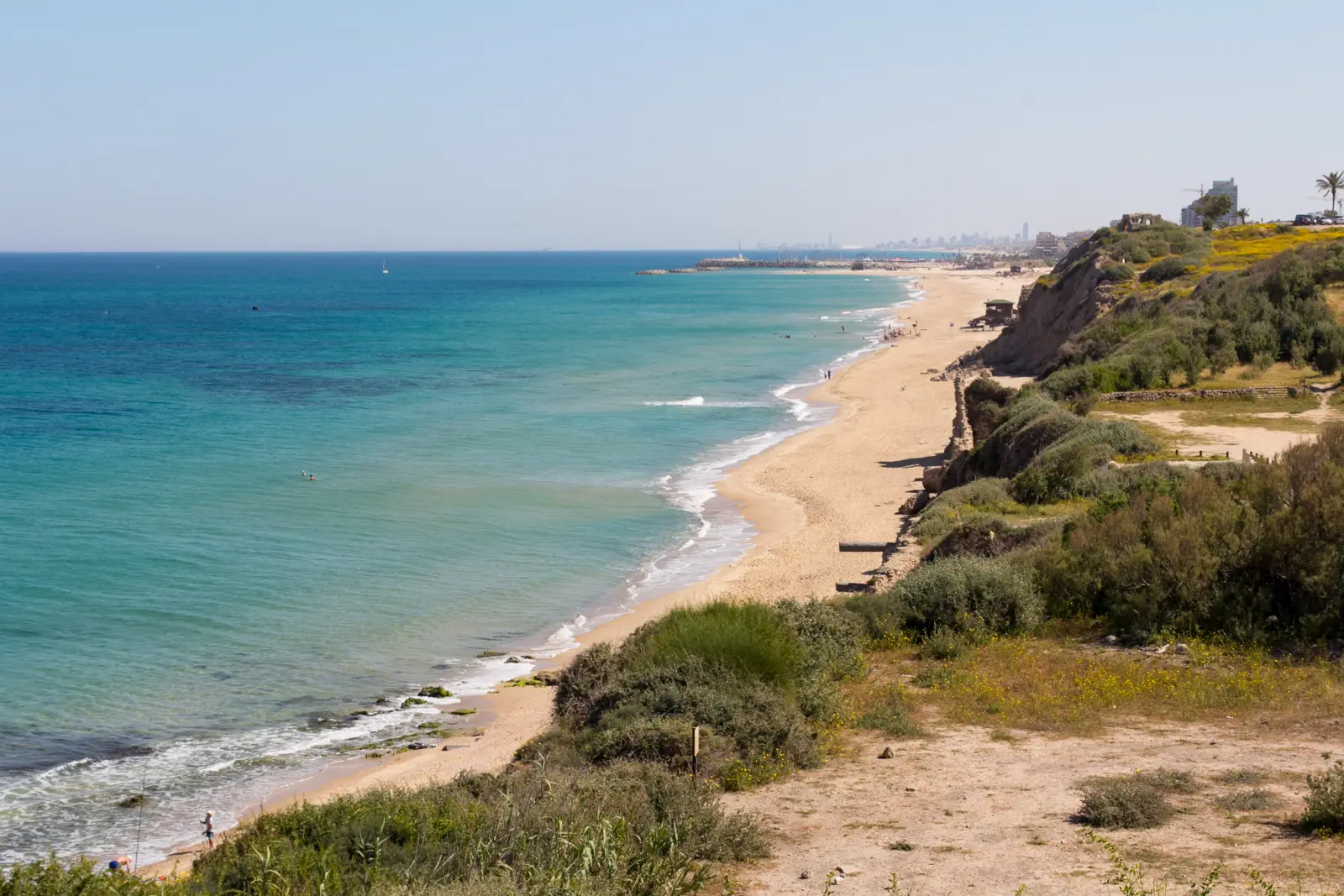
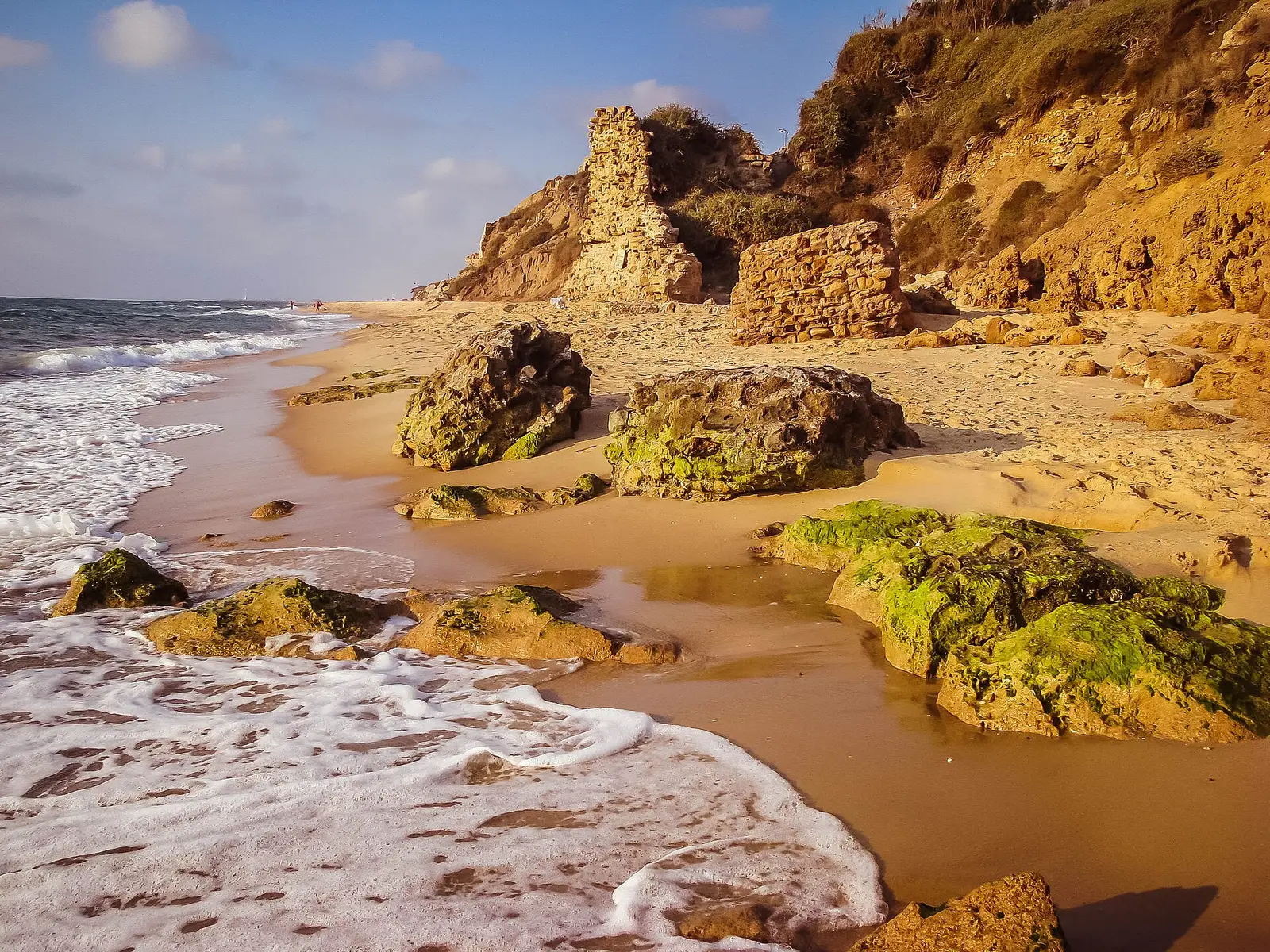
Photo credits
- Sandy beach and cliffs near Ashkelon on the Mediterranean, in the old land of the Philistines. Today · 2014 · Oren Rozen · CC BY-SA 3.0 · Source
- Eroded remains of walls on the beach in Ashkelon National Park. Today · 2009 · YunaFrolov · CC BY-SA 4.0 · Source


Photos from Wikimedia Commons and the Matson Collection of the Library of Congress, resized. Tap a photo to enlarge it. Captions AI-assisted – How the texts are made
About the place
Philistia was the small country of the Philistines on the Mediterranean coast in south-western Canaan, a fertile plain crossed by the coastal road between Egypt and the east (Exodus 15:14).1,2 According to the Bible, the Philistines came from Caphtor and lived in five independent cities, each under its own ruler (Amos 9:7; 1 Samuel 6:17).1,2 In the time of the judges and of Saul they were Israel’s most dangerous enemy, until David broke their power (2 Samuel 5:17–25).1,2 Their name lives on in the word Palestine.1
Where Philistia was
Strictly speaking, Philistia is the coastal plain stretching from the Brook of Egypt, the Wadi el-Arish, some 113 kilometres north to just beyond Joppa; near Gaza it reaches its widest point, about 48 kilometres.1 Apart from dunes along the shore the soil is fertile and yields plenty of grain and fruit.1 The coastal road brought trade but also left the land open to armies; after the exodus God deliberately did not lead Israel by this shortest route, so that they would not be drawn into war straight away (Exodus 13:17).1,2
Where the Philistines came from
According to the Bible the Philistines came from Caphtor, which is usually identified with Crete (Deuteronomy 2:23; Jeremiah 47:4; Amos 9:7).1,2 Egyptian sources call them Peleset and count them among the Sea Peoples, whom Ramesses III defeated on land and at sea in the Nile Delta.1 Reliefs on the temple at Medinet Habu show them wearing feathered headdresses and carrying long swords and round shields.1
Five cities
The Philistines had no single king; Gaza, Ashkelon, Ashdod, Gath and Ekron were independent city-states whose rulers made major decisions together (1 Samuel 6:17).1,2 In this way they made sure David did not march with them against Israel, although Achish of Gath wanted to take him along (1 Samuel 29).1,2 Their chief god in the Bible is Dagon, who had temples at Gaza and Ashdod (Judges 16:23–30; 1 Samuel 5:1–5).1,2
The Philistines and Israel
The Philistines controlled ironworking and allowed no smith in Israel, so that on the day of battle only Saul and Jonathan had sword and spear (1 Samuel 13:19–22).1,2 They captured the ark and returned it after seven months, sent out Goliath as their champion in the Valley of Elah and defeated Saul on Gilboa (1 Samuel 4:1–11; 6:1; 17:1–11; 31:1–10).1,2 David struck them down from Geba to Gezer and broke their power (2 Samuel 5:17–25).1,2
The end of the Philistines
Uzziah broke through the city walls at Gath, Jabneh and Ashdod, while Hezekiah defeated the Philistines as far as Gaza (2 Chronicles 26:6–7; 2 Kings 18:8).1,2 Jeremiah gives them a short chapter of their own (Jeremiah 47).1,2 Over time the Philistines were absorbed into Canaanite culture and vanished from the Bible and from history; what remains is their name in Palestine.1
Philistia in the Bible
Philistia appears in 21 sections across 14 books of the Bible – first in Exodus 15:14, last in Zechariah 9:6. Most often in Psalms (4), Isaiah (3) and 1 Chronicles (2).
Exodus
mentioned: 15:14
Judges
mentioned: 10:6
1 Samuel
mentioned: 31:9
2 Samuel
mentioned: 8:12
1 Chronicles
2 Chronicles
mentioned: 26:6
Psalms
mentioned: 60:8; 83:7; 87:4; 108:9
Isaiah
mentioned: 9:12; 11:14; 14:29; 14:31
Jeremiah
mentioned: 47:5
Ezekiel
Joel
mentioned: 3:4
Amos
mentioned: 6:2
Obadiah
mentioned: 1:19
Zechariah
mentioned: 9:6
Often mentioned together
Events at this place
References
- Tyndale Open Bible Dictionary – Article “Philistia, Philistines” · tyndaleopenresources.com
- Bible text: Exodus 13:17; Exodus 15:14; Deuteronomy 2:23; Judges 16:23–30; 1 Samuel 4:1–11; 1 Samuel 5:1–5; 1 Samuel 6:1; 1 Samuel 6:17; 1 Samuel 13:19–22; 1 Samuel 17:1–11; 1 Samuel 29:1–11; 1 Samuel 31:1–10; 2 Samuel 5:17–25; 2 Kings 18:8; 2 Chronicles 26:6–7; Jeremiah 47:1–7; Amos 9:7