Capernaum
- Today
- Tell Hum by the Sea of Galilee
- Location
- securely identified (confidence 842 of 1000)
- Meaning of the name
- “village of Nahum” (after Tyndale)
- Elevation
- 150 m below sea level
- Coordinates
- 32.881° N, 35.575° E
When the place appears in the Bible
Map
Base map: Natural Earth (public domain), places after OpenBible.info (CC BY 4.0), © OpenStreetMap (ODbL) · All sources and licences
Notes and sources for this map
Location after OpenBible.info
Pictures
Today: the place and its landscape as they look today · Excavation: remains from biblical times that have survived or been excavated · Back then: photographs from around 1900–1940 (Matson Collection), before modern development
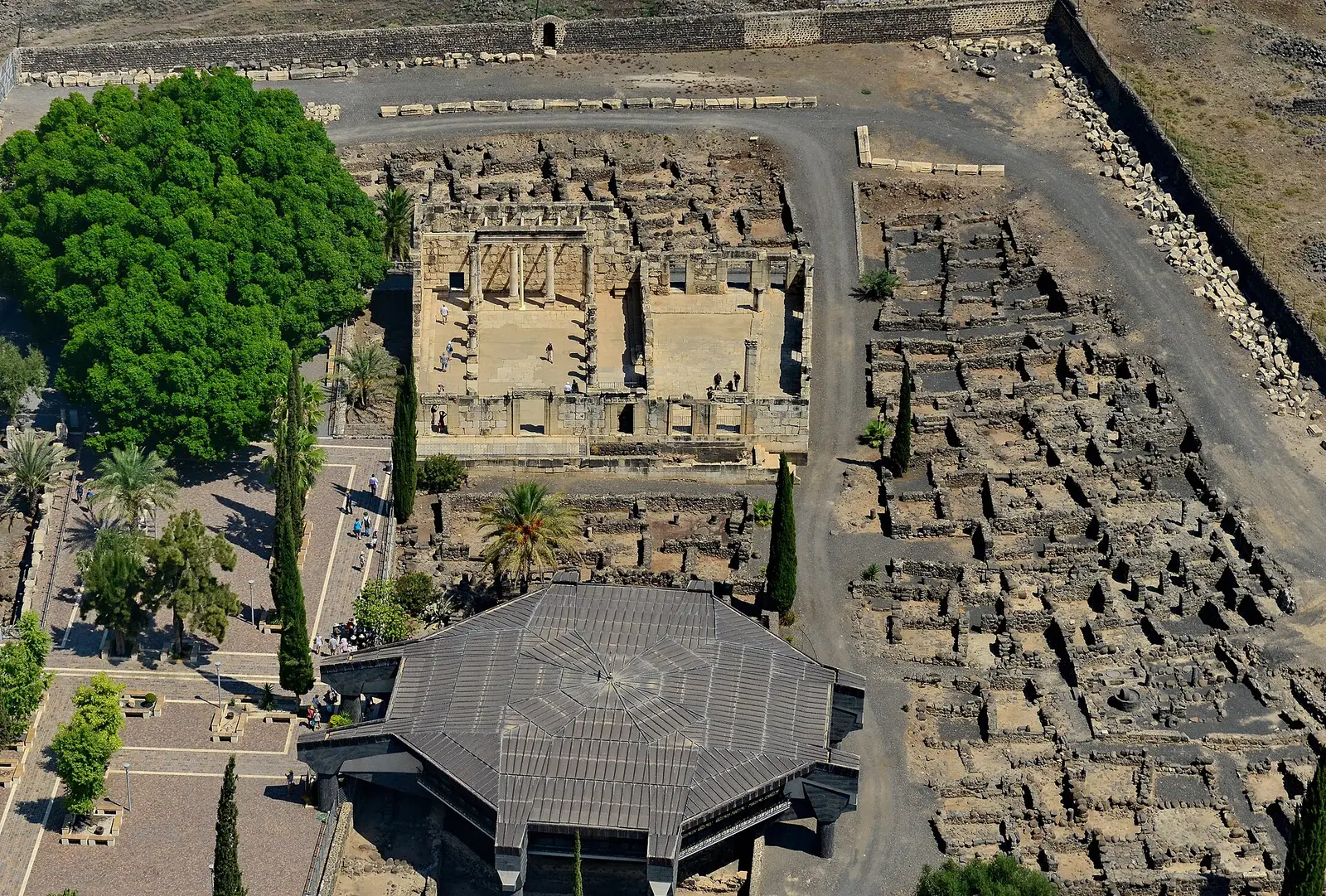 Today · 2015
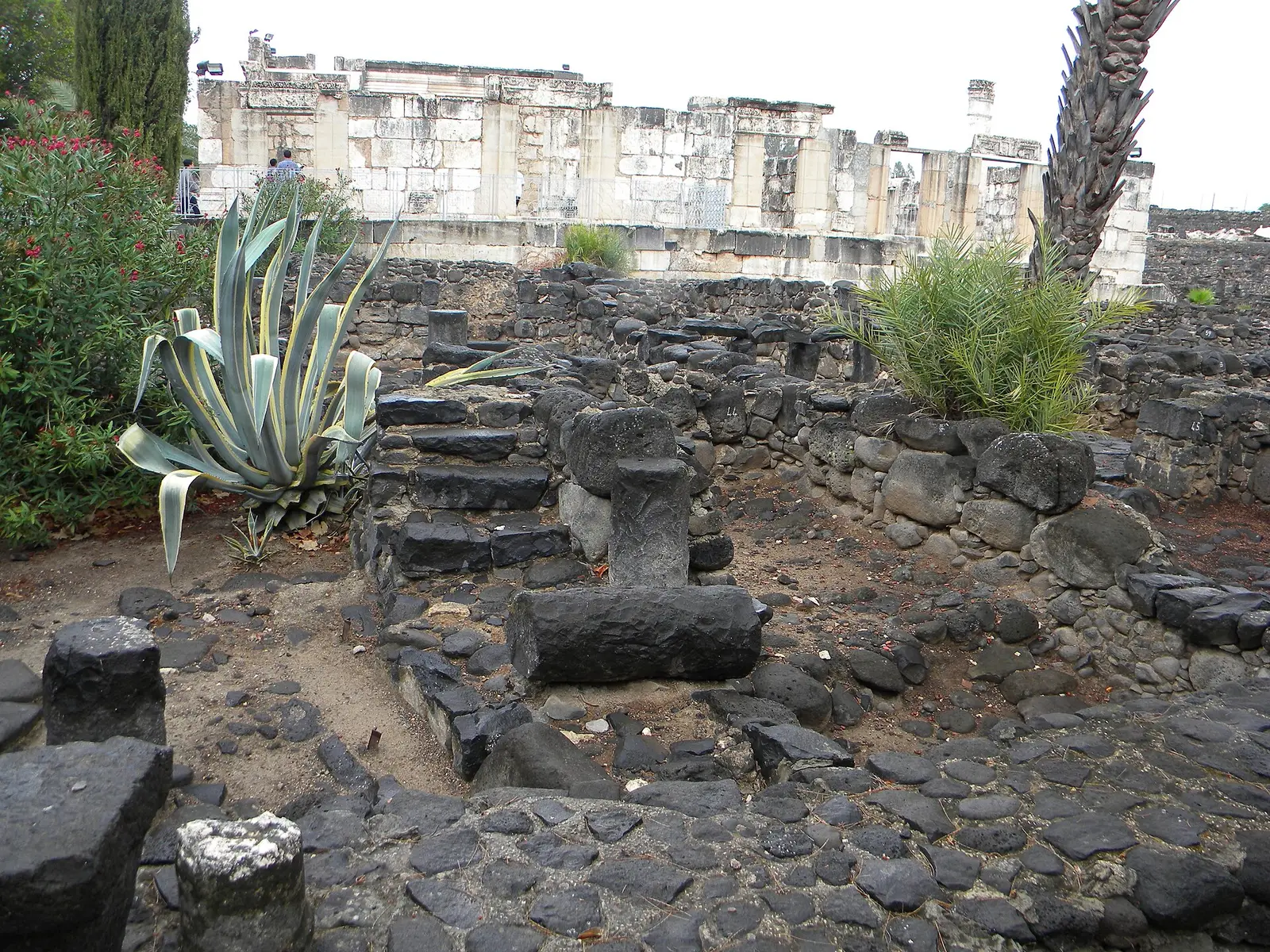 Excavation · 2014
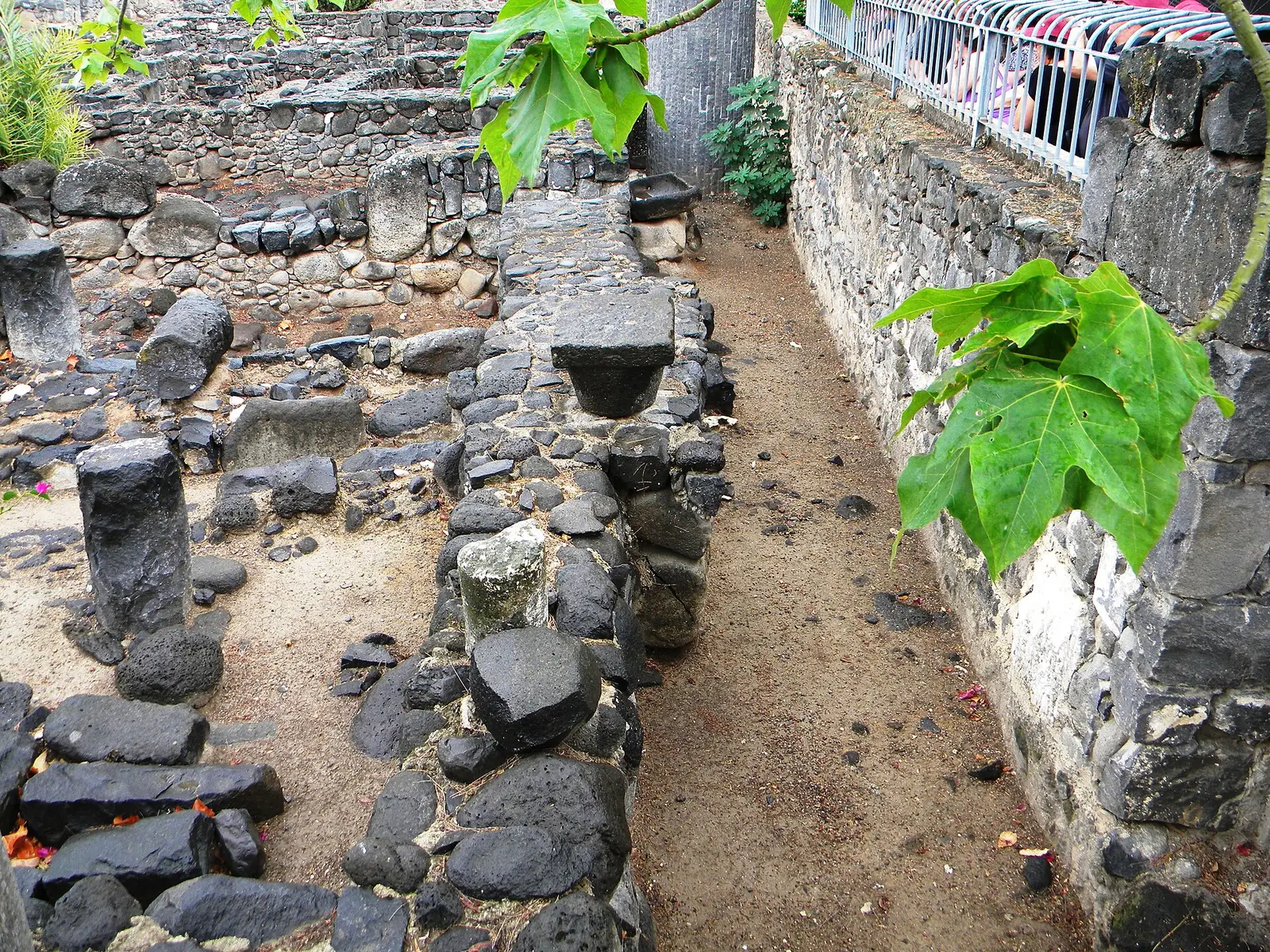 Excavation · 2014
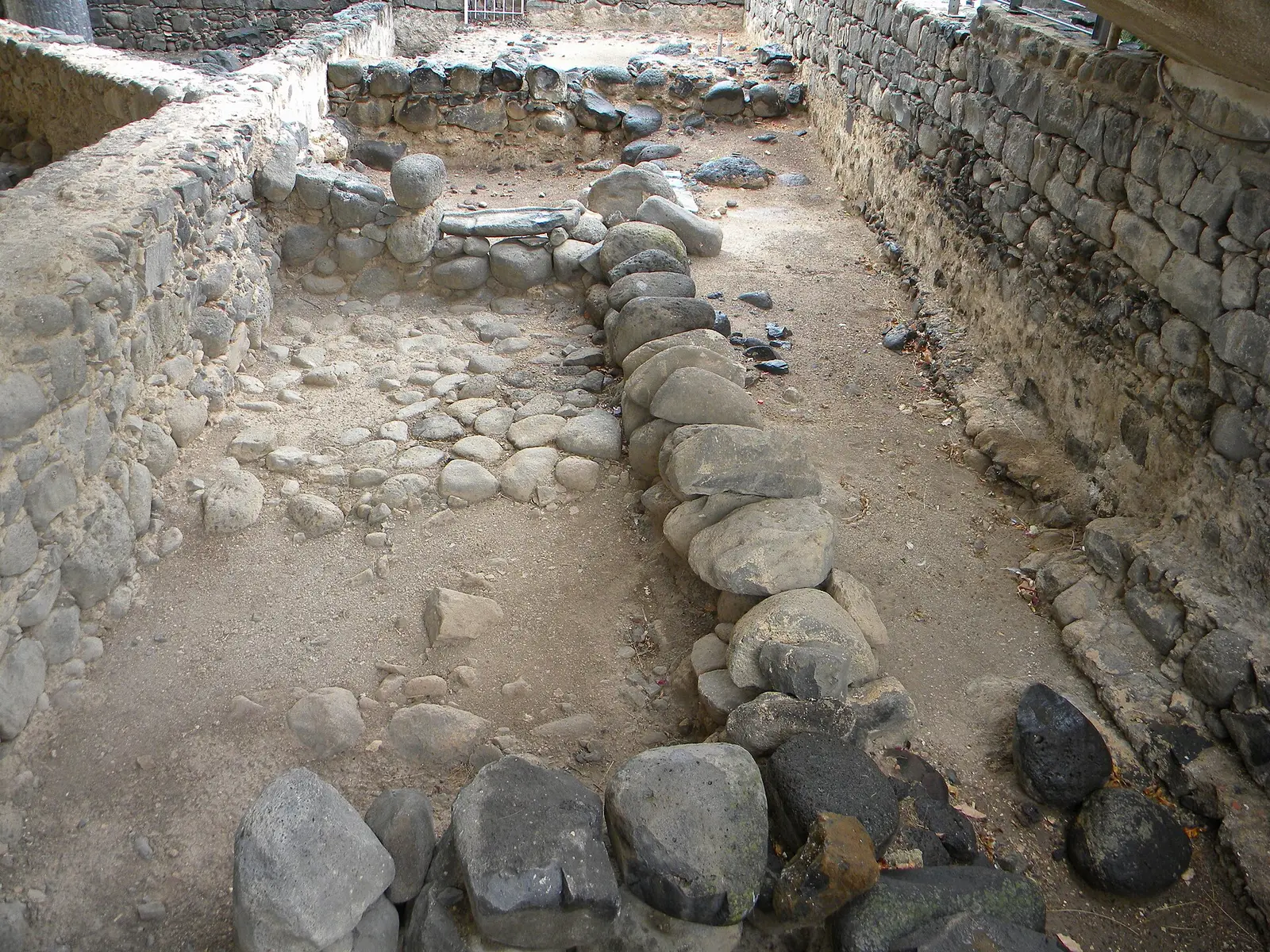 Excavation · 2014
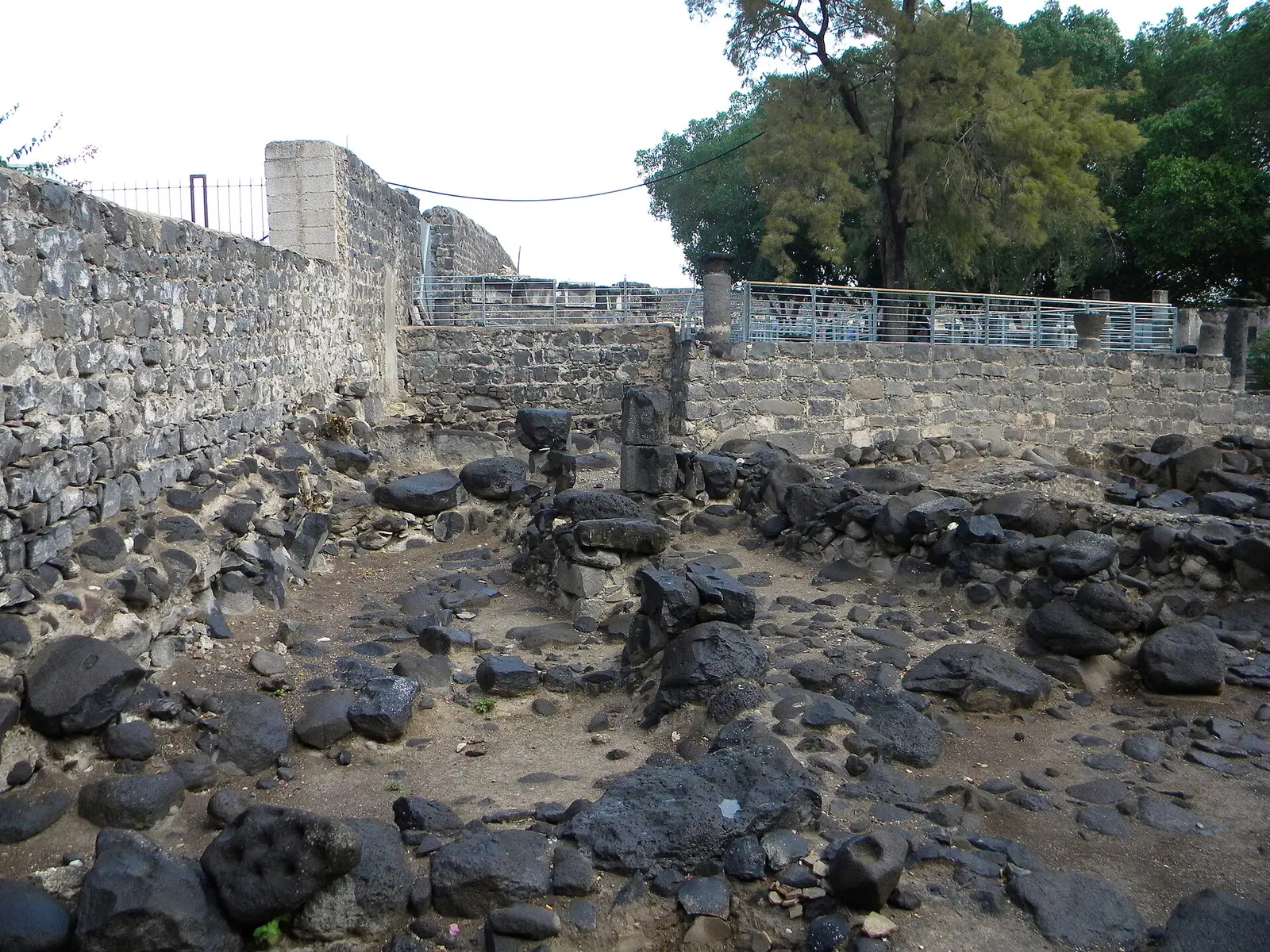 Excavation · 2014
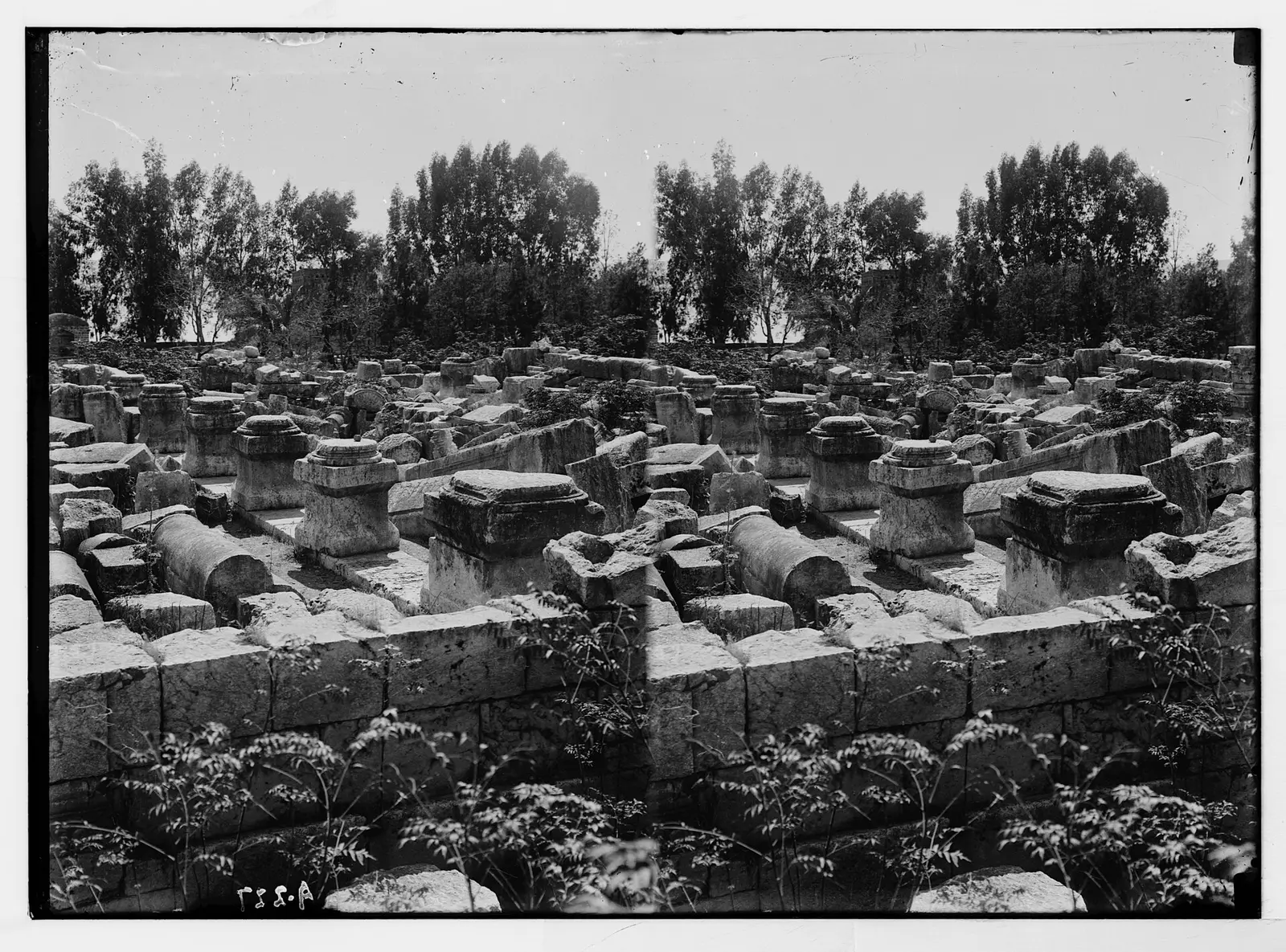 Back then · c. 1900
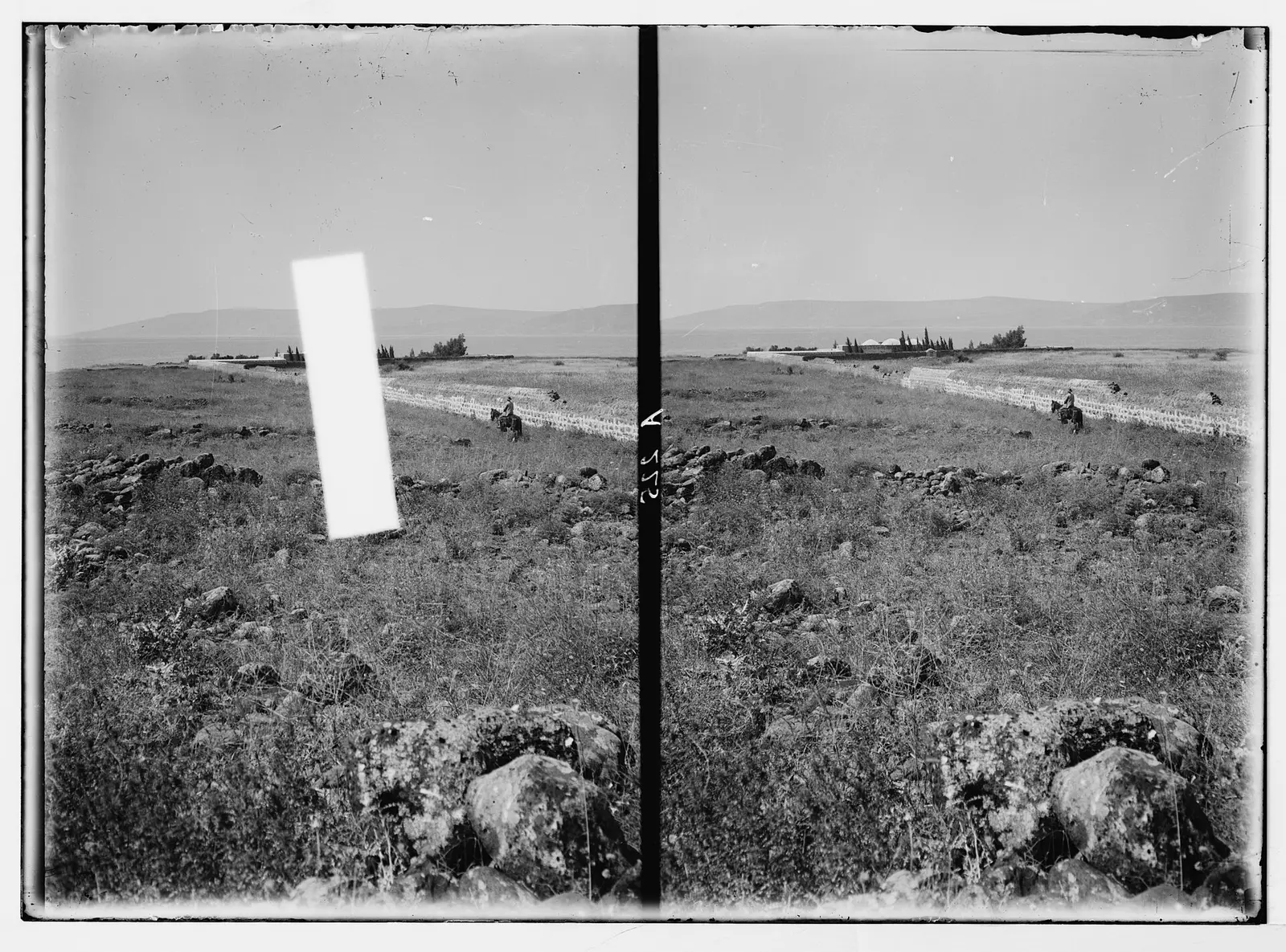 Back then · c. 1900
Photo credits
- Capernaum from the air – the town on the Sea of Galilee where Jesus lived and taught. Today · 2015 · AVRAMGR · CC BY-SA 4.0 · Source
- Ruins of Capernaum – houses and synagogue of basalt and limestone. Excavation · 2014 · Britchi Mirela · CC BY-SA 4.0 · Source
- Ruins of Capernaum. Excavation · 2014 · Britchi Mirela · CC BY-SA 4.0 · Source
- Ruins of Capernaum. Excavation · 2014 · Britchi Mirela · CC BY-SA 4.0 · Source
- Ruins of Capernaum. Excavation · 2014 · Britchi Mirela · CC BY-SA 4.0 · Source
- Remains of the Capernaum synagogue with column bases, around 1900 – a later building on older foundations. Back then · c. 1900 · G. Eric and Edith Matson Photograph Collection, Library of Congress, Prints & Photographs Division, LC-DIG-matpc-05168 · Public Domain · Source
- Capernaum from the north, around 1900. Back then · c. 1900 · G. Eric and Edith Matson Photograph Collection, Library of Congress, Prints & Photographs Division, LC-DIG-matpc-05167 · Public Domain · Source
Photos from Wikimedia Commons and the Matson Collection of the Library of Congress, resized. Tap a photo to enlarge it. Captions AI-assisted – How the texts are made
Finds from here


About the place
Capernaum lay on the northwest shore of the Sea of Galilee and is named in the Bible only in the Gospels; its name means “village of Nahum”.1 After Nazareth rejected him, Jesus made the town his home and the centre of his work in Galilee (Matthew 4:13; 9:1).1,2 Despite the many miracles done there, Capernaum did not repent, and Jesus announced judgment on it (Matthew 11:23).1,2 Excavations at Tell Hum confirm the location and uncovered a house that probably belonged to Peter.1
What the name means
Capernaum means “village of Nahum”; whether this Nahum was the prophet or someone else cannot be known.1 The Midrash Kohelet, from around AD 110, renders the Greek name as Hebrew Kaphar Nahum, which shows the town still existed in the second century.1
Where Capernaum was
The town stood by the lake in the lands of Zebulun and Naphtali; the tribe of Naphtali had settled the western shore (Matthew 4:13).1,2 Capernaum was a frontier town near the Jordan: the centurion whose servant Jesus healed belonged to a small Roman garrison of about 100 men, and Levi sat at the customs post where the area’s taxes were collected (Matthew 8:5; Mark 2:14).1,2
Capernaum in the New Testament
Here Jesus was at home, and here he did many miracles: he healed the centurion’s servant and Peter’s mother-in-law and drove out an unclean spirit in the synagogue (Mark 2:1; Matthew 8:5–13; Mark 1:21–31).1,2 Because the town still did not repent, Jesus told it, “you will be brought down to Hades” (Matthew 11:23).1,2
Excavations
After the second century Capernaum is not mentioned again until 1160, by Benjamin of Tudela; the Franciscans, who own the site, found many coins at Tell Hum, and the synagogue ruins may date from the third century AD.1 Beneath a fourth-century Jewish-Christian meeting place a house came to light that early Christians were already using as an assembly hall in the first half of the second century.1 Inscriptions and the accounts of early Christian travellers make it likely that this was Peter’s house.1
Capernaum in the Bible
Capernaum appears in 37 sections across 4 books of the Bible – first in Matthew 4:13, last in John 6:60. Most often in Matthew (14), Mark (9) and Luke (9).
Matthew
- Matthew 4:12–25 Beginning in Galilee
- Matthew 8:1–17 Healings in Capernaum
- Matthew 9:1–8 The Paralytic
- Matthew 9:9–17 Matthew and the Question of Fasting
- Matthew 9:18–34 A Daughter, a Woman and Two Blind Men
- Matthew 10:1–15 Sending Out the Twelve
- Matthew 12:1–21 Lord of the Sabbath
- Matthew 12:22–37 A House Divided
- Matthew 12:38–50 The Sign of Jonah
- Matthew 15:1–20 What Defiles a Person
- Matthew 17:24–27 The Temple Tax
- Matthew 18:1–14 Who Is the Greatest?
- Matthew 18:15–35 Restoring and Forgiving
mentioned: 11:23
Mark
- Mark 1:21–34 A Day in Capernaum
- Mark 2:1–12 The Paralytic through the Roof
- Mark 2:13–22 Levi, Fasting and New Wine
- Mark 2:23–3:6 Lord of the Sabbath
- Mark 3:20–35 Who Belongs to Jesus?
- Mark 5:21–43 Jairus’ Daughter and the Sick Woman
- Mark 7:1–23 What Makes a Person Unclean
- Mark 9:30–50 Who Is the Greatest?
mentioned: 10:1
Luke
- Luke 4:31–44 A Sabbath in Capernaum
- Luke 5:27–39 Levi and the Question of Fasting
- Luke 6:1–11 Lord of the Sabbath
- Luke 6:12–19 Choosing the Twelve
- Luke 7:1–17 The Centurion and the Widow’s Son
- Luke 8:40–56 Jairus’s Daughter and the Sick Woman
- Luke 11:14–36 A House Divided and the Sign of Jonah
John
- John 2:1–12 The Wedding at Cana
- John 6:1–21 Feeding and Walking on Water
- John 6:22–59 The Bread of Life
- John 6:60–71 Many Turn Away
mentioned: 4:46–47
Places nearby
Often mentioned together
Events at this place
- Jesus in Capernaum
- Peter’s mother-in-law and many others healed
- The man with an unclean spirit
- A stay in Capernaum
- The centurion’s servant healed
- Jesus calls Levi (Matthew)
- The question about fasting
- New wine into new wineskins
- Miracles in Capernaum: Jairus’ daughter and the sick woman
- The Twelve are chosen
- The withered hand healed
- The dispute about Beelzebul
- Dispute over commandment and tradition
- The coin in the fish’s mouth
- Teaching on humility, stumbling and reconciliation
- The Bread of Life discourse
References
- Tyndale Open Bible Dictionary – Article “Capernaum” · tyndaleopenresources.com
- Bible text: Matthew 4:13; Matthew 9:1; Matthew 11:23; Mark 2:1; Matthew 8:5–13; Mark 1:21–31; Mark 2:14