Galilee
- Kind
- Region
- Today
- northern Israel
- Location
- securely identified (confidence 1000 of 1000)
- Meaning of the name
- “circuit” (after Tyndale)
When the place appears in the Bible
Map
Base map: Natural Earth (public domain), places after OpenBible.info (CC BY 4.0), © OpenStreetMap (ODbL) · All sources and licences
Notes and sources for this map
Location after OpenBible.info
Pictures
Today: the place and its landscape as they look today
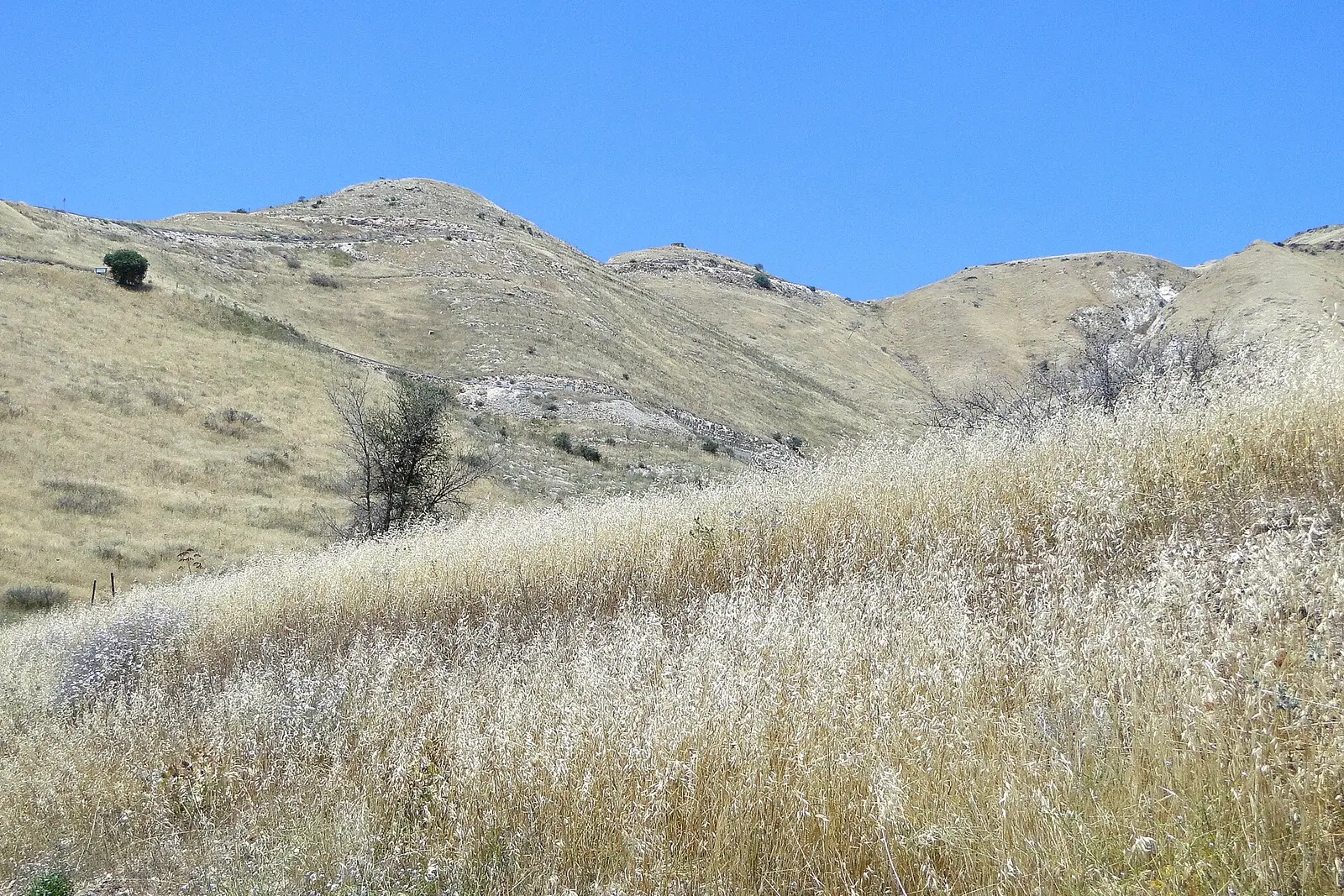
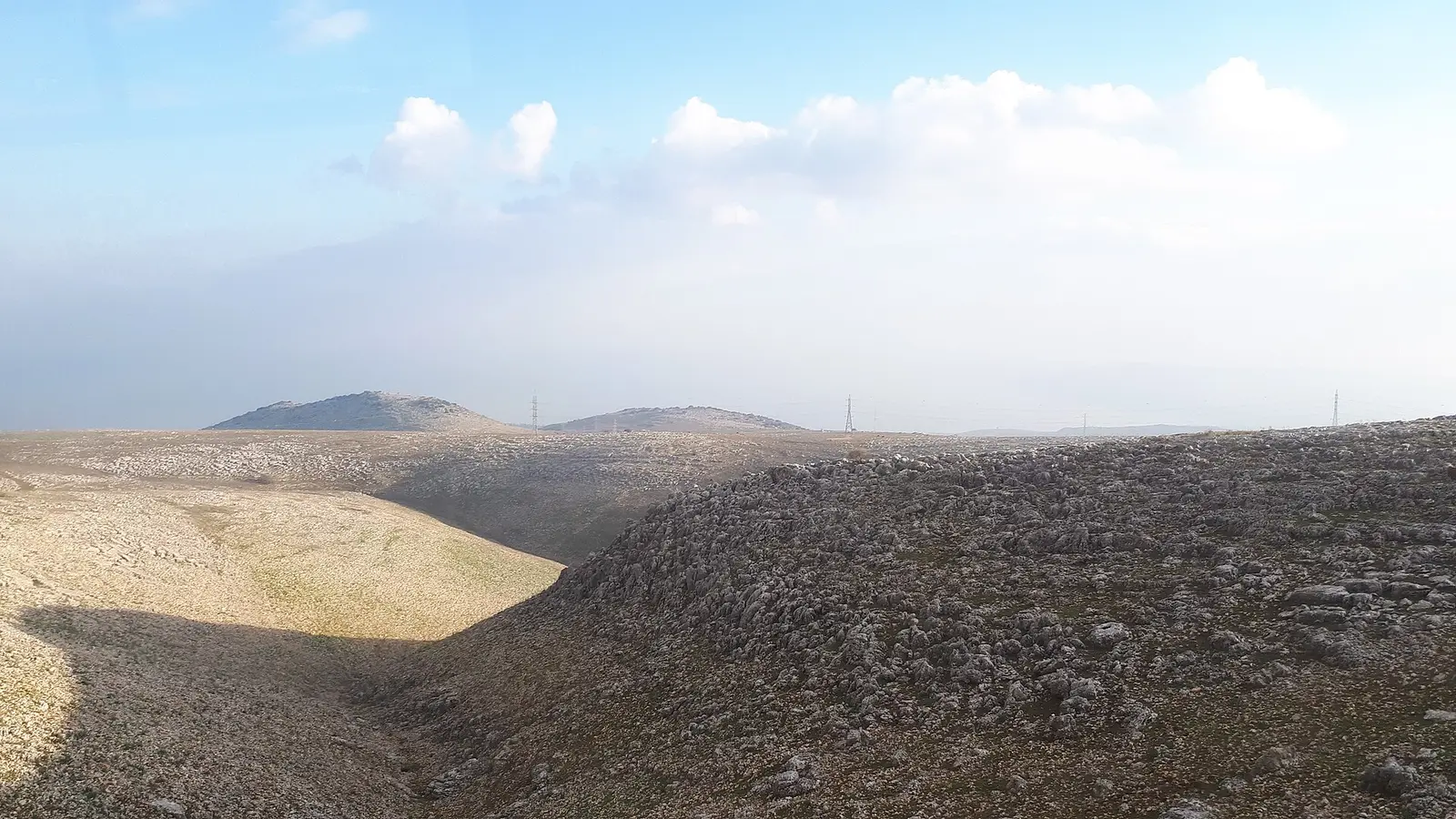
Photo credits
- Dry hills in Galilee near Tiberias. Today · 2011 · Adam Jones from Kelowna, BC, Canada · CC BY-SA 2.0 · Source
- Rugged hill country in Upper Galilee. Today · 2020 · Rakoon · CC0 1.0 · Source


Photos from Wikimedia Commons and the Matson Collection of the Library of Congress, resized. Tap a photo to enlarge it. Captions AI-assisted – How the texts are made
About the place
Galilee is the region in the north of the land between the upper Jordan and the Sea of Galilee to the east and the Jezreel plain to the south; the name comes from Hebrew words for “circle” or “district”.1 In the Old Testament the area plays a minor part, but in Jesus’ time it was densely settled and Jewish in outlook.1 Jesus grew up in Nazareth, and the first three Gospels tell mostly of his work in Galilee, much of it around the lake (Luke 4:16; Mark 1:14–20).1,2
What the name means
The name comes from Hebrew words for “circle” or “district”.1 Isaiah speaks of “Galilee of the nations”, and Matthew takes this up as “Galilee of the Gentiles” (Isaiah 9:1; Matthew 4:15).1,2 The phrase probably reflects the mixed population, since the northern tribes had not driven out the Canaanites (Judges 1:30–33).1,2
Where Galilee was
To the east the upper Jordan and the Sea of Galilee bounded the region, to the south the Jezreel plain; to the west it reached the Mediterranean and Carmel, while its northern edge shifted over time.1 Under Roman rule Galilee measured some 40 to 50 kilometres from east to west and 55 to 65 kilometres from north to south.1 Upper Galilee rises in places above 900 metres, Lower Galilee falls steeply to the lake, and the land is cooler and more fertile than the south.1
Galilee in the Old Testament
Galilee first appears as the location of Kedesh in the hill country of Naphtali, a city of refuge (Joshua 20:7).1,2 Solomon gave towns in Galilee to Hiram king of Tyre, and later the region became a borderland that took the brunt of Aramean attacks (1 Kings 9:11; 15:20).1,2 In 732 BC the Assyrian Tiglath-pileser conquered Galilee and deported its people to Assyria (2 Kings 15:29).1,2
Galilee in the New Testament
Jesus grew up in Nazareth, and eleven of his twelve disciples came from Galilee; only Judas Iscariot was from Judea (Luke 4:16).1,2 Capernaum was a centre of his work, many of his parables and miracles belong here, and after the resurrection he met the disciples on a mountain in Galilee and by the lake (Mark 2:1; Matthew 28:16–20; John 21:1).1,2 The ruler was Herod Antipas, who around AD 22 founded Tiberias on the lakeshore as his new capital (Luke 23:6–7).1,2
The Galileans
Galileans were Jewish in faith but of mixed descent, and their speech sounded different from that of Judea (Matthew 26:73).1,2 For this reason some in Judea looked down on them (John 1:46; 7:52).1,2
Galilee in the Bible
Galilee appears in 78 sections across 10 books of the Bible – first in Joshua 20:7, last in Acts 13:31. Most often in Matthew (26), Luke (20) and Mark (13).
Joshua
mentioned: 20:7; 21:32
1 Kings
mentioned: 9:11
2 Kings
mentioned: 15:29
1 Chronicles
mentioned: 6:76
Isaiah
mentioned: 9:1
Matthew
- Matthew 4:12–25 Beginning in Galilee
- Matthew 5:1–12 The Beatitudes
- Matthew 5:13–20 Salt, Light and the Law
- Matthew 5:21–48 “But I Tell You”
- Matthew 6:1–18 Giving, Prayer and Fasting
- Matthew 6:19–34 Treasures and Worry
- Matthew 7:1–12 Judging and Asking
- Matthew 7:13–29 Two Ways, Two Houses
- Matthew 8:1–17 Healings in Capernaum
- Matthew 9:35–38 The Harvest Is Plentiful
- Matthew 10:16–42 Sheep among Wolves
- Matthew 11:1–19 Jesus and John the Baptist
- Matthew 11:20–30 Woe and Rest
- Matthew 12:1–21 Lord of the Sabbath
- Matthew 28:16–20 The Great Commission
mentioned: 2:22; 3:13; 14:1; 15:21; 17:22; 19:1; 21:11; 26:32; 26:69; 27:55; 28:7; 28:10
Mark
- Mark 1:14–20 The First Disciples
- Mark 1:35–45 Prayer, Preaching and a Leper
- Mark 2:23–3:6 Lord of the Sabbath
- Mark 3:7–19 The Crowds and the Twelve
- Mark 9:30–50 Who Is the Greatest?
mentioned: 1:9; 1:28; 6:21; 7:24; 8:27; 14:28; 15:41; 16:7
Luke
- Luke 4:14–30 Rejected at Nazareth
- Luke 4:31–44 A Sabbath in Capernaum
- Luke 5:12–26 A Leper and a Paralytic
- Luke 6:1–11 Lord of the Sabbath
- Luke 6:12–19 Choosing the Twelve
- Luke 7:18–35 John’s Question
- Luke 7:36–50 A Sinful Woman Anoints Jesus
- Luke 8:1–21 The Sower and the Lamp
- Luke 17:11–19 Ten Lepers
mentioned: 1:26; 2:4; 2:39; 3:1; 3:19; 8:26; 9:7; 13:1–2; 23:5–7; 23:49; 23:55; 24:6
John
- John 4:1–42 The Woman at the Well
- John 4:43–54 The Official’s Son
- John 7:1–36 At the Feast of Tabernacles
- John 7:37–52 Streams of Living Water
mentioned: 1:43; 2:1; 2:11; 12:21; 21:2
Acts
mentioned: 1:11; 2:7; 5:37; 9:31; 10:37; 13:31
Often mentioned together
Events at this place
- Jesus in Galilee
- Jesus leaves Judea for Galilee
- First tour of Galilee
- A leper healed
- Jesus speaks about John the Baptist
- Woe to Chorazin and Bethsaida
- Grain on the Sabbath
- Jesus heals many
- Anointed by a sinful woman
- Second tour of Galilee
- Third tour of Galilee: the Twelve sent out
- Second prediction of death and resurrection
- The Feast of Tabernacles
- Resurrection and ascension
- Ten lepers healed
- On the coming of the kingdom
References
- Tyndale Open Bible Dictionary – Article “Galilee” · tyndaleopenresources.com
- Bible text: Isaiah 9:1; Matthew 4:15; Judges 1:30–33; Joshua 20:7; 1 Kings 9:11; 1 Kings 15:20; 2 Kings 15:29; Luke 4:16; Mark 1:14–20; Mark 2:1; Matthew 28:16–20; John 21:1; Luke 23:6–7; Matthew 26:73; John 1:46; John 7:52