Temple
- Kind
- Building
- Today
- Temple Mount, Jerusalem
- Location
- securely identified (confidence 1000 of 1000)
- Coordinates
- 31.778° N, 35.236° E
When the place appears in the Bible
Map
Base map: Natural Earth (public domain), places after OpenBible.info (CC BY 4.0), © OpenStreetMap (ODbL) · All sources and licences
Notes and sources for this map
Location after OpenBible.info
Pictures
Today: the place and its landscape as they look today
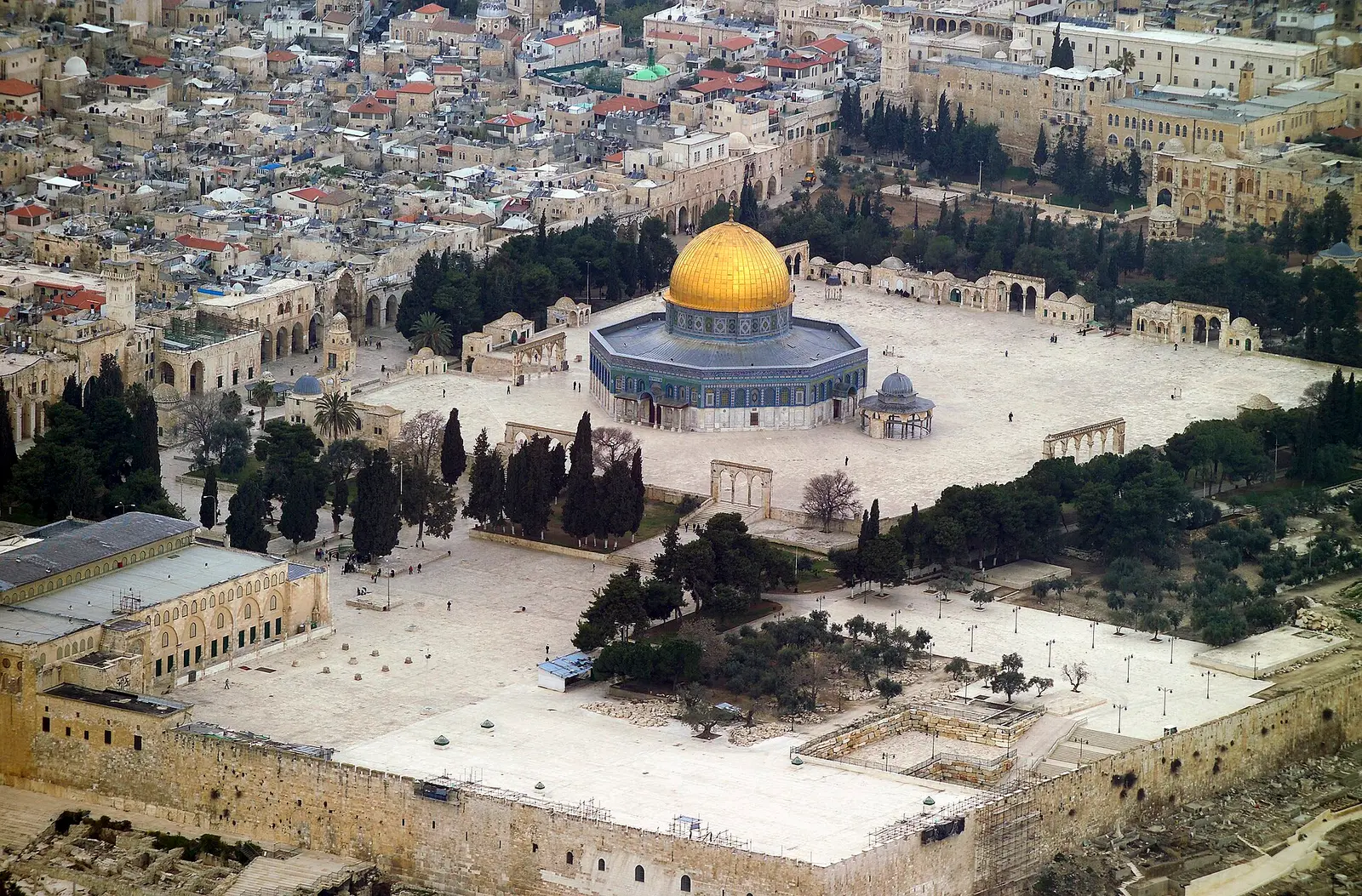
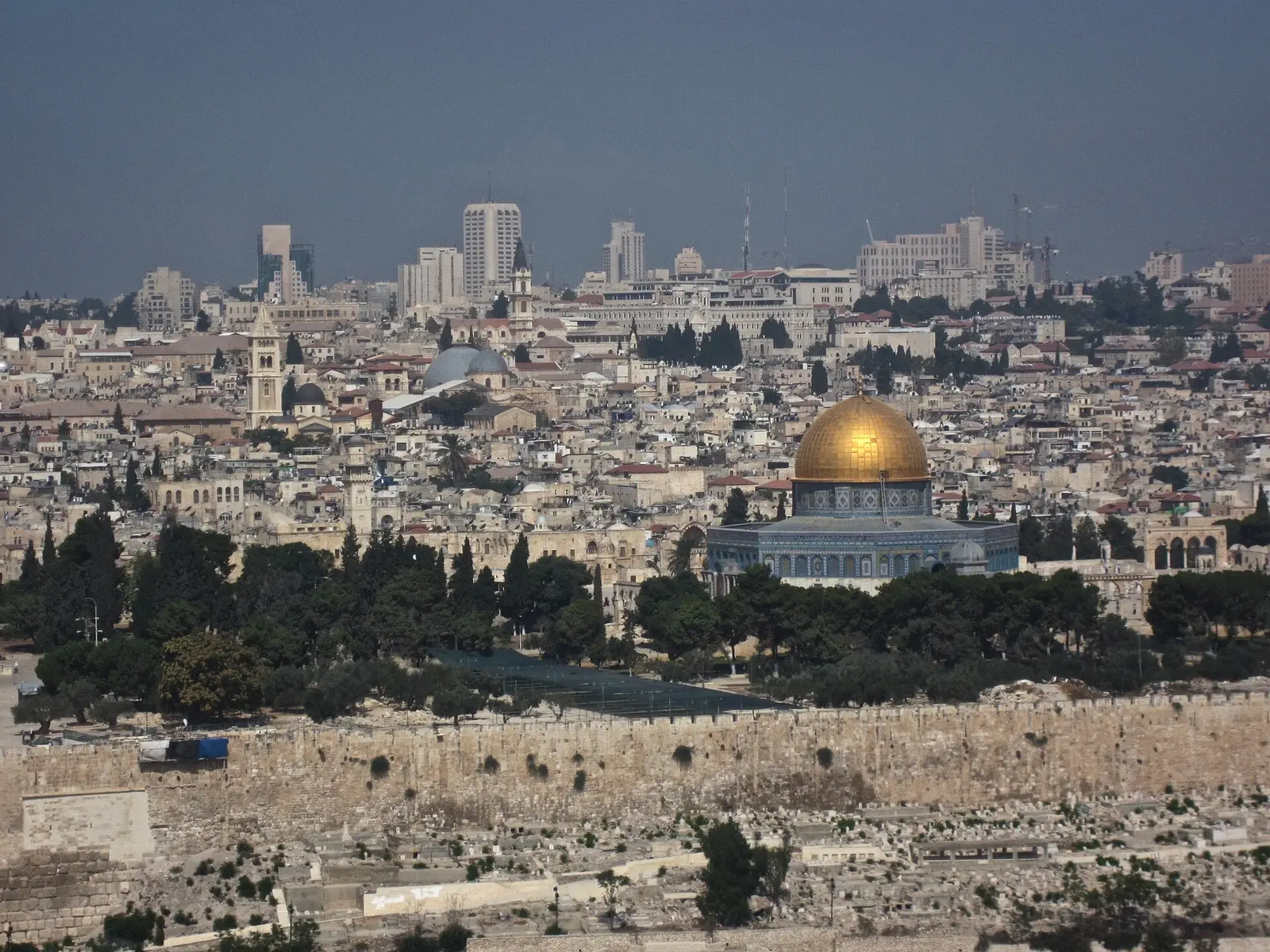
Photo credits
- The Temple Mount in Jerusalem from the air with the Dome of the Rock – the temple stood on this platform; today’s buildings are post-biblical. Today · 2007 · Godot13 · CC BY-SA 4.0 · Source
- The Dome of the Rock and the eastern wall of the Temple Mount, seen from the Mount of Olives – where the temple stood. Today · 2011 · brionv from San Francisco, United States · CC BY-SA 2.0 · Source


Photos from Wikimedia Commons and the Matson Collection of the Library of Congress, resized. Tap a photo to enlarge it. Captions AI-assisted – How the texts are made
About the place
This is the temple in Jerusalem as the Gospels and Acts know it: the sanctuary that Herod had rebuilt in place of the second temple.1 It stood where Solomon had built the house of the LORD on Mount Moriah and where the house of God was raised again after the exile (2 Chronicles 3:1; Ezra 6:7).1,2 Jesus taught here and drove out the traders, and after Pentecost the first believers met here every day (Mark 11:15; Luke 19:47; Acts 2:46).1,2 The New Testament has two Greek words for it: hieron for the whole precinct with its courts, naos for the sanctuary itself.1
Solomon’s temple
David bought the site and stored up gold, silver, timber and stone, but he was not to build the house himself, because he had shed much blood and fought great wars (1 Chronicles 21:25; 22:7–8, 14).1,2 Solomon began in the fourth year of his reign and worked on it for seven years; the house was sixty cubits long, twenty wide and thirty high (1 Kings 6:1–2, 38).1,2 At the dedication the priests carried the ark of the covenant into the Most Holy Place, and the glory of the LORD filled the house (1 Kings 8:6, 10–11).1,2
Destruction and rebuilding
After King Zedekiah rebelled against the king of Babylon, Nebuzaradan, captain of the guard, burned down the house of the LORD, and the Chaldeans carried the bronze of its pillars and furnishings to Babylon (2 Kings 24:20; 25:8–9, 13).1,2 The Persian king Cyrus allowed the returning exiles to rebuild the house of the LORD in Jerusalem (Ezra 1:2–3).1,2 Encouraged by the prophets Haggai and Zechariah, Zerubbabel and Jeshua took up the work, and the house was finished in the sixth year of King Darius (Ezra 5:1–2; 6:15).1,2
Herod’s temple
Herod had the second temple taken down, the ground levelled and the whole area enclosed by a wall of huge stone blocks, long stretches of which survive today.1 The sanctuary was in use within ten years, but the complex as a whole was not finished until AD 64, six years before the Romans destroyed it.1 The inner courts were ringed by the Court of the Gentiles; notices in Greek and Latin, two of which have been found, barred non-Jews from going further on pain of death.1
Jesus in the temple
When Jesus was twelve, His parents found Him in the temple courts sitting among the teachers, and He told them He had to be in His Father’s house (Luke 2:42–49).1,2 The devil set Him on the pinnacle of the temple, which is often placed on the south side, where the ground drops steeply into the valley (Matthew 4:5; Luke 4:9).1,2 Later He drove out the traders and money changers, saying, “My house will be called a house of prayer for all the nations”, taught there every day and foretold that not one stone would be left on another (Mark 11:15–17; Luke 19:47; Matthew 24:1–2).1,2
The first church in the temple
After Pentecost the believers kept meeting daily in the temple courts, including Solomon’s Colonnade on the east side, where Jesus too had walked (Acts 2:46; 5:12; John 10:23).1,2 At the gate called Beautiful, Peter raised up a man who had been lame from birth (Acts 3:1–8).2 Later an angry crowd seized Paul in the temple; the Roman commander had him arrested and taken into the barracks, probably the Fortress of Antonia north-west of the temple precinct (Acts 21:27–34).1,2
Temple in the Bible
Temple appears in 39 sections across 5 books of the Bible – first in Matthew 4:5, last in Acts 26:21. Most often in Luke (9), John (9) and Acts (9).
Matthew
mentioned: 4:5; 12:5–6; 21:12; 21:14–15; 21:23; 24:1; 26:55
Mark
mentioned: 11:11; 11:15–16; 11:27; 12:35; 13:1; 13:3; 14:49
Luke
mentioned: 2:27; 2:37; 2:46; 4:9; 18:10; 19:45; 19:47; 20:1; 21:5; 21:37–38; 22:52–53; 24:53
John
mentioned: 2:14–15; 5:14; 7:14; 7:28; 8:2; 8:20; 8:59; 10:23; 11:56; 18:20
Acts
mentioned: 2:46; 3:1–3; 3:8; 3:10; 4:1; 5:20–21; 5:24–25; 5:42; 21:26–30; 22:17; 24:6; 24:12; 24:18; 25:8; 26:21
Places nearby
Often mentioned together
References
- Tyndale Open Bible Dictionary – Article “Temple” · tyndaleopenresources.com
- Bible text: 2 Chronicles 3:1; Ezra 6:7; Mark 11:15–17; Luke 19:47; Acts 2:46; 1 Chronicles 21:25; 1 Chronicles 22:7–8; 1 Chronicles 22:14; 1 Kings 6:1–2; 1 Kings 6:38; 1 Kings 8:6; 1 Kings 8:10–11; 2 Kings 24:20; 2 Kings 25:8–9; 2 Kings 25:13; Ezra 1:2–3; Ezra 5:1–2; Ezra 6:15; Luke 2:42–49; Matthew 4:5; Luke 4:9; Matthew 24:1–2; Acts 5:12; John 10:23; Acts 3:1–8; Acts 21:27–34