Ezion-geber
- Kind
- Region
- Today
- near Aqaba and Eilat
- Location
- uncertain – the details show the most likely site (confidence 360 of 1000)
- Meaning of the name
- “the giant’s backbone” (after Easton)
- Coordinates
- 29.463° N, 34.860° E
When the place appears in the Bible
Map
Base map: Natural Earth (public domain), places after OpenBible.info (CC BY 4.0), © OpenStreetMap (ODbL) · All sources and licences
Notes and sources for this map
Location after OpenBible.info
Pictures possible location
Possible location: the photos show the most likely site of the place – this is not certain.
Today: the place and its landscape as they look today
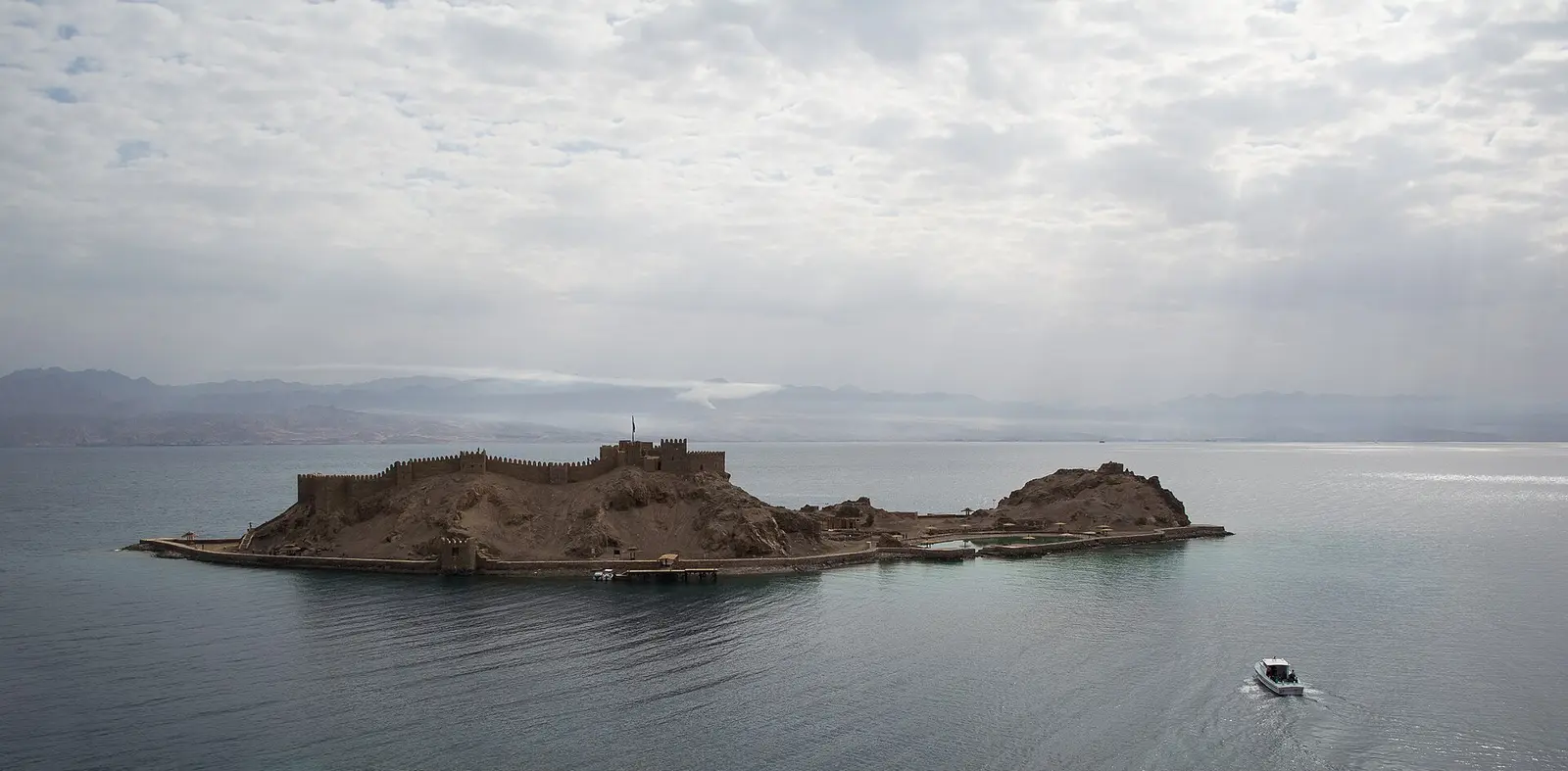
Photo credits
- Saladin’s fortress on Pharaoh’s Island in the Gulf of Aqaba – one proposal for Ezion-geber (1 Kings 9:26). Today · 2016 · Abdozaghloul · CC BY-SA 4.0 · Source

Photos from Wikimedia Commons and the Matson Collection of the Library of Congress, resized. Tap a photo to enlarge it. Captions AI-assisted – How the texts are made
About the place
Ezion-geber was a port at the northern tip of the Gulf of Aqaba, and earlier one of the places where Israel camped on the way to the plains of Moab (Numbers 33:35–36; Deuteronomy 2:8).1,2 Solomon built a fleet here, and his men sailed with the seamen of Hiram of Tyre to bring gold from Ophir (1 Kings 9:26–28).1,2 After the kingdom split the port belonged to Judah; Pharaoh Shishak burned it in 925 BC, and the ships Jehoshaphat later had built were wrecked at Ezion-geber (1 Kings 22:48).1,2 Judah could use the harbour in its strong periods, while in weaker ones it passed to others such as Edom (2 Kings 8:20–22).1,2
Ezion-geber in the Bible
Ezion-geber appears in 6 sections across 4 books of the Bible – first in Numbers 33:35, last in 2 Chronicles 20:36. Most often in 1 Kings (2) and 2 Chronicles (2).
Numbers
mentioned: 33:35–36
Deuteronomy
mentioned: 2:8
1 Kings
2 Chronicles
Places nearby
Often mentioned together
References
- Tyndale Open Bible Dictionary – Article “Ezion-Geber” · tyndaleopenresources.com
- Bible text: Numbers 33:35–36; Deuteronomy 2:8; 1 Kings 9:26–28; 1 Kings 22:48; 2 Kings 8:20–22