Lebanon
- Kind
- Region
- Today
- Lebanon mountains
- Location
- securely identified (confidence 1000 of 1000)
- Meaning of the name
- “white” (after Tyndale)
When the place appears in the Bible
Map
Base map: Natural Earth (public domain), places after OpenBible.info (CC BY 4.0), © OpenStreetMap (ODbL) · All sources and licences
Notes and sources for this map
Location after OpenBible.info
Pictures
Today: the place and its landscape as they look today
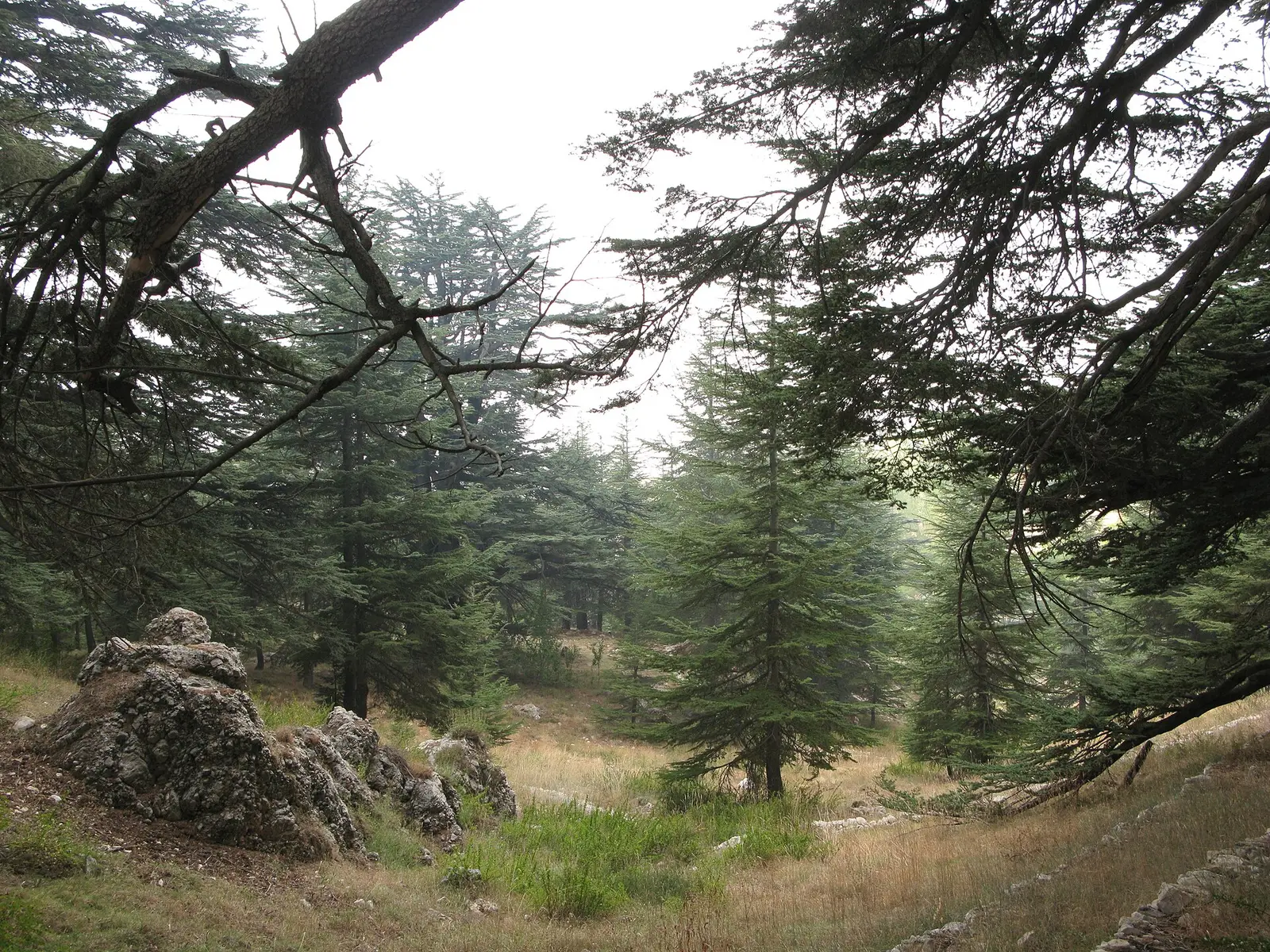
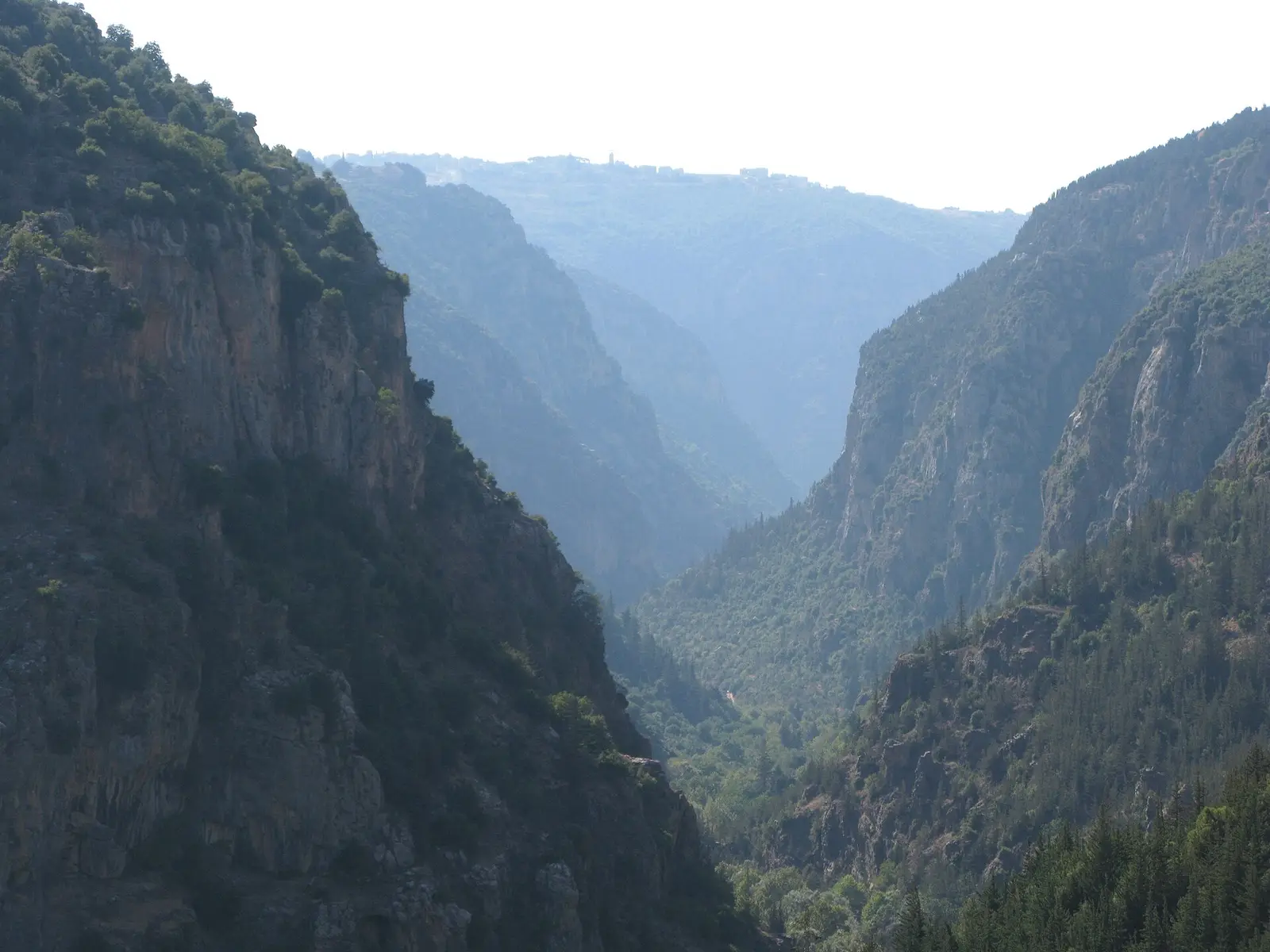
Photo credits


Photos from Wikimedia Commons and the Matson Collection of the Library of Congress, resized. Tap a photo to enlarge it. Captions AI-assisted – How the texts are made
About the place
In the Bible, Lebanon mostly means the double mountain range that begins near Tyre and runs northeast along the Mediterranean coast: Lebanon to the west and, parallel to it, Anti-Lebanon to the east.1 The name comes from the Hebrew root for “white”, probably because of the pale limestone or the snow that covers the peaks for half the year (Jeremiah 18:14).1,2 The mountains were known for their forests of cedar and fir, from which Solomon obtained timber for the temple (1 Kings 5:6–11).1,2 As a region Lebanon is named only in the Old Testament, but its coastal towns Tyre and Sidon also appear in the New.1
Where Lebanon is
The Lebanon ridge is about 160 kilometres long and rises to almost 3,000 metres in the north; in the south the gorge of the Litani separates it from the hills of Galilee.1 Between the two ranges lies a broad depression, the valley of Lebanon, today the Beqaa (Joshua 11:17).1,2 In the southern Anti-Lebanon rises Mount Hermon, which the Sidonians called Sirion and the Amorites Senir (Deuteronomy 3:9).1,2
Cedars for the temple
For the temple in Jerusalem Solomon obtained cedar and fir from Hiram, king of Tyre, and paid with wheat and oil (1 Kings 5:6–11).1,2 Hiram’s men took the logs down to the sea and floated them in rafts to a place Solomon named (1 Kings 5:9).1,2 Cedar from Lebanon was also shipped to Joppa for the second temple (Ezra 3:7).1,2
The cedars as an image
Biblical poetry uses Lebanon’s tall cedars for greatness and strength: the righteous grow like a cedar in Lebanon (Judges 9:15; Psalm 92:12; 104:16).1,2 At the same time they picture human pride, which God breaks (Psalm 29:5; Isaiah 2:13).1,2
Lebanon in history
As early as about 2600 BC Pharaoh Snefru brought 40 shiploads of cedar from Lebanon; later the Assyrians and Babylonians took large amounts of timber as tribute.1 Isaiah and Habakkuk speak of the plundering of its forests (Isaiah 14:8; Habakkuk 2:17).1,2 After that Persians, Greeks and Romans ruled the region in turn.1
Tyre and Sidon
On the well-watered coastal strip below the mountains the Phoenician towns flourished, among them Tyre, Sidon and Byblos, called Gebal in the Bible; Ezekiel 27 describes their far-reaching trade in detail.1,2 Jesus went into the region of Tyre and Sidon and met a woman there who was a Syrophoenician (Mark 7:24–31).1,2
Lebanon in the Bible
Lebanon appears in 44 sections across 16 books of the Bible – first in Deuteronomy 1:7, last in Zechariah 11:1. Most often in Isaiah (9), Psalms (5) and Song of Songs (4).
Deuteronomy
Joshua
Judges
mentioned: 9:15
1 Kings
mentioned: 4:33; 5:6; 5:9; 5:14; 9:19
2 Kings
2 Chronicles
mentioned: 2:8; 2:16; 8:6; 25:18
Ezra
mentioned: 3:7
Psalms
mentioned: 29:5–6; 37:35; 72:16; 92:12; 104:16
Song of Songs
mentioned: 3:9; 4:8; 4:11; 4:15; 5:15; 7:4
Isaiah
mentioned: 2:13; 10:34; 14:8; 29:17; 33:9; 35:2; 37:24; 40:16; 60:13
Jeremiah
mentioned: 18:14; 22:6; 22:20; 22:23
Ezekiel
mentioned: 17:3; 27:5; 31:3; 31:15–16
Hosea
mentioned: 14:5–7
Nahum
mentioned: 1:4
Habakkuk
mentioned: 2:17
Zechariah
Often mentioned together
References
- Tyndale Open Bible Dictionary – Article “Lebanon” · tyndaleopenresources.com
- Bible text: Jeremiah 18:14; Joshua 11:17; Deuteronomy 3:9; 1 Kings 5:6–11; Ezra 3:7; Judges 9:15; Psalms 92:12; Psalms 104:16; Psalms 29:5; Isaiah 2:13; Isaiah 14:8; Habakkuk 2:17; Ezekiel 27:1–36; Mark 7:24–31