Salt Sea
- Kind
- Water
- Today
- Dead Sea
- Location
- securely identified (confidence 1000 of 1000)
When the place appears in the Bible
Map
Base map: Natural Earth (public domain), places after OpenBible.info (CC BY 4.0), © OpenStreetMap (ODbL) · All sources and licences
Notes and sources for this map
Location after OpenBible.info
Pictures
Today: the place and its landscape as they look today
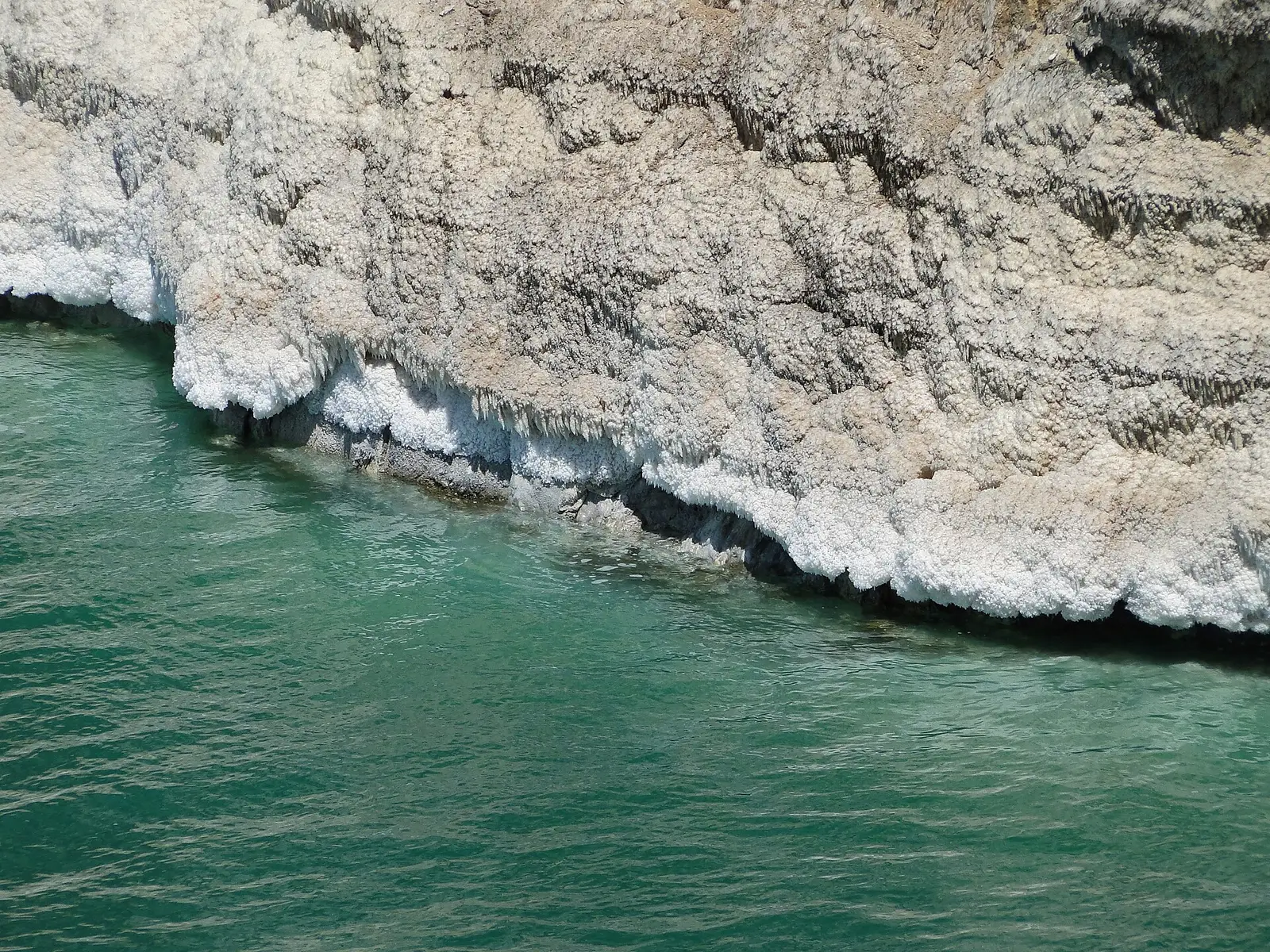
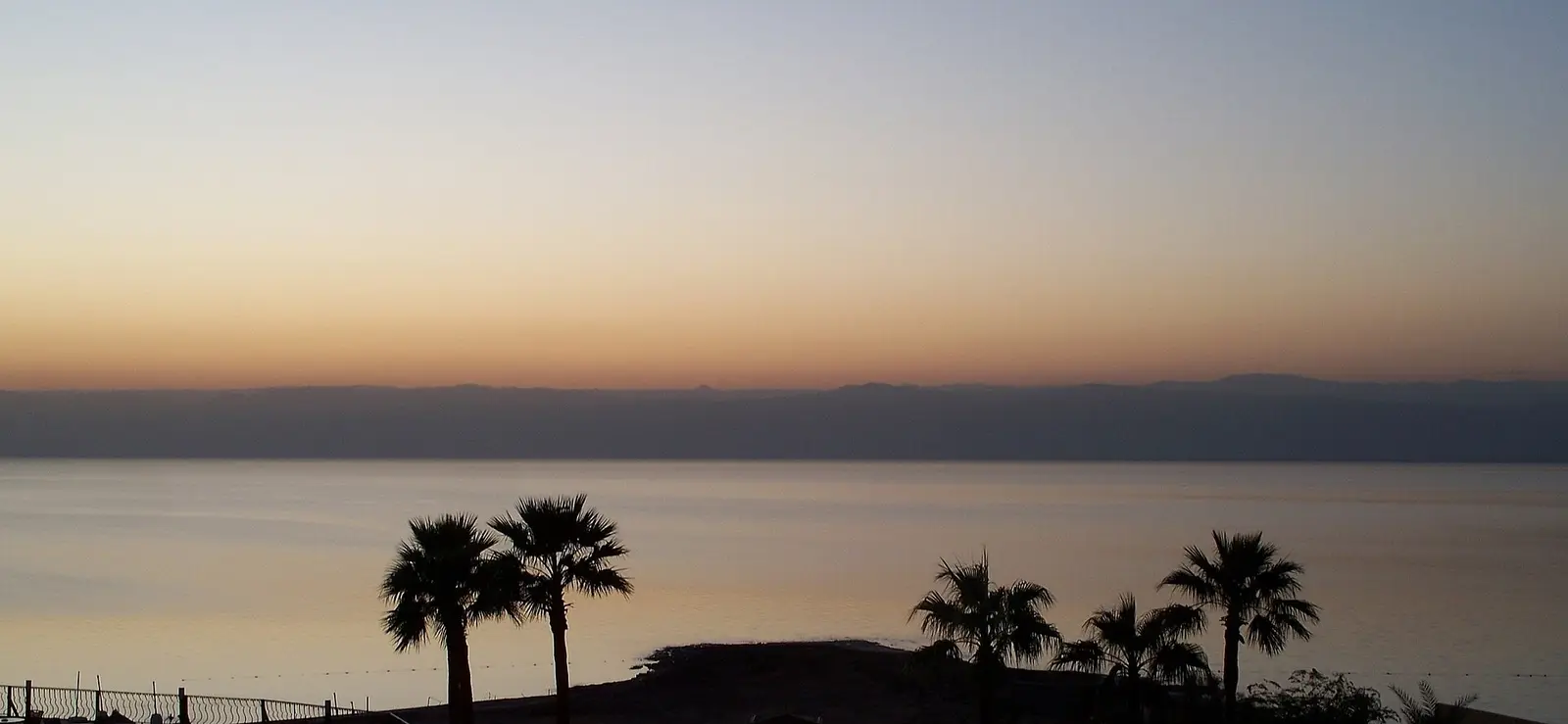
Photo credits
- Salt crusts on the eastern shore of the Dead Sea in Jordan – the Bible calls it the Salt Sea. Today · 2010 · Bernard Gagnon · CC BY-SA 3.0 · Source
- Early morning at the Dead Sea seen from Jordan, with the western shore opposite. Today · 2009 · High Contrast · CC BY 3.0 DE · Source


Photos from Wikimedia Commons and the Matson Collection of the Library of Congress, resized. Tap a photo to enlarge it. Captions AI-assisted – How the texts are made
About the place
The Salt Sea is the large salt lake into which the Jordan flows; since Greek times the West has called it the Dead Sea.1 It lies in the deep trough of the Jordan Valley, with its shoreline about 400 metres below sea level, and measures roughly 85 kilometres by 16.1 The Old Testament mentions it often, the New Testament not at all (Genesis 14:3; Joshua 3:16).1,2 Sodom and Gomorrah were destroyed in its vicinity (Genesis 19).1,2
The names of the sea
The Old Testament usually calls the lake the Salt Sea, after salt, a valuable trade good in the ancient world (Genesis 14:3; Numbers 34:3; Joshua 15:2).1,2 It is also called the Sea of the Arabah and the Eastern Sea (Deuteronomy 3:17; 4:49; 2 Kings 14:25; Ezekiel 47:18; Zechariah 14:8).1,2 Later Jewish and Greek writers also speak of the Sea of Sodom, the Sea of Asphalt or the Sea of Lot.1
Where the Salt Sea is
The Salt Sea lies in the Jordan rift, part of the great fault that runs from the Taurus Mountains in Turkey through the Red Sea down to East Africa.1 From the east the Lisan peninsula, almost 14 kilometres long, juts out and divides the lake into a larger northern basin up to about 400 metres deep and a shallow southern basin only 1 to 9 metres deep.1 Steep rock walls rise on both sides.1
Why the water is so salty
The Jordan and several streams feed the lake, but water leaves it only by evaporation, with little rain and summer heat of up to 52 degrees Celsius.1 Salty inflows, springs on the lake bed and a massive salt plug in the south-east raise the salt content to about 26 percent, compared with 3.5 percent in the ocean, and nothing lives in the water.1 In antiquity the lake was prized for salt and bitumen; the Nabateans traded the bitumen and shipped it to Egypt for embalming.1
The Salt Sea in the Bible
Sodom and Gomorrah were destroyed in the area of the lake; Mount Sedom, the salt hill in the south-east, still echoes the name Sodom (Genesis 19:24–28).1,2 The wilderness along its shore gave refuge to David on the run and later to the Qumran community (1 Samuel 23:29).1,2 In a vision Ezekiel saw water flowing down from the temple that makes even the water of this sea fresh, so that fish live in it (Ezekiel 47:1–12).1,2
Salt Sea in the Bible
Salt Sea appears in 17 sections across 11 books of the Bible – first in Genesis 14:3, last in Zechariah 14:8. Most often in Joshua (4), Ezekiel (3) and Deuteronomy (2).
Genesis
mentioned: 14:3
Numbers
mentioned: 34:3; 34:12
Deuteronomy
Joshua
mentioned: 3:16; 12:3; 15:2; 15:5; 18:19
2 Kings
mentioned: 14:25
2 Chronicles
mentioned: 20:2
Isaiah
mentioned: 16:8
Jeremiah
mentioned: 48:32
Ezekiel
mentioned: 39:11; 47:8–10; 47:18
Joel
mentioned: 2:20
Zechariah
mentioned: 14:8
Often mentioned together
References
- Tyndale Open Bible Dictionary – Article “Dead Sea” · tyndaleopenresources.com
- Bible text: Genesis 14:3; Genesis 19:24–28; Numbers 34:3; Deuteronomy 3:17; Deuteronomy 4:49; Joshua 3:16; Joshua 15:2; 1 Samuel 23:29; 2 Kings 14:25; Ezekiel 47:1–12; Ezekiel 47:18; Zechariah 14:8