Arabah
- Kind
- Region
- Today
- Jordan Rift between the Dead Sea and the Gulf of Aqaba
- Location
- securely identified (confidence 1000 of 1000)
When the place appears in the Bible
Map
Base map: Natural Earth (public domain), places after OpenBible.info (CC BY 4.0), © OpenStreetMap (ODbL) · All sources and licences
Notes and sources for this map
Location after OpenBible.info
Pictures
Today: the place and its landscape as they look today
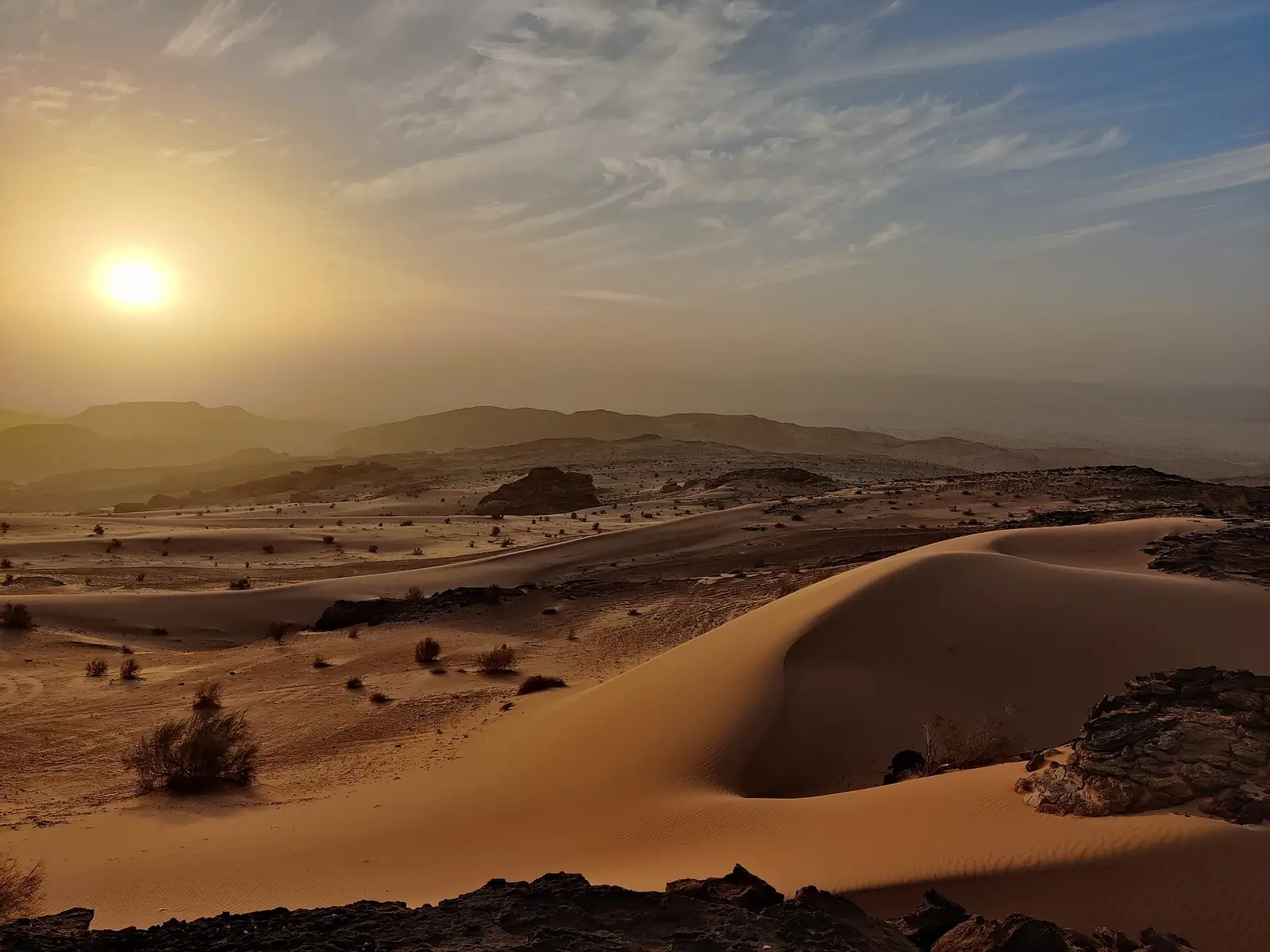
Photo credits
- Dunes in Wadi Araba, the rift valley between the Dead Sea and the Gulf of Aqaba. Today · 2021 · RayanGT · CC BY-SA 4.0 · Source

Photos from Wikimedia Commons and the Matson Collection of the Library of Congress, resized. Tap a photo to enlarge it. Captions AI-assisted – How the texts are made
About the place
The Arabah is the great rift that splits the land into a western and an eastern half; it runs from the Sea of Galilee down the Jordan valley to the Dead Sea and on to the Gulf of Aqaba.1 The rift is about 322 kilometres long and around 10 kilometres wide, and the Dead Sea in its middle lies 388 metres below sea level.1 In the Old Testament the name can mean the whole rift or only parts of it, such as the south around Elath or the Jordan valley (Deuteronomy 2:8; 3:17).1,2
What the name means
The Hebrew word arabah means wasteland or barren country.1 Its plural occurs 17 times in the Hebrew Old Testament, means “plains” and refers to the area near Jericho or in Moab, as in the plains of Moab (Deuteronomy 34:1).1,2 In the BSB the Dead Sea is called the Sea of the Arabah (Deuteronomy 3:17).1,2
Where the Arabah is
Arabs call the section between the Sea of Galilee and the Dead Sea the Ghor, “depression”, and keep the name Arabah for the part south of the Dead Sea.1 The Bible sometimes means the south (Deuteronomy 1:1; 2:8), sometimes the north-east (Deuteronomy 3:17; 4:49; Joshua 11:2), and sometimes the side west of the Jordan (Joshua 11:16).1,2 North of the Dead Sea the valley was fertile then and still is today.1
The Arabah in the Old Testament
Israel wandered in the southern Arabah during its years in the wilderness; at the end Moses went up Nebo from the Moabite plains on the far side of the Dead Sea, died in the land of Moab and was buried there (Deuteronomy 34:1–6).1,2 After his defeat at Gibeon, Abner marched all night through the Arabah, and the murderers of Ish-bosheth took the same route to reach David at Hebron (2 Samuel 2:29; 4:7).1,2 Zedekiah was heading for the Arabah when the Babylonians caught him (2 Kings 25:4; Jeremiah 39:4).1,2
Minerals and trade routes
South of the Dead Sea there are deposits of iron and copper; Deuteronomy 8:9 may have them in mind when it describes a land with iron in its rocks and copper to be mined from its hills.1,2 The ground there is mostly poor, but in antiquity careful irrigation made some farming possible.1 Several important trade routes passed through the region.1
The Arabah in the prophets
Ezekiel sees a river flowing out from the temple and down into the Arabah; it makes the water of the sea fresh, and fish abound in it (Ezekiel 47:1–12).1,2 Joel and Zechariah likewise speak of water flowing from the house of the LORD and from Jerusalem (Joel 3:18; Zechariah 14:8).1,2
Arabah in the Bible
Arabah appears in 21 sections across 10 books of the Bible – first in Deuteronomy 1:1, last in Zechariah 14:10. Most often in Deuteronomy (5), Joshua (4) and 2 Samuel (3).
Deuteronomy
mentioned: 1:1; 1:7; 2:8; 3:17; 4:49; 11:30
Joshua
mentioned: 8:14; 11:2; 11:16; 12:1; 12:3; 12:8; 18:18
1 Samuel
mentioned: 23:24
2 Samuel
2 Kings
mentioned: 25:4–5
1 Chronicles
mentioned: 11:32
Isaiah
mentioned: 33:9
Jeremiah
Ezekiel
mentioned: 47:8
Zechariah
mentioned: 14:10
Often mentioned together
References
- Tyndale Open Bible Dictionary – Article “Arabah” · tyndaleopenresources.com
- Bible text: Deuteronomy 1:1; Deuteronomy 2:8; Deuteronomy 3:17; Deuteronomy 4:49; Deuteronomy 8:9; Deuteronomy 34:1–6; Joshua 11:2; Joshua 11:16; 2 Samuel 2:29; 2 Samuel 4:7; 2 Kings 25:4; Jeremiah 39:4; Ezekiel 47:1–12; Joel 3:18; Zechariah 14:8