Nile
- Kind
- Water
- Today
- Nile
- Location
- securely identified (confidence 1000 of 1000)
When the place appears in the Bible
Map
Base map: Natural Earth (public domain), places after OpenBible.info (CC BY 4.0), © OpenStreetMap (ODbL) · All sources and licences
Notes and sources for this map
Location after OpenBible.info
Pictures
Today: the place and its landscape as they look today
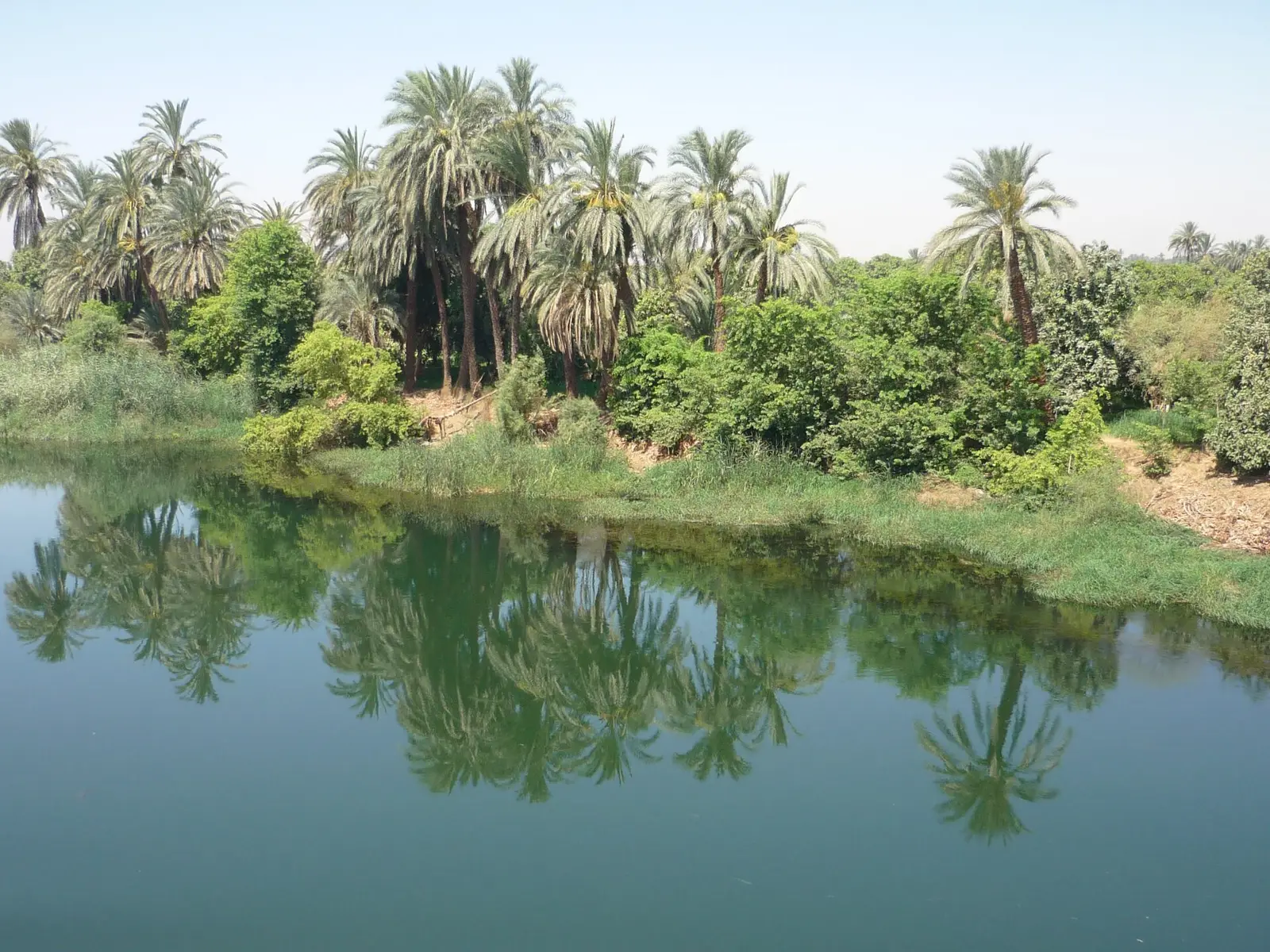
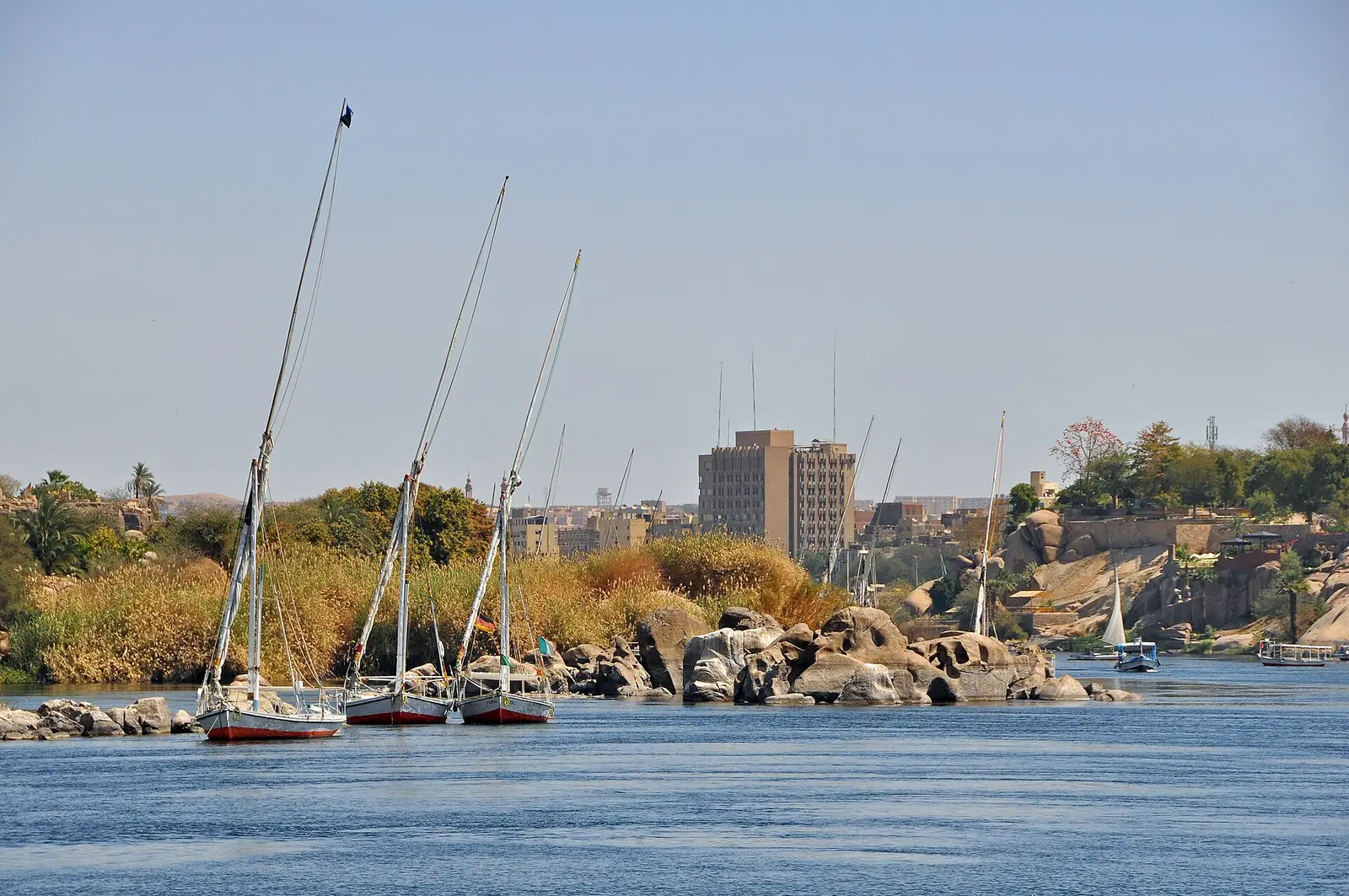
Photo credits
- Date palms on the banks of the Nile between Edfu and Kom Ombo in Upper Egypt. Today · 2009 · Rémih · CC BY-SA 3.0 · Source
- Feluccas on the Nile at Aswan, by the First Cataract. Today · 2012 · Marc Ryckaert (MJJR) · CC BY 3.0 · Source


Photos from Wikimedia Commons and the Matson Collection of the Library of Congress, resized. Tap a photo to enlarge it. Captions AI-assisted – How the texts are made
About the place
The Nile is the river that gives life to Egypt in north-east Africa; at about 6,700 kilometres it is regarded as the longest river on earth.1 Without its water and the fertile silt left by its yearly flood, Egypt could never have produced its civilization.1 In the Bible it appears mainly in the stories of Joseph and Moses and in the prophets’ oracles against Egypt (Genesis 41:1–4; Exodus 1:22; Ezekiel 29:3).1,2 The BSB calls it the Nile, while the KJV says simply “the river” (Genesis 41:1; Exodus 1:22).2
What the name means
Where the name Nile comes from and what it means is unknown.1 To the ancient Egyptians it was simply “the river”; they could hardly picture any other, and on reaching the Euphrates they thought it ran backwards, since it flows south while the Nile flows north.1
Where the Nile flows
The White Nile rises in the region of Lake Victoria, the Blue Nile in Lake Tana in the Ethiopian highlands, and the two meet at Khartoum.1 On its way north the river passes six cataracts, rocky barriers in its bed, the first of them at Aswan.1 The delta measures roughly 200 by 185 kilometres; in antiquity seven branches reached the sea, today only two, at Rosetta and Damietta.1
The Nile and Egypt
The river set Egypt’s three seasons; the flood from mid-July to mid-November soaked the soil and laid down fresh silt, so that good harvests needed little irrigation.1 Because the Nile runs north and the wind mostly blows from the north, boats could sail upstream and drift downstream, which made the river the country’s main highway.1 The Egyptians worshipped the river as the god Hapi.1
The Nile in the stories of Joseph and Moses
Pharaoh dreamed that he stood by the Nile and saw seven fat and seven thin cows come up out of the water (Genesis 41:1–4).1,2 Later a pharaoh ordered every newborn Israelite boy to be thrown into the Nile; Pharaoh’s daughter found Moses when she went down to bathe in the river (Exodus 1:22; 2:5).1,2 In the plagues the water of the Nile turned to blood, and the frogs came up out of the river (Exodus 7:15–24; 8:3).1,2
The Nile in the prophets
Isaiah announces that the Nile will dry up and the fishermen will mourn, yet he also foresees blessing for Egypt in the end (Isaiah 19:5–8, 24–25).1,2 Ezekiel calls Pharaoh a great monster lying among his rivers who says, “The Nile is mine” (Ezekiel 29:3).1,2 Amos compares the quaking land to the rising and falling of the Nile, and Zechariah announces that the depths of the river will dry up (Amos 8:8; 9:5; Zechariah 10:11).1,2
Nile in the Bible
Nile appears in 21 sections across 9 books of the Bible – first in Genesis 41:1, last in Acts 7:19. Most often in Exodus (6), Isaiah (5) and Jeremiah (2).
Genesis
mentioned: 41:1–3; 41:17–19
Exodus
mentioned: 1:22; 2:3; 2:5; 4:9; 7:15; 7:17–18; 7:20–21; 7:24–25; 8:3; 8:9; 8:11; 17:5
Isaiah
mentioned: 7:18; 18:1–2; 19:5–8; 23:3; 23:10; 51:9
Jeremiah
Ezekiel
mentioned: 29:3–5; 29:9–10; 30:12
Amos
Nahum
mentioned: 3:8
Zechariah
mentioned: 10:11
Acts
mentioned: 7:19
Often mentioned together
References
- Tyndale Open Bible Dictionary – Article “Nile River” · tyndaleopenresources.com
- Bible text: Genesis 41:1–4; Exodus 1:22; Exodus 2:5; Exodus 7:15–24; Exodus 8:3; Isaiah 19:5–8; Isaiah 19:24–25; Isaiah 23:3; Jeremiah 46:7–8; Ezekiel 29:3–5; Amos 8:8; Amos 9:5; Zechariah 10:11