Persia
- Kind
- Region
- Today
- Tell Hagmatana (Iran)
- Location
- securely identified (confidence 1000 of 1000)
When the place appears in the Bible
Map
Base map: Natural Earth (public domain), places after OpenBible.info (CC BY 4.0), © OpenStreetMap (ODbL) · All sources and licences
Notes and sources for this map
Location after OpenBible.info
Pictures
Today: the place and its landscape as they look today
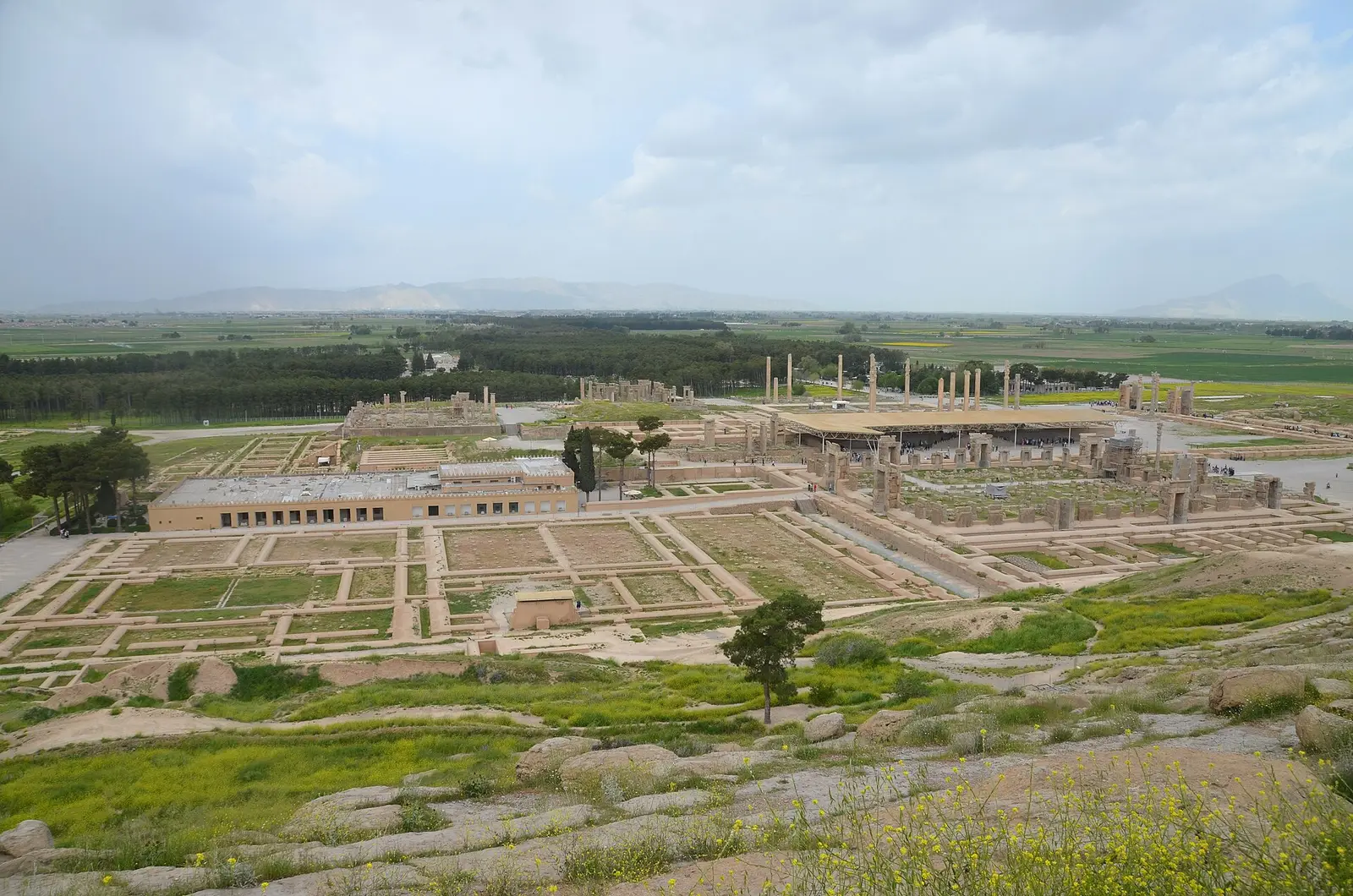
Photo credits
- The ruins of Persepolis in southern Iran, residence of the Persian kings. Today · 2019 · Carole Raddato · CC BY-SA 2.0 · Source

Photos from Wikimedia Commons and the Matson Collection of the Library of Congress, resized. Tap a photo to enlarge it. Captions AI-assisted – How the texts are made
About the place
Persia lay east of Mesopotamia and covered much the same area as modern Iran, which was called Persia until 1935.1 In 539 BC Cyrus took Babylon and allowed the exiled Jews to go back to Jerusalem and rebuild the temple (Ezra 1:1–4; 2 Chronicles 36:22–23).1,2 The books of Ezra, Nehemiah and Esther and the prophets Haggai and Zechariah belong to the Persian period.1
Where the name comes from
In antiquity the country went by names such as Fars or Pars, from which the name Persia derives.1 Only in 1935 was it changed to Iran; its official language, Persian, belongs to the Indo-European family and uses Arabic script.1
Land and climate
Persia resembles a triangle set between the Caspian Sea in the north and the Persian Gulf in the south, its sides formed by mountain ranges such as the Zagros, Elburz and Makran that enclose a desert.1 The capital Susa lay in the plain of Susiana, a continuation of the Mesopotamian plain.1 With no great river and no regular rainy seasons, farming depends on irrigation.1
The Persian Empire
Cyrus the Great (559–530 BC) defeated the Medes, made their capital Ecbatana his own and kept his archives there, where his decree on the temple was later found (Ezra 6:1–2).1,2 Darius the Great divided the empire into 20 provinces under satraps and built up Persepolis as his capital; his trilingual rock inscription at Behistun later helped scholars decipher cuneiform.1 Alexander the Great’s victories in 333 and 331 BC brought the rule of the Persian kings to an end.1
Persia and the return from exile
Isaiah names Cyrus as the one through whom Jerusalem will be rebuilt and the temple founded (Isaiah 44:28–45:1).1,2 Despite opposition the temple was finished on the third day of Adar in the sixth year of Darius, which corresponds to March 515 BC (Ezra 6:15).1,2 Nehemiah asked King Artaxerxes I in the month of Nisan of his twentieth year, 445 BC, for leave to go to Jerusalem (Nehemiah 2:1).1,2
Persia in the prophets and in Esther
The book of Esther is set under King Ahasuerus, identified with Xerxes, and shows many details of life at the Persian court (Esther 1:1–8; Ezra 4:6).1,2 Ezekiel lists Persians among the soldiers of Tyre and among the allies of Gog (Ezekiel 27:10; 38:5).1,2 Daniel too mentions Persia in his accounts and visions (Daniel 8:20; 10:1; 11:2).1,2
Persia in the Bible
Persia appears in 15 sections across 5 books of the Bible – first in 2 Chronicles 36:20, last in Daniel 11:2. Most often in Ezra (6), Daniel (3) and 2 Chronicles (2).
2 Chronicles
Ezra
mentioned: 1:1–2; 1:8; 3:7; 4:3; 4:5; 4:7; 4:9; 4:24; 6:14; 7:1; 9:9
Esther
mentioned: 1:3; 1:14; 1:18–19; 10:2
Ezekiel
Daniel
mentioned: 8:20; 10:1; 10:13; 10:20; 11:2
Often mentioned together
References
- Tyndale Open Bible Dictionary – Article “Persia, Persians” · tyndaleopenresources.com
- Bible text: 2 Chronicles 36:22–23; Ezra 1:1–4; Ezra 4:6; Ezra 6:1–2; Ezra 6:15; Nehemiah 2:1; Esther 1:1–8; Isaiah 44:28–45:1; Ezekiel 27:10; Ezekiel 38:5; Daniel 8:20; Daniel 10:1; Daniel 11:2