Gibeon
- Today
- El Jib (West Bank)
- Location
- securely identified (confidence 912 of 1000)
- Meaning of the name
- “hill city” (after Easton)
- Elevation
- 770 m above sea level
- Coordinates
- 31.847° N, 35.183° E
When the place appears in the Bible
Map
Base map: Natural Earth (public domain), places after OpenBible.info (CC BY 4.0), © OpenStreetMap (ODbL) · All sources and licences
Notes and sources for this map
Location after OpenBible.info
Pictures
Today: the place and its landscape as they look today · Back then: photographs from around 1900–1940 (Matson Collection), before modern development
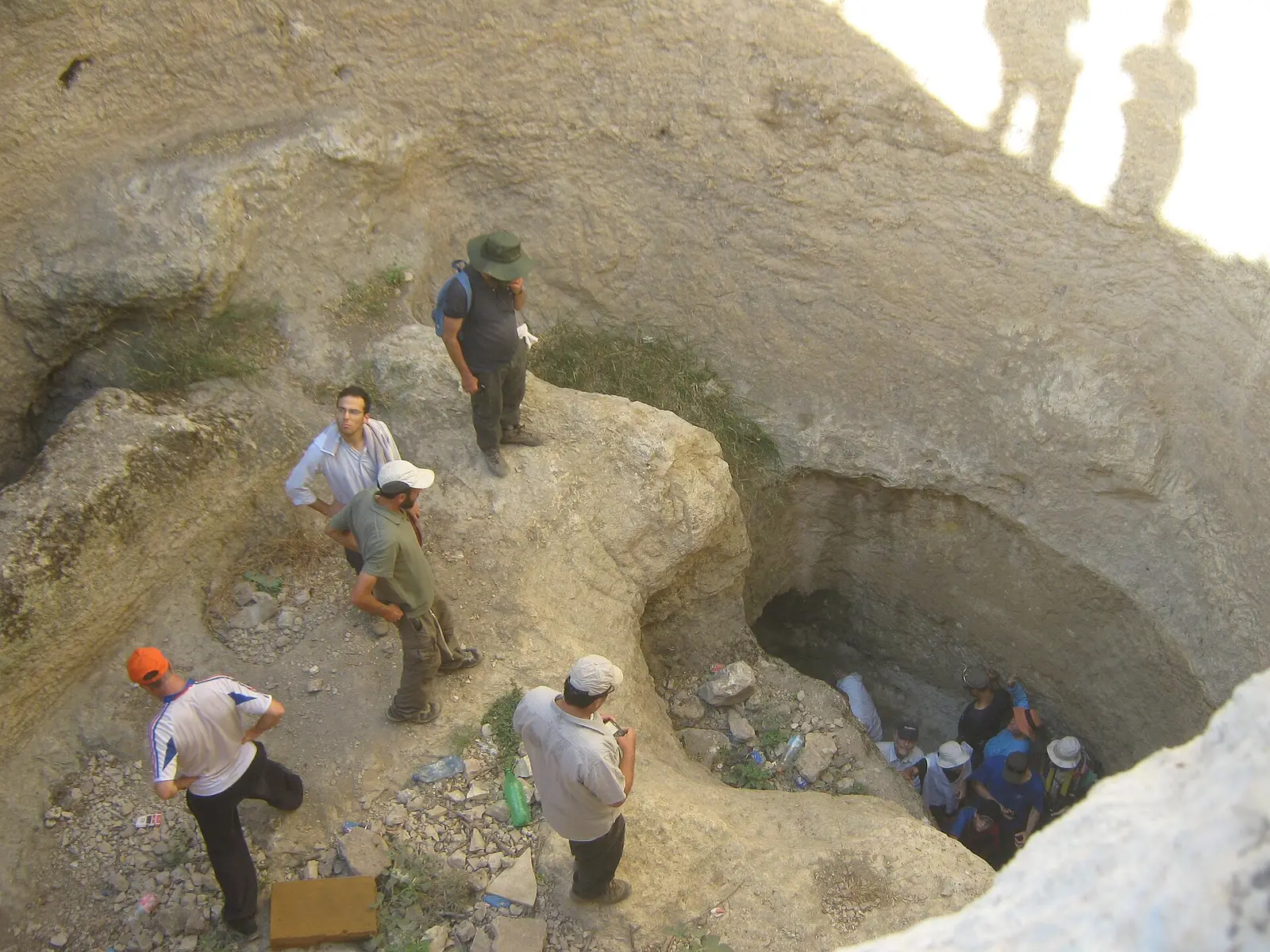
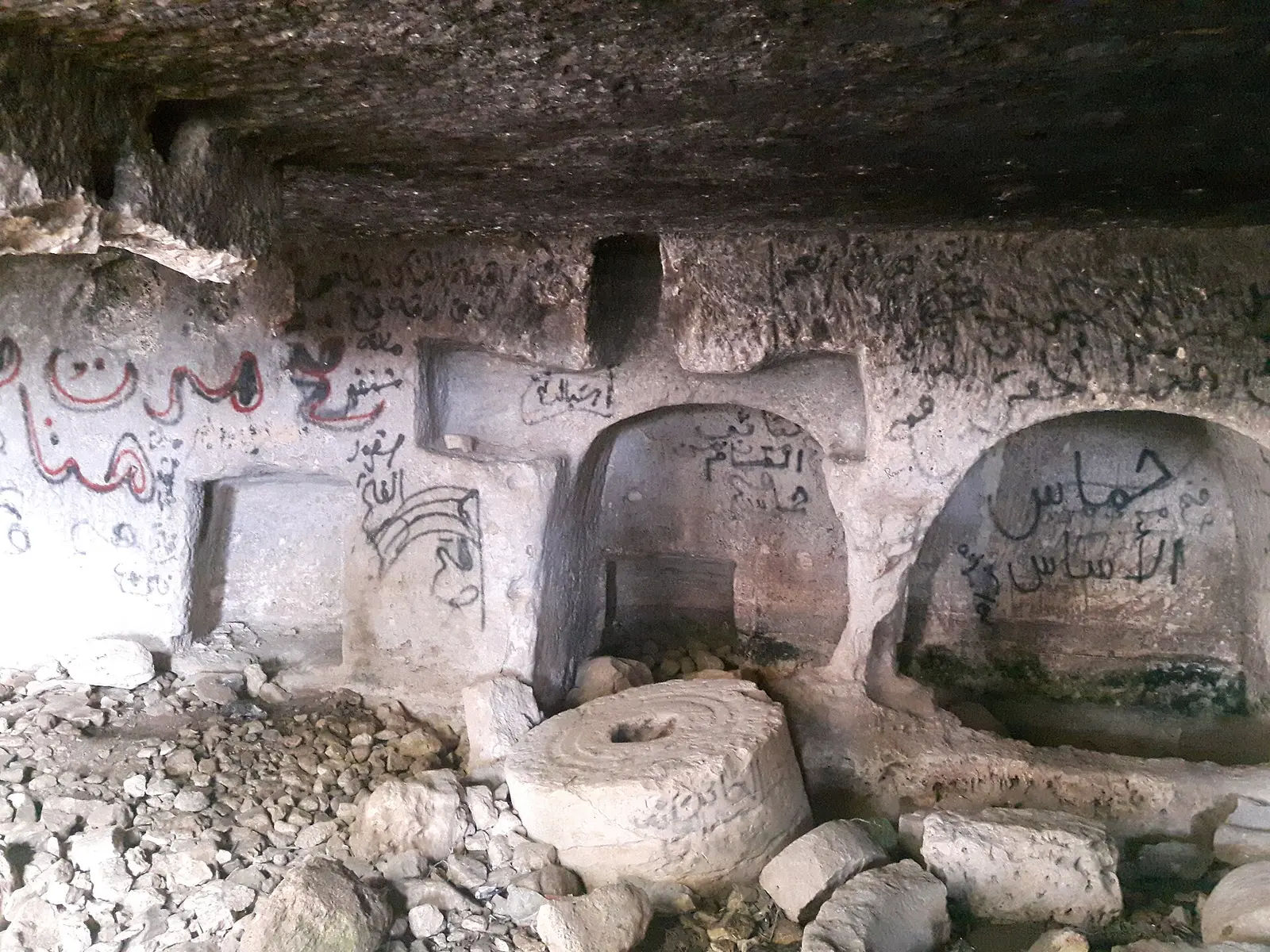
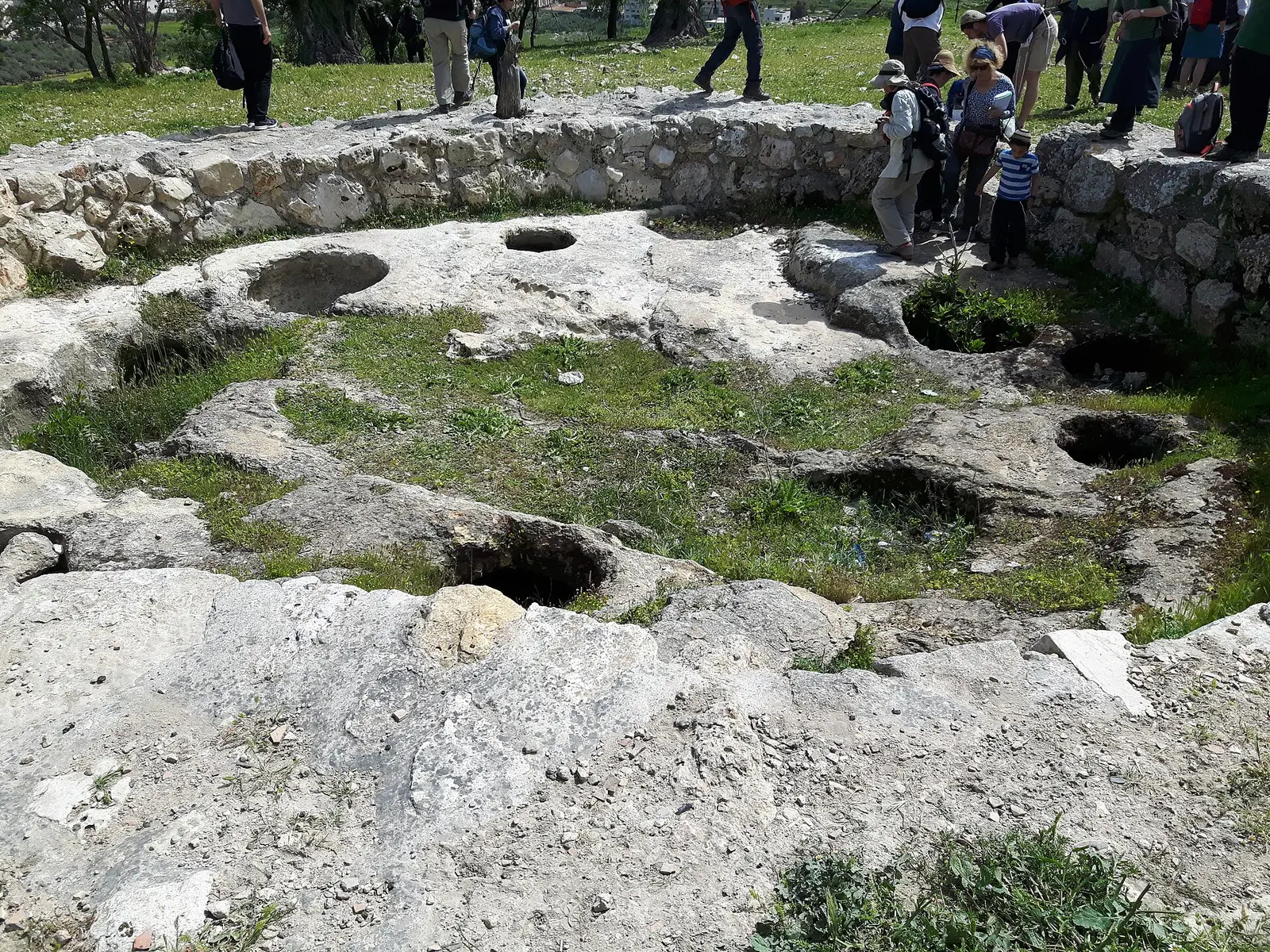
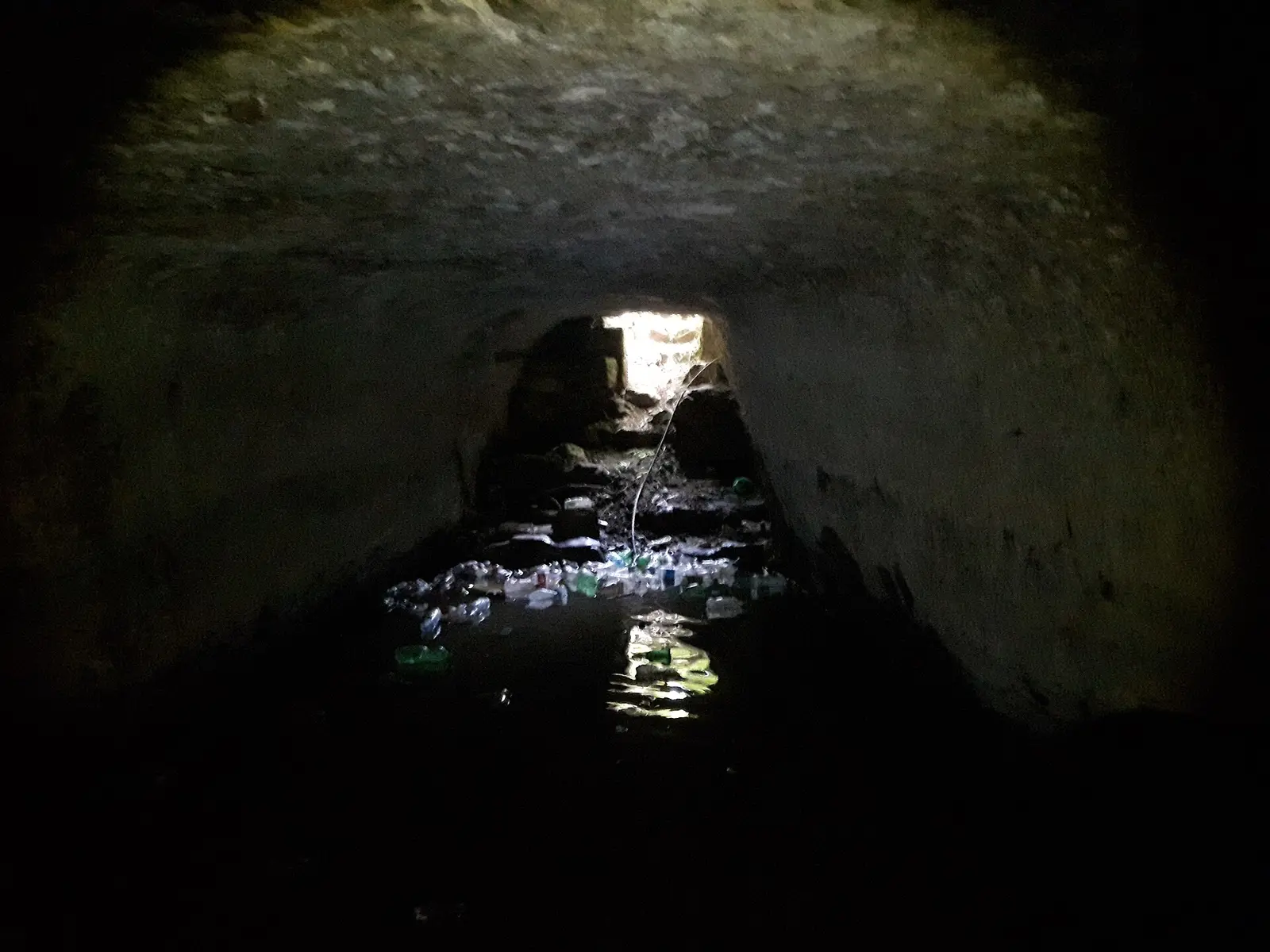
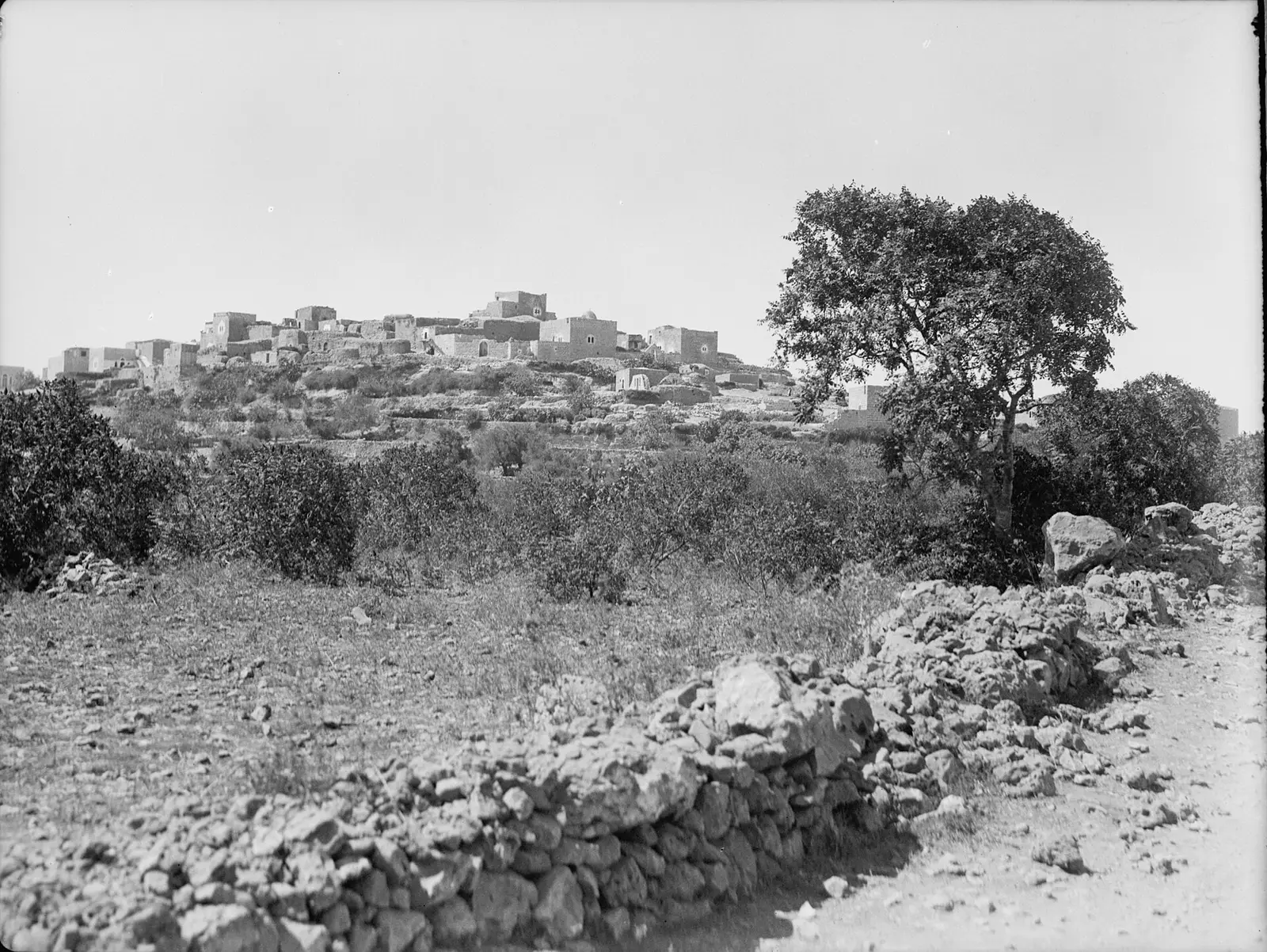
Photo credits
- The pool of Gibeon with steps to the spring – possibly the pool of 2 Samuel 2:13. Today · 2011 · Ar2332 · CC BY-SA 4.0 · Source
- Oil press in a cave at Gibeon. Today · 2019 · Owenglyndur · CC BY 4.0 · Source
- Rock-cut wine cellars at Gibeon. Today · 2019 · Owenglyndur · CC BY 4.0 · Source
- The underground spring below the pool of Gibeon. Today · 2019 · Owenglyndur · CC BY 4.0 · Source
- El-Jib (Gibeon) – a village on a hill, 1930s. Back then · c. 1934–1939 · G. Eric and Edith Matson Photograph Collection, Library of Congress, Prints & Photographs Division, LC-DIG-matpc-18995 · Public Domain · Source


Photos from Wikimedia Commons and the Matson Collection of the Library of Congress, resized. Tap a photo to enlarge it. Captions AI-assisted – How the texts are made
About the place
Gibeon was a town a little under nine kilometres north of Jerusalem that appears again and again in the Old Testament, from Joshua to Nehemiah.1 Its people used a ruse to win a covenant with Israel and were the only town that made peace with the Israelites (Joshua 9; 11:19).1,2 In David’s day the tabernacle of the LORD stood on the high place at Gibeon, and there Solomon asked God for wisdom in a dream (1 Chronicles 16:39; 1 Kings 3:4–15).1,2 The site is known today as el-Jib.1
Where Gibeon was
Gibeon is today’s el-Jib, a little under nine kilometres north of Jerusalem and south-west of Ai; when the land was shared out it went to Benjamin and was given to the Levites (Joshua 18:25; 21:17).1,2 Edward Robinson suggested the identification as early as 1838, and the digs between 1956 and 1962 confirmed it: 31 jar handles turned up with the name Gibeon on them.1 The phases of settlement uncovered there match the periods in which the Bible mentions the town.1
The covenant with Joshua
When the Gibeonites heard what had happened to Jericho and Ai, they came to Joshua in worn clothes and shoes with dry bread, as if from a distant country, and so obtained a peace treaty (Joshua 9:3–15).1,2 Once the deception came out, they had to cut wood and draw water for Israel (Joshua 9:21–27).1,2 Five Amorite kings led by Adoni-zedek of Jerusalem then attacked Gibeon; Joshua marched up overnight from Gilgal and defeated them, and that day the sun halted above Gibeon (Joshua 10:1–14).1,2
Gibeon in the days of David and Solomon
At the pool of Gibeon the men of Abner and Joab met; twelve fighters from each side killed one another before the battle began, which David’s men won (2 Samuel 2:12–17).1,2 Later, at the great stone in Gibeon, Joab killed Amasa (2 Samuel 20:8–10).1,2 The tabernacle of the LORD and the altar of burnt offering stood on the high place at Gibeon; here God appeared to Solomon in a dream, and Solomon asked for wisdom to govern the people (1 Chronicles 21:29; 2 Chronicles 1:3–13).1,2
The broken oath
Saul broke the oath Israel had sworn to the Gibeonites and had Gibeonites put to death.1,2 Under David they demanded atonement for this, and David handed over seven of Saul’s descendants to them (2 Samuel 21:1–9).1,2 Gibeon remained important later on: Pharaoh Shishak captured it in the tenth century BC, and Hananiah, who prophesied falsely in Jeremiah’s time, came from Gibeon (Jeremiah 28:1).1,2
After the exile
Among those who returned from Babylon were 95 men of Gibeon, and men from Gibeon helped Nehemiah repair the wall of Jerusalem (Nehemiah 7:25; 3:7).1,2 As late as AD 66, according to Josephus, the Roman commander Cestius camped at Gibeon on his march against Jerusalem.1
Gibeon in the Bible
Gibeon appears in 24 sections across 7 books of the Bible – first in Joshua 9:3, last in Jeremiah 41:12. Most often in 1 Chronicles (7), Joshua (6) and 2 Samuel (4).
Joshua
- Joshua 9:1–27 The Deceit of the Gibeonites
- Joshua 10:1–15 The Day the Sun Stood Still
mentioned: 10:41; 11:19; 18:25; 21:17
2 Samuel
- 2 Samuel 2:1–32 David Becomes King of Judah
- 2 Samuel 21:1–22 The Gibeonites and the Philistine Wars
1 Kings
1 Chronicles
mentioned: 6:60; 8:29; 9:35; 12:4; 14:16; 16:39; 21:29
2 Chronicles
- 2 Chronicles 1:1–17 Solomon Asks for Wisdom
Nehemiah
Jeremiah
mentioned: 28:1; 41:12; 41:16
Places nearby
Often mentioned together
References
- Tyndale Open Bible Dictionary – Article “Gibeon, Gibeonites” · tyndaleopenresources.com
- Bible text: Joshua 9:3–27; Joshua 10:1–14; Joshua 11:19; Joshua 18:25; Joshua 21:17; 2 Samuel 2:12–17; 2 Samuel 20:8–10; 2 Samuel 21:1–9; 1 Kings 3:4–15; 1 Kings 9:2; 1 Chronicles 16:39; 1 Chronicles 21:29; 2 Chronicles 1:3–13; Jeremiah 28:1; Nehemiah 3:7; Nehemiah 7:25