Valley of Hinnom
- Kind
- Valley
- Today
- Hinnom Valley (Israel)
- Location
- securely identified (confidence 1000 of 1000)
- Coordinates
- 31.769° N, 35.228° E
When the place appears in the Bible
Map
Base map: Natural Earth (public domain), places after OpenBible.info (CC BY 4.0), © OpenStreetMap (ODbL) · All sources and licences
Notes and sources for this map
Location after OpenBible.info
Pictures
Today: the place and its landscape as they look today
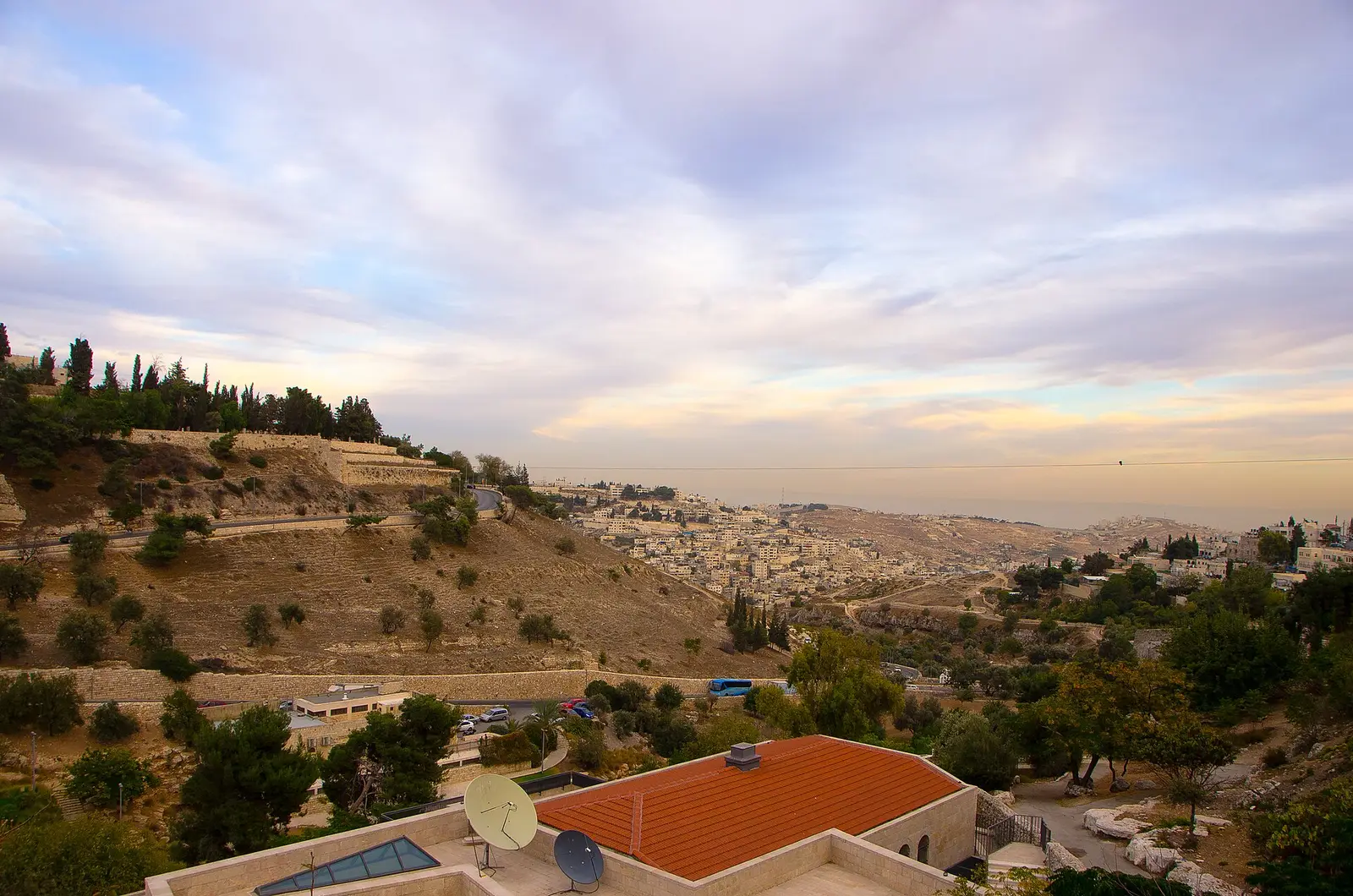
Photo credits
- The Valley of Hinnom on the south-western edge of Jerusalem’s Old City. Today · 2014 · Michal Levinsky · CC BY-SA 3.0 · Source

Photos from Wikimedia Commons and the Matson Collection of the Library of Congress, resized. Tap a photo to enlarge it. Captions AI-assisted – How the texts are made
About the place
The Valley of the son of Hinnom is a deep ravine south of Jerusalem that formed the boundary between the territories of Judah and Benjamin (Joshua 15:8; 18:16).1,2 It is usually identified with the Wadi er-Rababi, which starts below the western wall of the Old City.1 The valley became infamous for the idolatry practised under Kings Ahaz and Manasseh, including child sacrifice to Molech; Josiah put an end to it, and Jeremiah used the valley as an image of God’s judgment (2 Chronicles 28:3; 33:6; 2 Kings 23:10; Jeremiah 7:30–32; 19:5–6).1,2 From its Hebrew name came, by way of Aramaic, the Greek word Gehenna, which Jesus uses for the place of final punishment (Matthew 5:22; 10:28).1,2
Valley of Hinnom in the Bible
Valley of Hinnom appears in 10 sections across 5 books of the Bible – first in Joshua 15:8, last in Jeremiah 32:35. Most often in Jeremiah (4), Joshua (2) and 2 Chronicles (2).
Joshua
2 Kings
mentioned: 23:10
2 Chronicles
Nehemiah
mentioned: 11:30
Jeremiah
- Jeremiah 19:1–20:6 The Broken Jar
mentioned: 2:23; 7:31–32; 32:35
Places nearby
Often mentioned together
References
- Tyndale Open Bible Dictionary – Article “Gehenna” · tyndaleopenresources.com
- Bible text: Joshua 15:8; Joshua 18:16; 2 Chronicles 28:3; 2 Chronicles 33:6; 2 Kings 23:10; Jeremiah 7:30–32; Jeremiah 19:5–6; Matthew 5:22; Matthew 10:28