Damascus
- Today
- Damascus
- Location
- securely identified (confidence 1000 of 1000)
- Elevation
- 690 m above sea level
- Coordinates
- 33.511° N, 36.306° E
When the place appears in the Bible
Map
Base map: Natural Earth (public domain), places after OpenBible.info (CC BY 4.0), © OpenStreetMap (ODbL) · All sources and licences
Notes and sources for this map
Location after OpenBible.info
Pictures
Today: the place and its landscape as they look today · Excavation: remains from biblical times that have survived or been excavated · Back then: photographs from around 1900–1940 (Matson Collection), before modern development
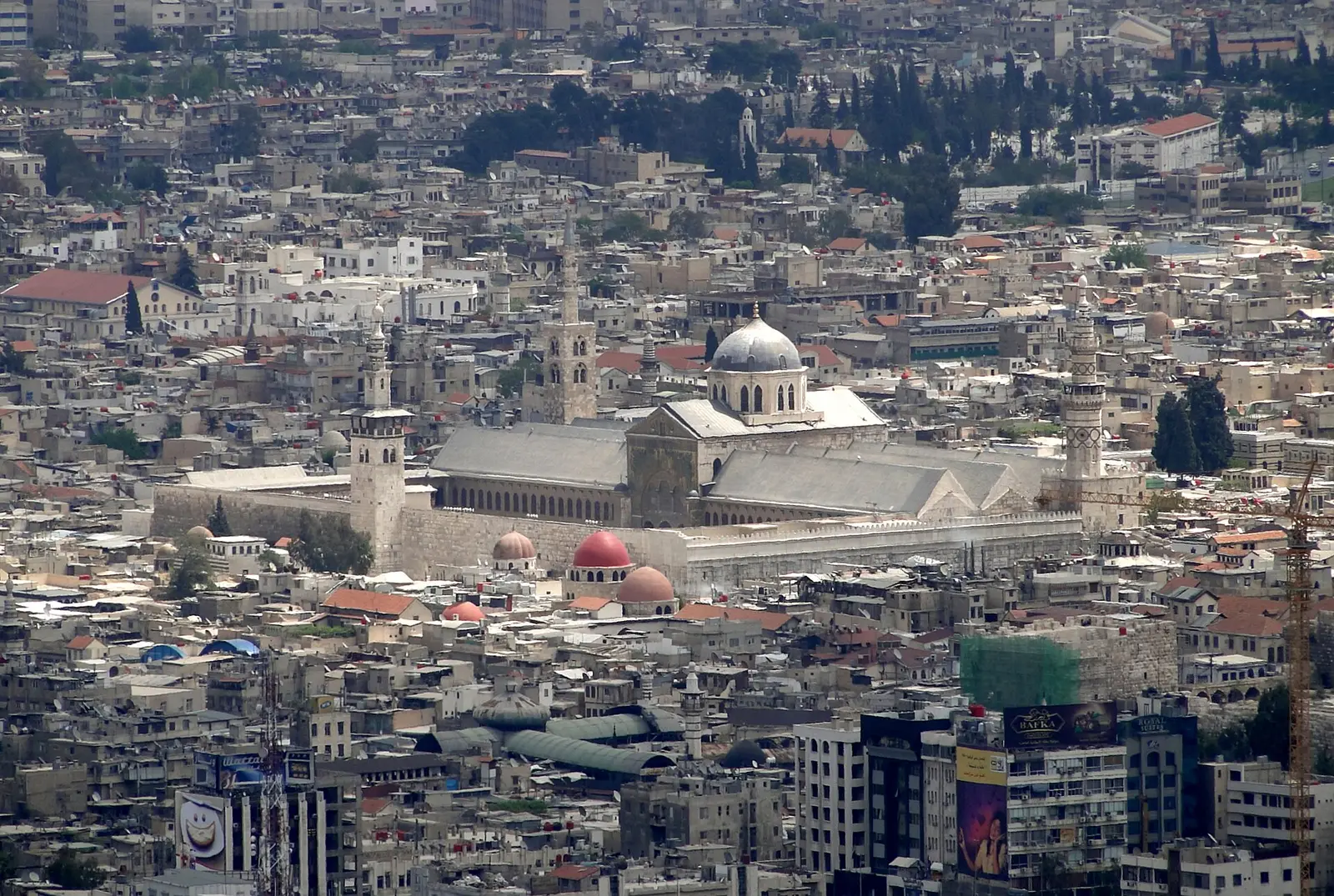
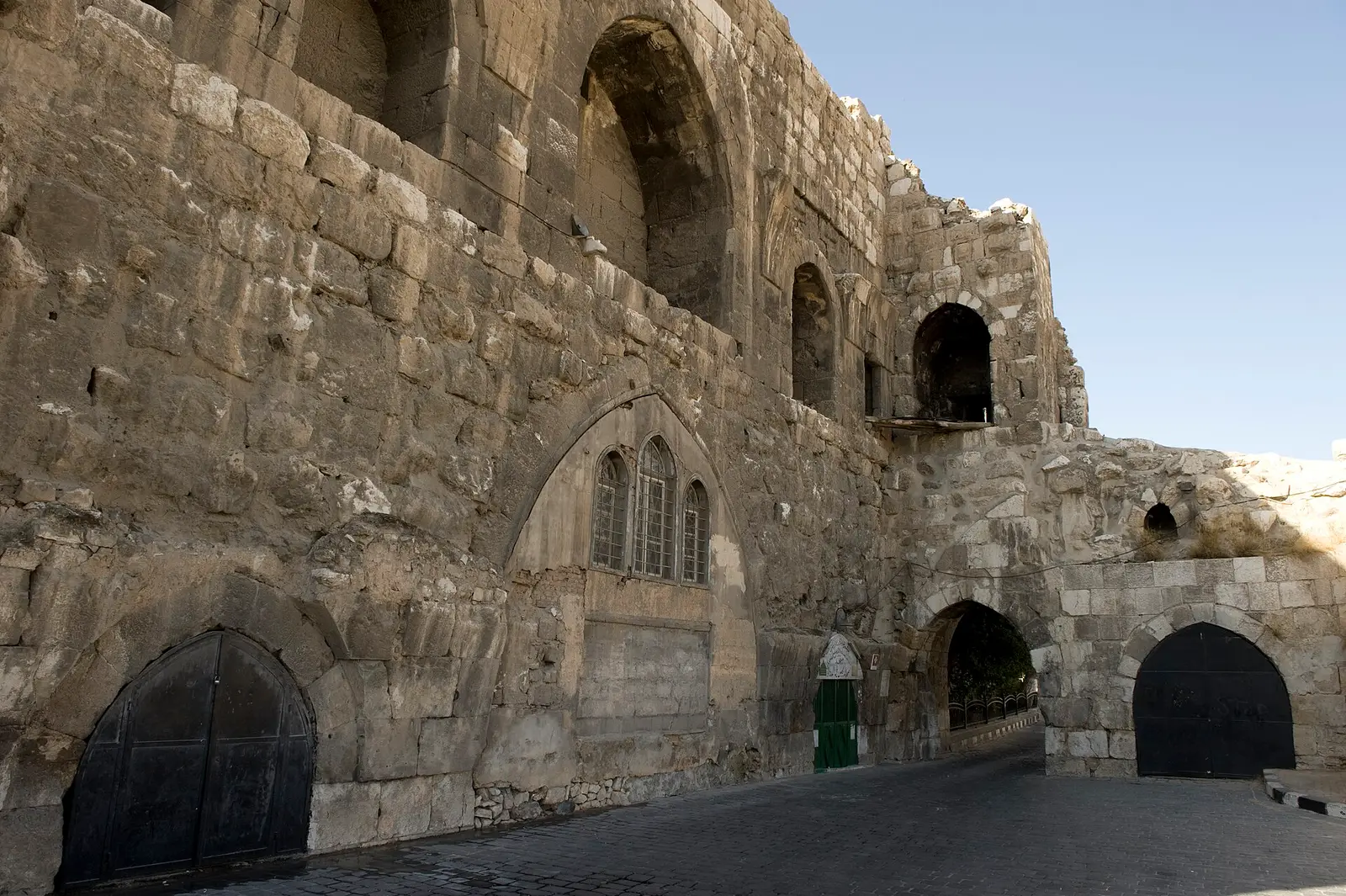
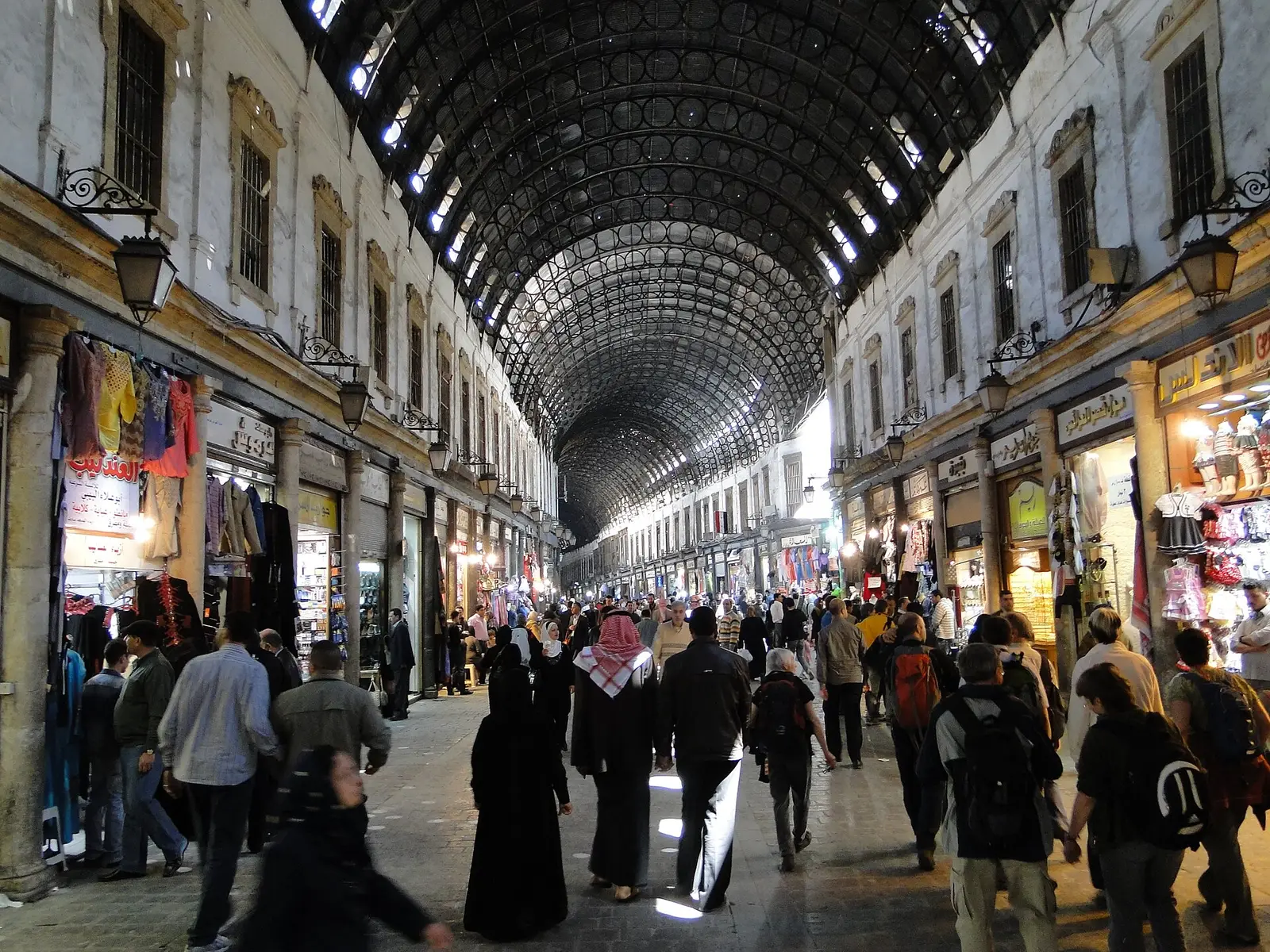
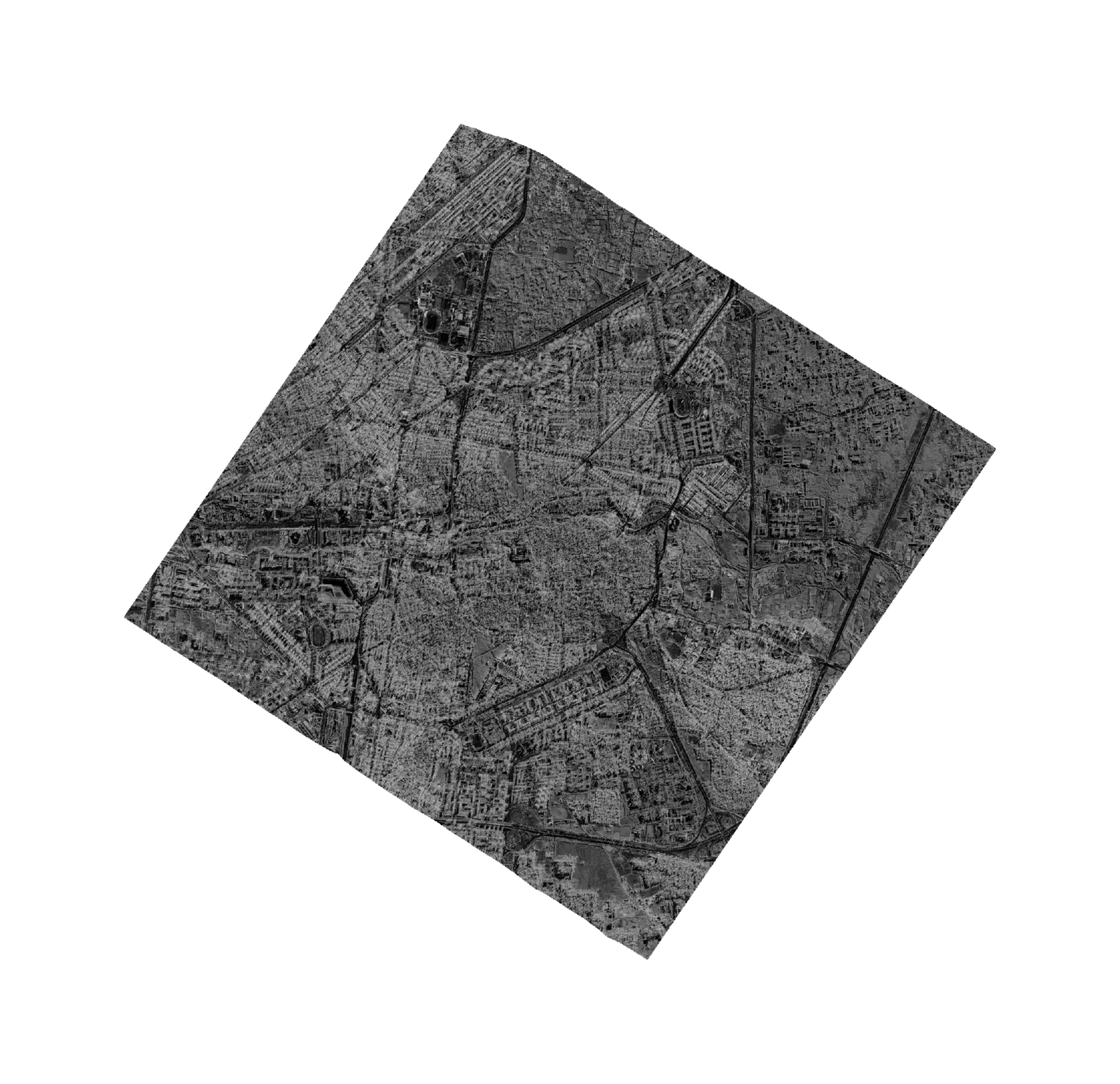
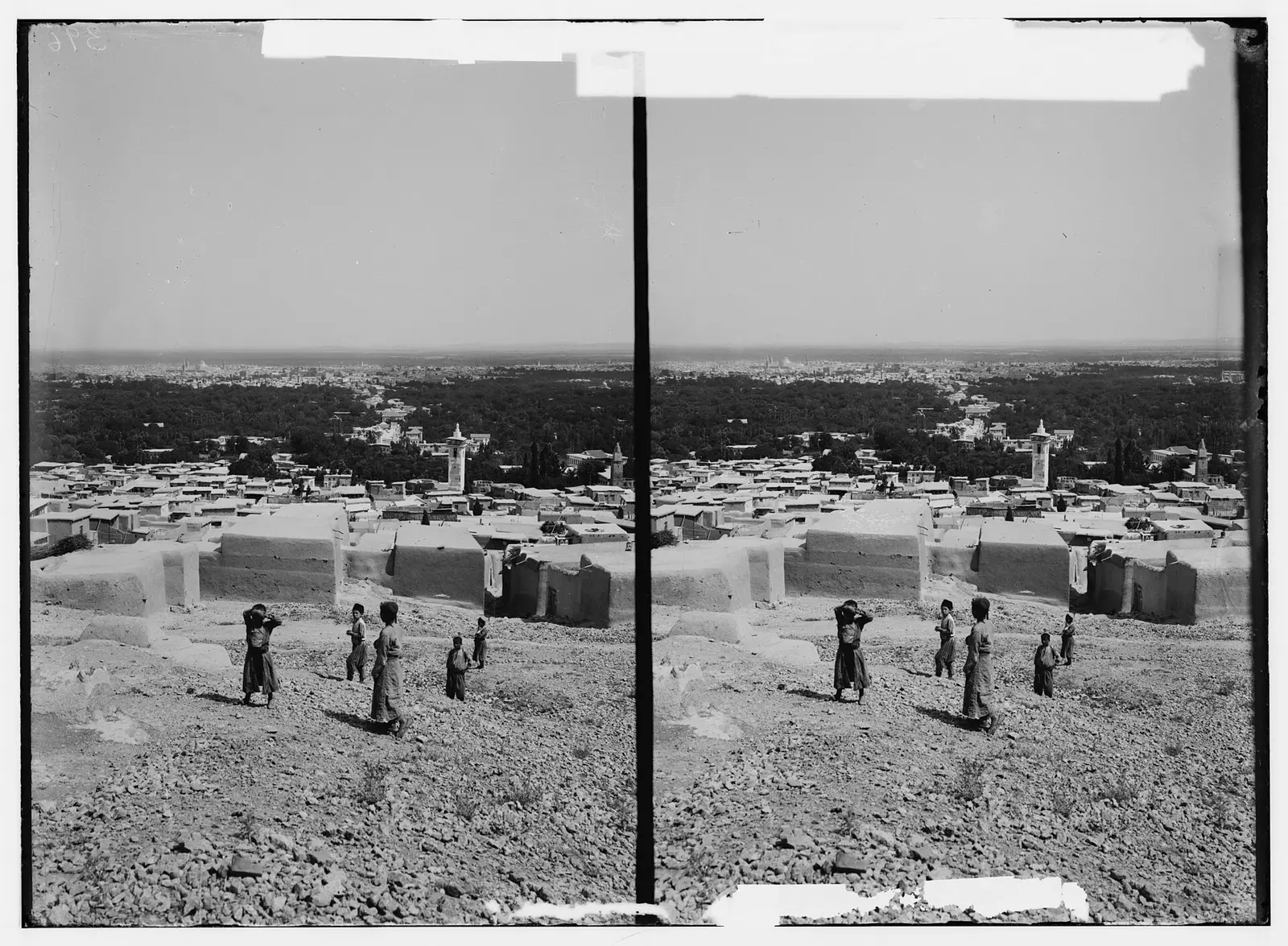
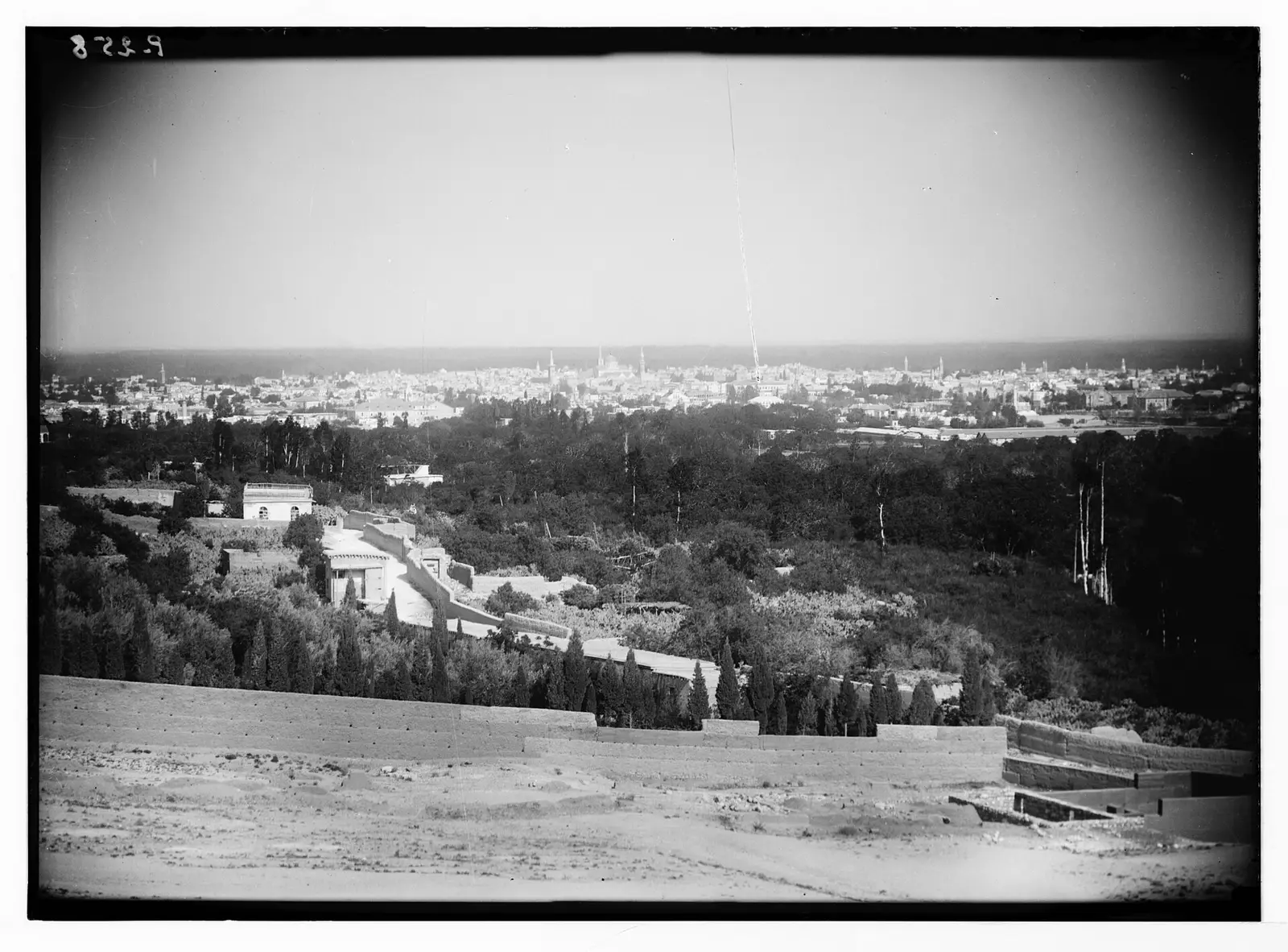
Photo credits
- Umayyad Mosque in Damascus – on the site of earlier temples and a church. Today · 2010 · Bernard Gagnon · CC BY-SA 3.0 · Source
- Street along the citadel wall in Damascus’ old city. Today · 2008 · Dosseman · CC BY-SA 4.0 · Source
- Al-Hamidiyah Souq, the great market in Damascus’ old city. Today · 2010 · Bernard Gagnon · CC BY-SA 3.0 · Source
- Old city of Damascus. Excavation · 2024 · Capella Space · CC BY 4.0 · Source
- Damascus from the Salihiyeh quarter, around 1900. Back then · c. 1900 · G. Eric and Edith Matson Photograph Collection, Library of Congress, Prints & Photographs Division, LC-DIG-matpc-01131 · Public Domain · Source
- View over Damascus from Salihiyeh. Back then · c. 1898–1946 · G. Eric and Edith Matson Photograph Collection, Library of Congress, Prints & Photographs Division, LC-DIG-matpc-05985 · Public Domain · Source


Photos from Wikimedia Commons and the Matson Collection of the Library of Congress, resized. Tap a photo to enlarge it. Captions AI-assisted – How the texts are made
About the place
Damascus is an oasis city in Syria, sheltered by mountains on three sides and set on ancient trade routes, some 257 kilometres north-east of Jerusalem; the name can also mean the surrounding district and the southern Syrian state.1 The city already appears in Abraham’s story, and from Rezon in Solomon’s day onward it was the seat of Aramean kings who often fought against Israel (Genesis 14:15; 1 Kings 11:23–25).1,2 The Assyrian king Tiglath-pileser III captured Damascus and deported its people; after that it was no longer an independent city-state (2 Kings 16:9).1,2 On the road to Damascus Saul encountered Jesus, and in the city he regained his sight (Acts 9:1–19).1,2
Where Damascus was
Damascus lies close to the desert, yet two rivers, the Barada or biblical Abana and the Awaj or biblical Pharpar, water some 640 square kilometres of land where almonds, apricots, olives, pomegranates, grapes and grain grow, among other crops.1 The Syrian Naaman thought these rivers better than all the waters of Israel and at first refused to wash in the Jordan (2 Kings 5:12).1,2 Several trade routes met here: one ran to Tyre and down the coast, one by way of Megiddo to Egypt and one to the Gulf of Aqaba.1
Damascus in the Old Testament
After the mention in Abraham’s time the Bible does not name Damascus again until David, who defeated Hadadezer of Zobah and stationed garrisons in Aram of Damascus (Genesis 14:15; 2 Samuel 8:5–6).1,2 Under Solomon, Rezon, a deserter from Hadadezer’s army, made himself king in Damascus (1 Kings 11:23–25).1,2 Later Elisha came to Damascus and sent word to the sick Ben-hadad that he would recover and yet would die; Hazael then killed him and took the throne (2 Kings 8:7–15).1,2
How Damascus fell
Under Hazael the Arameans dominated much of the land, and Joash of Judah bought Jerusalem’s safety with the temple treasures; under Jeroboam son of Joash, on the other hand, Damascus came under Israel (2 Kings 12:17–18; 14:28).1,2 Around 738 BC Rezin of Damascus joined Pekah of Israel against Judah, but Jerusalem held out; Isaiah, Amos and Jeremiah foretold the city’s downfall (2 Kings 16:5; Isaiah 17:1; Amos 1:3–5; Jeremiah 49:23–27).1,2 Ahaz called on Tiglath-pileser for help, who looted Damascus and carried its people off to Kir; afterwards the city served as the seat of an Assyrian province and later as a Persian administrative centre (2 Kings 16:7–9).1,2
Damascus in the New Testament
In Paul’s day the Nabateans ruled Damascus through a governor, probably on behalf of Aretas IV (2 Corinthians 11:32).1,2 Saul set out to persecute the Christians of Damascus, met Jesus on the way and regained his sight in a house on Straight Street; afterwards he proclaimed Jesus in the synagogues (Acts 9:1–22).1,2 When the Jews plotted to kill him, the disciples let him down over the wall in a basket by night (Acts 9:23–25; 2 Corinthians 11:33).1,2
Damascus in the Bible
Damascus appears in 33 sections across 15 books of the Bible – first in Genesis 14:15, last in Galatians 1:17. Most often in 1 Kings (4), 2 Kings (4) and Isaiah (4).
Genesis
2 Samuel
mentioned: 8:5–6
1 Kings
mentioned: 11:24; 15:18; 19:15; 20:34
2 Kings
- 2 Kings 8:1–15 The Shunammite’s Land and Hazael
mentioned: 5:12; 14:28; 16:9–12
1 Chronicles
mentioned: 18:5–6
2 Chronicles
mentioned: 16:2; 24:23; 28:5; 28:23
Song of Songs
mentioned: 7:4
Isaiah
mentioned: 7:8; 8:4; 10:9; 17:1; 17:3
Jeremiah
mentioned: 49:23–24; 49:27
Ezekiel
mentioned: 27:18; 47:16–18; 48:1
Amos
mentioned: 1:3; 1:5; 3:12; 5:27
Zechariah
mentioned: 9:1–2
Acts
- Acts 9:1–19 Saul on the Road to Damascus
- Acts 9:20–31 Saul Proclaims Christ
mentioned: 22:5–6; 22:10–12; 26:12; 26:20
2 Corinthians
mentioned: 11:32
Galatians
mentioned: 1:17
Places nearby
Often mentioned together
Events at this place
References
- Tyndale Open Bible Dictionary – Article “Damascus” · tyndaleopenresources.com
- Bible text: 2 Kings 5:12; Genesis 14:15; 2 Samuel 8:5–6; 1 Kings 11:23–25; 2 Kings 8:7–15; 2 Kings 12:17–18; 2 Kings 14:28; 2 Kings 16:5–9; Isaiah 17:1; Amos 1:3–5; Jeremiah 49:23–27; Acts 9:1–25; 2 Corinthians 11:32–33